
From the Four Corners
Date: 1942
Director: Anthony Havelock-Allan
Production Company: Ministry of Information
Stars: J. Johnston, W. Atkinson, R. Gilbert, Leslie Howard, Wylie Watson, Margaret Yarde
Location(s): Essex, Kent, London, Surrey, Auckland (New Zealand), British Columbia (Canada), New South Wales
Region(s): Australia, London E-G, N. America, Rest Of The World, South East E-L
Storyline:
Three Commonwealth soldiers, a Canadian, an Australian, and a New Zealander, are on leave in London where they meet English film actor, Leslie Howard, who takes them for a pint to ask them why they have crossed the seas to fight Hitler. Having stablished that they are essentially fighting for freedom and liberty, not for the Motherland, he then takes them to the top of St. Paul’s Cathedral in order to demonstrate to them that they do all actually have common roots in the Motherland.
Additional Information:
With thanks to Ben McHutchion for bringing this and other WWll Public Information propaganda films to our attention.
Screen captures uploaded by Richard Lovejoy.
It is an interesting fact, that perhaps of the four, Leslie Howard had the fewest natural ties to “the motherland”, being of Hungarian Jewish stock, was raised in Vienna and lived substantially in the United States. This may explain why his conclusions sound so heartfelt: he knew better than most how important it was to ensure Hitler’s defeat. He was determined to return to the country of his birth, keen to help the war effort, and particularly with this film, encourage the United States to enter the war. It was to be Howard’s last screen appearance, for on his return from Portugal on the 1st June 1943, where he had been promoting the British cause, he met his premature death when his plane was shot down. That itself, it would seem, is another story to be told.
Can you help:
If you have any information regarding this production, the locations or, even better, some comparison shots please contact us. Images submitted must be in Landscape orientation, as would be seen on the cinema screen, not Portrait.
We are aware that there are films on the site that were added when the criteria for the inclusion of locations was very different from today and, as a result, there may be scenes missing from some productions. Please do not forward additional screen captures to us but bring the detail to our attention, for we do, and are, 're-addressing' these older entries as time allows.
- Capture 1
- 10 Feb 2025
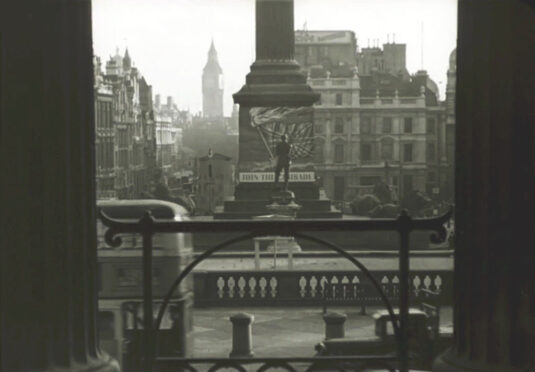
It started in Trafalgar Square, WC2 viewed from the National Gallery.
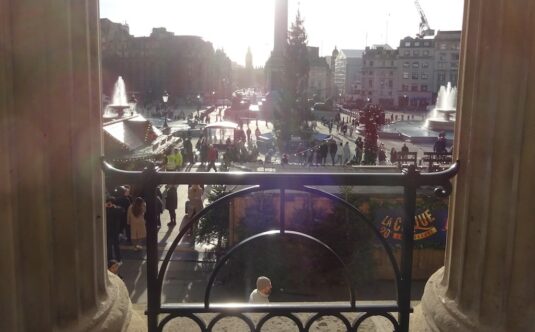
Not a particularly straightforward shot to replicate with sun and depth seeking to confound. SJ
- Capture 2
- 10 Feb 2025
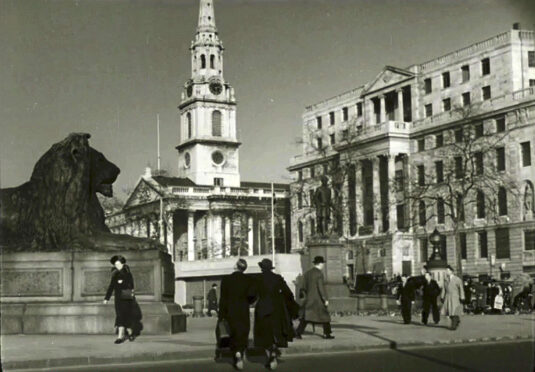
A second shot of the location. St Martin-in-the-Fields and South Africa House.
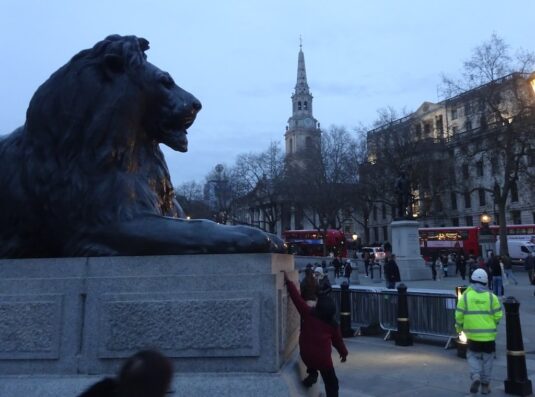
The traffic defied a shot from further away. SJ
- Capture 3
- 10 Feb 2025
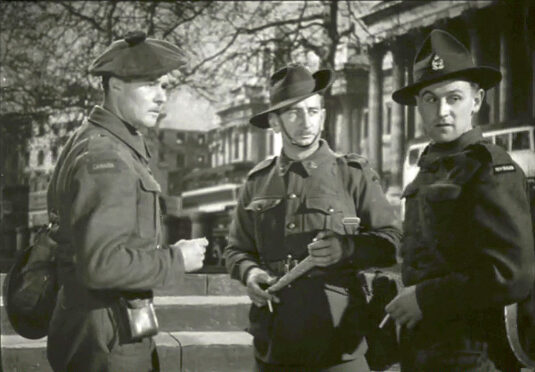
The three meet up, Private J Johnston (The Black Watch of Canada), Corporal W Atkinson (Australian Imperial Force) and Private R Gilbert (2nd New Zealand Expeditionary Force). A studio set with a rather confusing back projection of a segment of Trafalgar Square to include St. Martin-in-the-Fields.
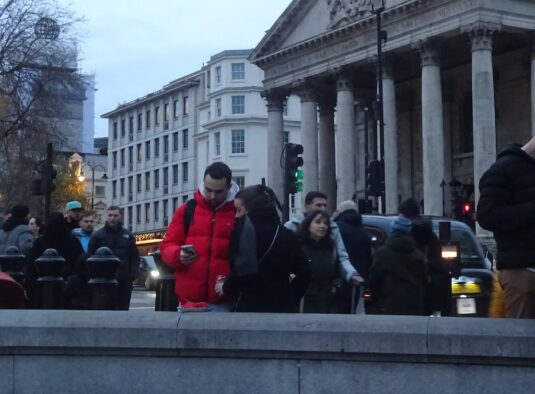
Confusing indeed. I think I've attained the rough angle of the backdrop. SJ
- Capture 4
- 10 Feb 2025
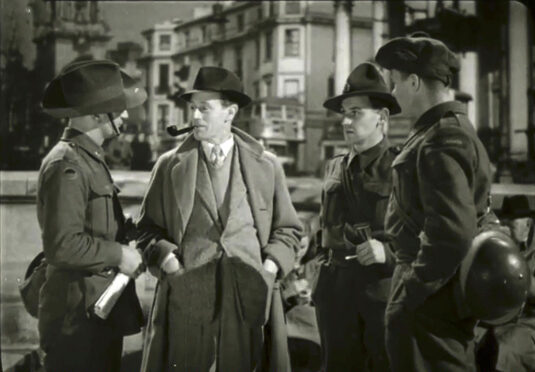
They are joined by Leslie Howard who happily tells them that the pubs north of Regent Street open at 11 o’clock and invites them for a beer. A more structured back projection of 6-8 St. Martins Place with the Coliseum to the left and the pillars of St Martin-in the-Fields to the right.
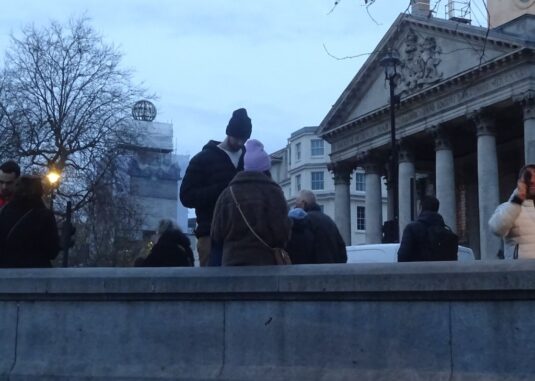
Much of the Coliseum is currently under wraps and tourists are rather in the way of 6-8 St. Martin's Place. SJ
- Capture 5
- 07 Mar 2025
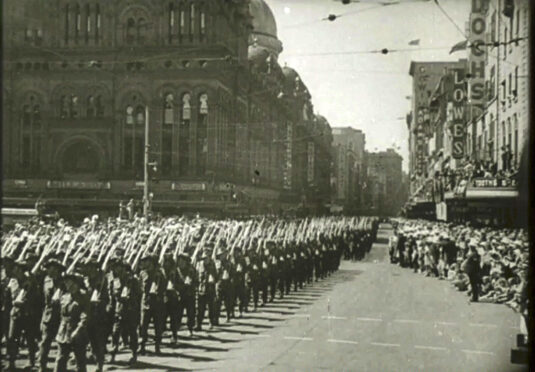
They each then tell their story of their particular involvement in the war effort. How at the cinema, Corp. Atkinson had seen footage of Australian troops marching through the street on their way to the harbour. Looking north along George Street, Sydney, NSW, Australia.
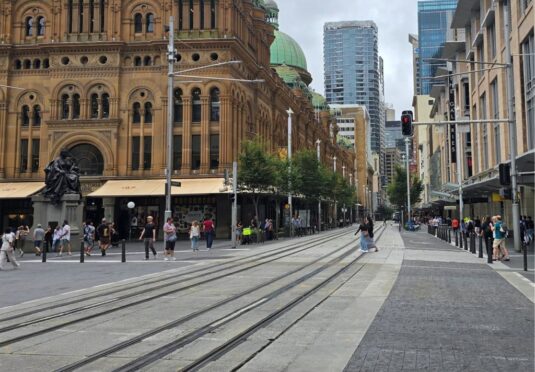
Troopless in 2025, with tall buildings behind. The statue of Queen Victoria now in front of the Queen Victoria Building was moved from Ireland in 1986.(SR)
- Capture 6
- 07 Mar 2025
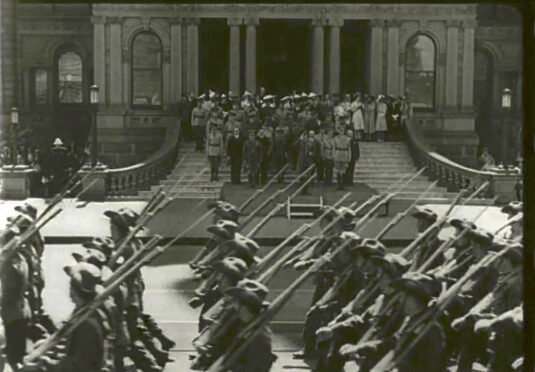
They march past Sydney Town Hall, George Street, Sydney.
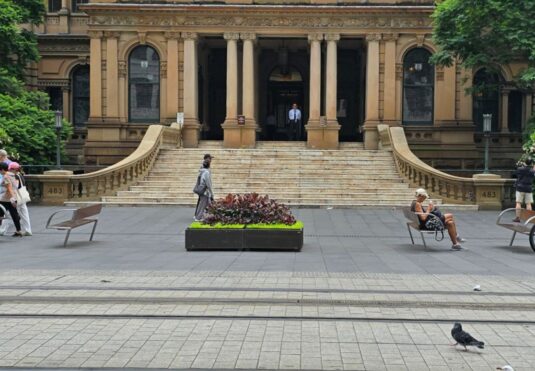
A peaceful Sydney Town Hall today. (SR)
- Capture 7
- 'Now' required
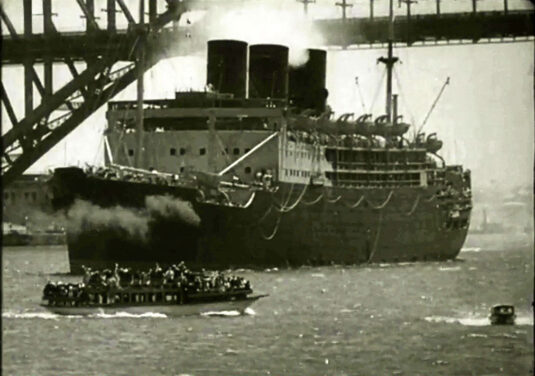
Then he saw the troop ship leaving harbour and he made up his mind. Troop ship passing under the Sydney Harbour Bridge.
- Capture 8
- 'Now' required
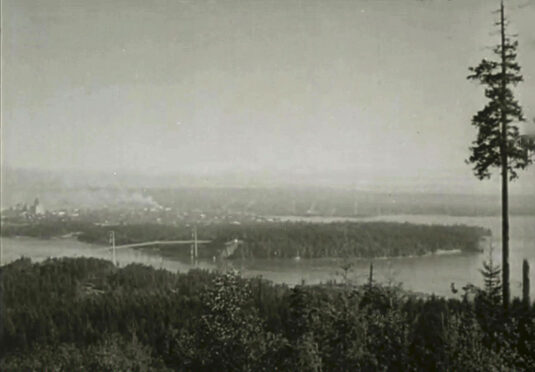
Pvt. Johnston, a farmer, had quite a piece of land near Vancouver. Had he not volunteered his wife would probably have kicked him on the boat. A general view south of Vancouver, British Colombia, Canada showing the Lions Gate Bridge.
- Capture 9
- 'Now' required
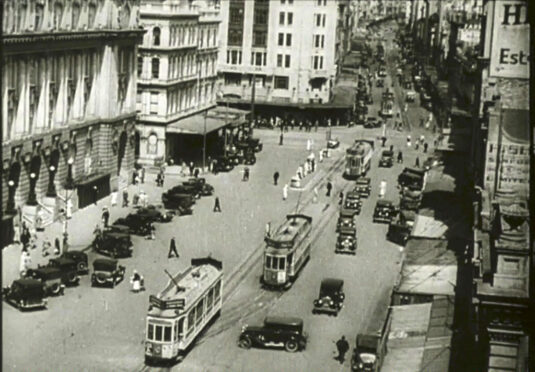
Pvt. Gilbert, a law student sitting his finals, was prompted to consider the purpose of his studies if the war was lost. There just happened to be a recruitment office near to his office. Looking south down Queen Street, Auckland, New Zealand with the Auckland Chief Post Office building to the left. Pleasing to see that the building on the corner of Queen Street and Customs Street, also survives.
- Capture 10
- 13 Oct 2026

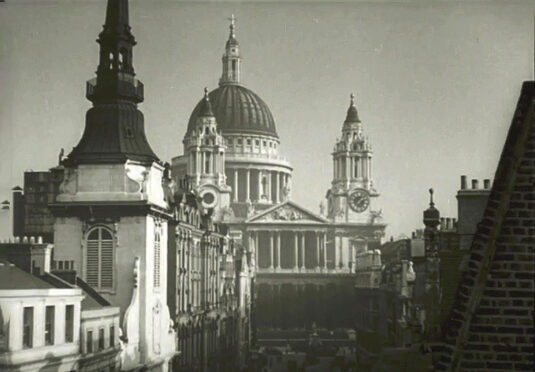
Leslie Howard takes the three to show them why he thinks he knows why they answered ‘the call to arms’. An unusually high view up Ludgate Hill to St. Paul’s Cathedral introducing the subsequent studio based ‘viewing gallery’. One has to stretch one's imagination to expect to see some of the sights he will highlight from St. Paul's Cathedral.
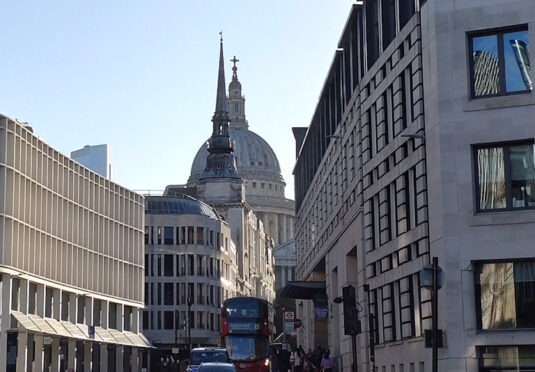
After several attempts from a number of positions, this compromise shot will have to do. PW
- Capture 11
- 07 Feb 2025
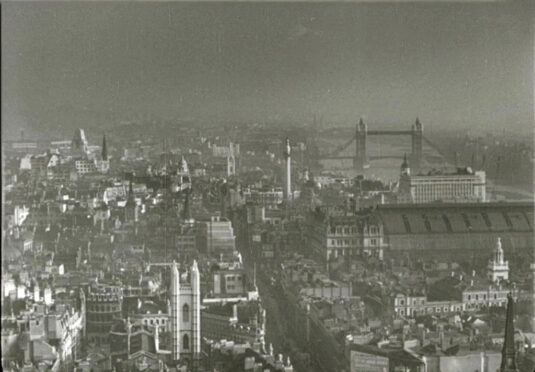
From a more likely viewing gallery at St Paul’s Cathedral. “About 500 years ago an Englishman described London as being happy in the wholesomeness of its air, its ancient foundations and its most worthy liberty.” A view across the City of London towards Tower Bridge. The tower of St Mary Aldermary, Queen Victoria Street, foreground. Cannon Street station to the right before it was bombed on the 11th May 1941 with Adelaide House behind.
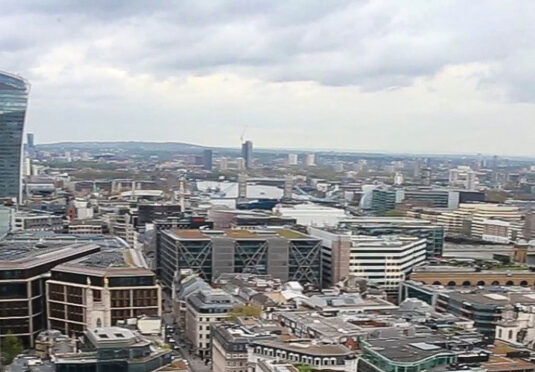
The landmarks of 1942 are now dwarfed.
- Capture 12
- 07 Feb 2025
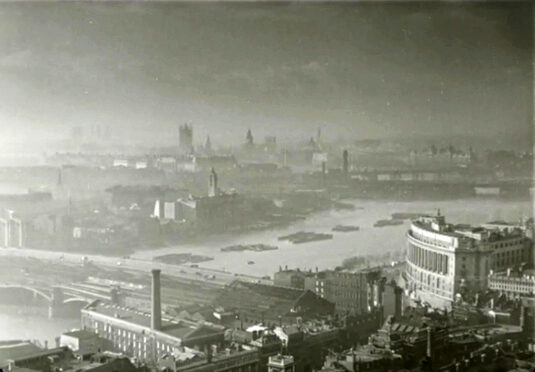
“The River looks nice from here doesn’t it?” “Liquid history someone else called it”. Looking south east with Unilever House dominant in the right hand corner.
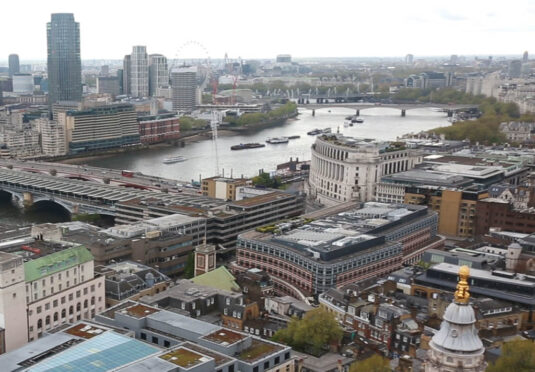
Unilever House is one of the few recognisable buildings remaining.
- Capture 13
- 11 Feb 2025
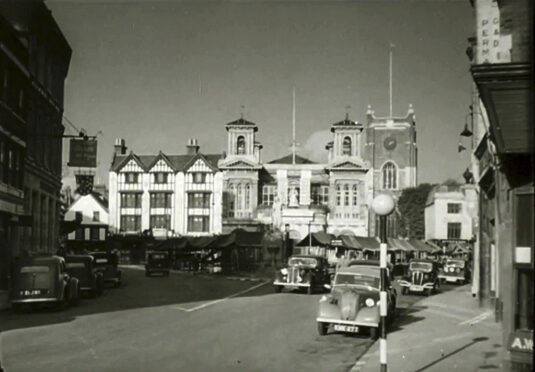
“Just over there, short of the Surrey hills lies Kingston, ‘King’s Stone’, where many of the early kings were crowned.” Market Place, Kingston upon Thames. It similarly features in a number of films including 'The Dock Brief', 'Operation Diplomat', 'The Lost Hours' and 'Marriage of Convenience' and 'The Yellow Teddy Bears'.
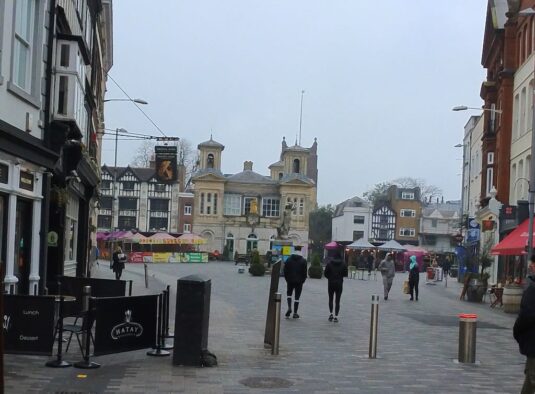
John Harwood found a gloomier day. (SJ)
- Capture 14
- 11 Feb 2025
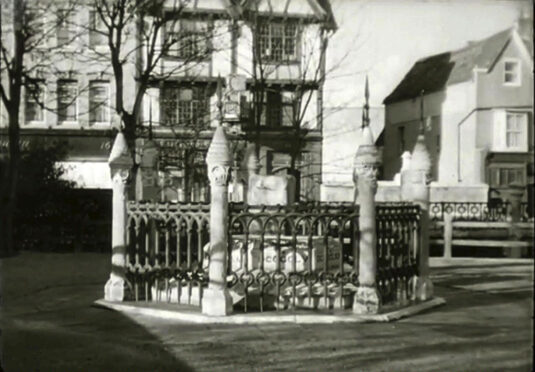
“In fact the ‘Coronation Stone’, still stands in the Market Square.”
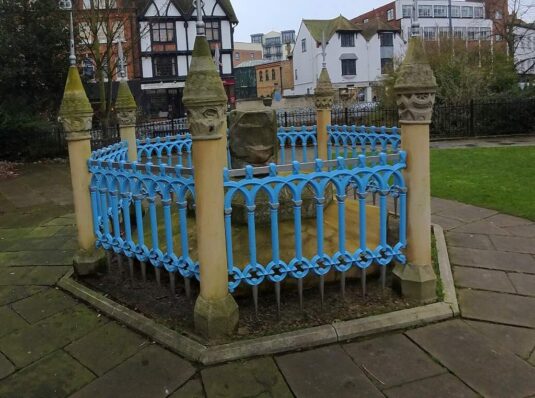
Equally deserted for John. (SJ)
- Capture 15
- 11 Feb 2025
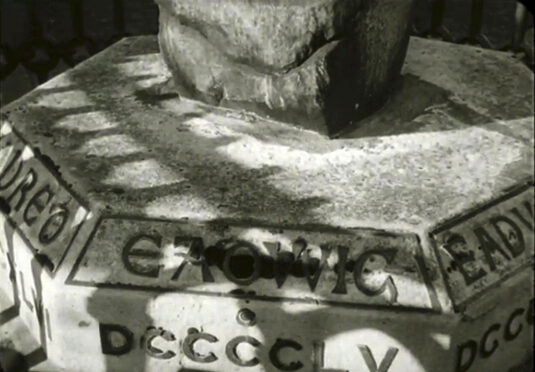
“Those chaps made their mark on London. Alfred the Great for instance, the father of the British navy".
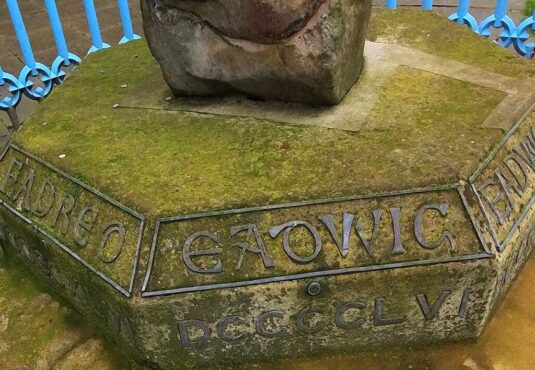
John did all seven sides just to be sure. (SJ)
- Capture 16
- 11 Feb 2025
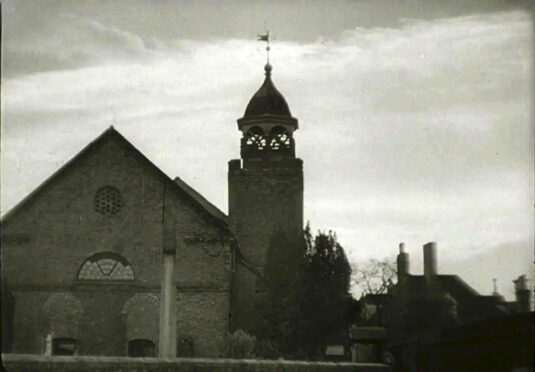
A little way beyond Kingston is a place called Petersham, Richmond, Surrey at the time of filming. St Peter’s Church, as viewed from Church Lane looking south.
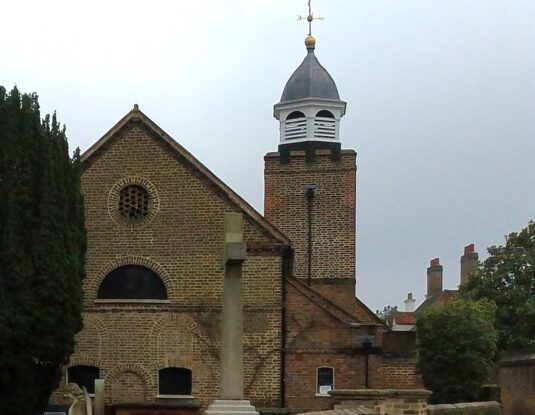
John found the trees re-arranged. (SJ)
- Capture 17
- 'Now' required
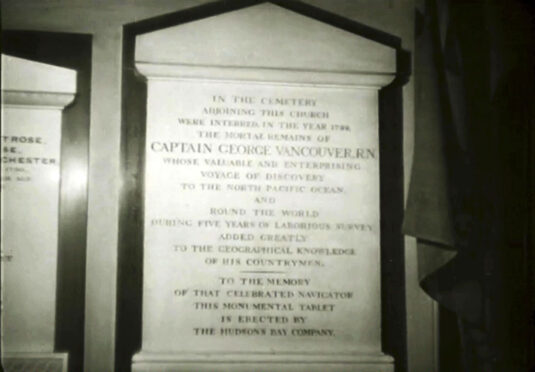
"Buried there is Captain George Vancouver RN". “Well, I must tell them at home” says Pvt. Johnston.
- Capture 18
- 'Now' required
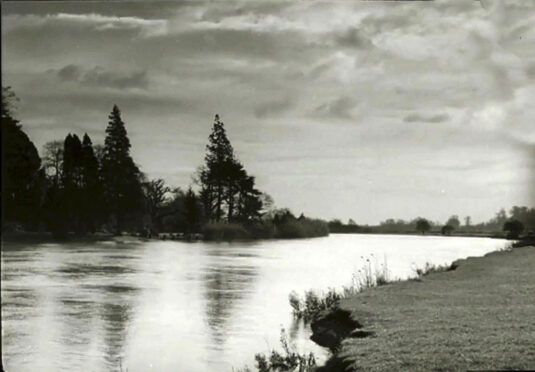
“A little further along the River, Staines way, is Runneymede, where Magna Carta was sealed”. “No free man shall be taken or imprisoned or in any way destroyed nor will we send upon him except by the lawful judgement of his peers and the law of the Land” recited Pvt. Gilbert. It would seem that this location could well be the bank of the River Thames at Runneymede, Surrey nearest to the Magna Carta Memorial.
- Capture 19
- 31 Mar 2025
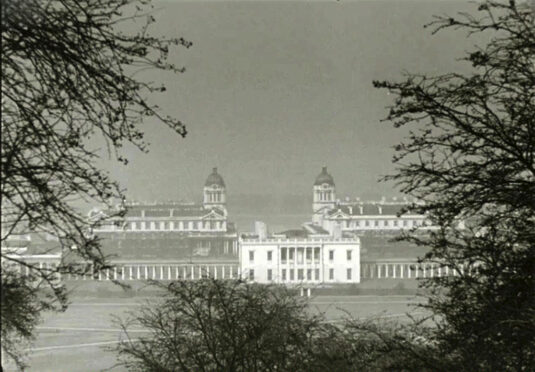
"Between the trees down there is Greenwich Hospital", SE10. "Captain Cook had a job there once and he is ‘common property’ to all three of you. As viewed from Greenwich Park.
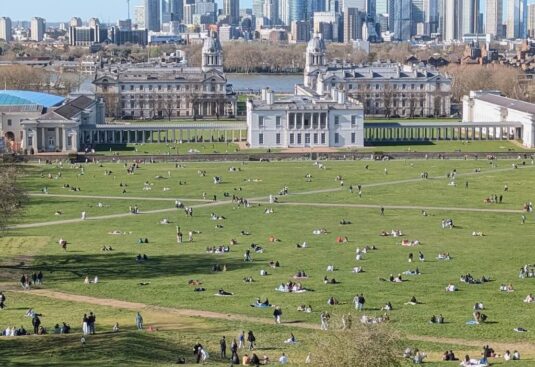
John Harwood provides this sunny spring scene. (SJ)
- Capture 20
- 'Now' required
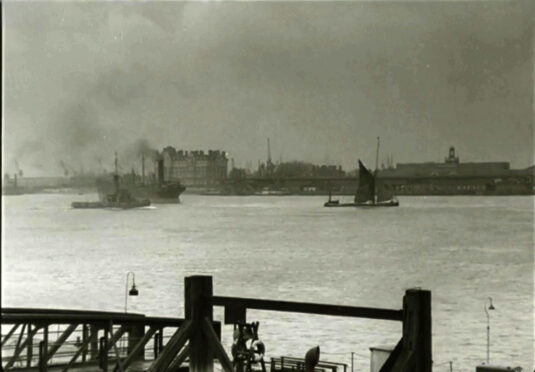
“Look down to Tilbury”. “That is where your fathers and my fathers stood when we were threatened by the Armada with invasion”. Viewed from Gravesend West Street Pier (Kent), Tilbury Riverside Station (Essex) (closed 1992) and what is now Tilbury Cruise Terminal to the right on opposite bank together with 'Tilbury Hotel' to the left, ravaged by an incendiary fire in 1944.
- Capture 21
- 07 Feb 2025
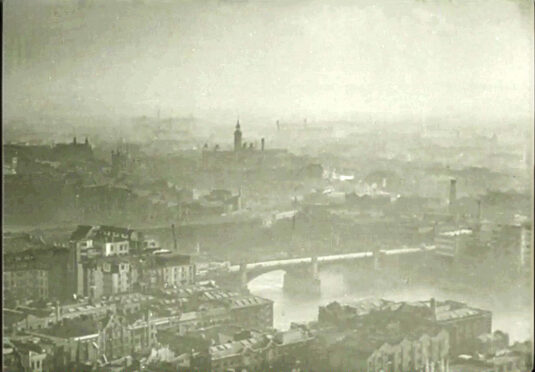
“Have you seen the Shakespeare country?” “Bankside just down there across the River below us”. “That was their theatreland”. Referring to the siting of the original Globe Theatre built in 1598, destroyed by fire 1613, rebuilt 1614 and then demolished in 1644. Southwark Bridge holding center stage.
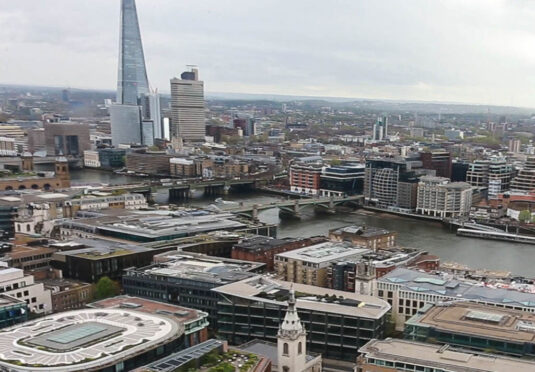
How noticeable that all those small properties have given way to block development.
- Capture 22
- 09 Aug 2025
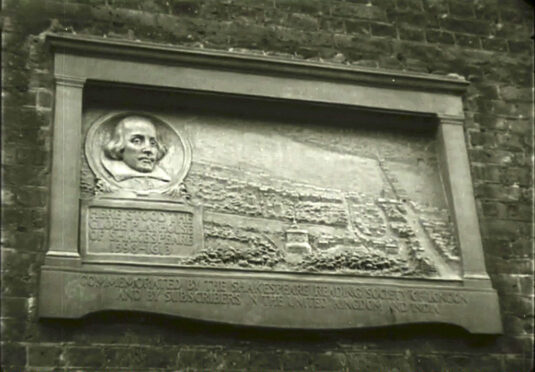
“Will Shakespeare’s plays were often running at the old Globe Theatre down there.” A plaque marking the original site was erected in 1912 on the wall of the Anchor Brewery that occupied the site and now forms part of a wall at 123 Park Street, SE1
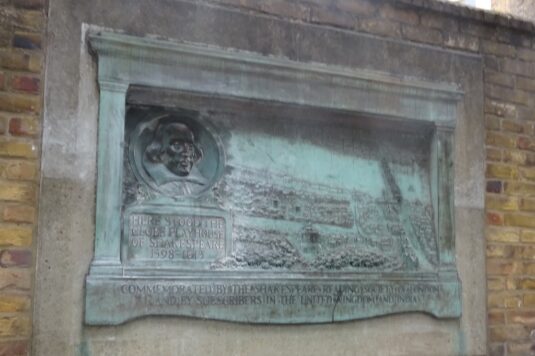
This is just east of Southwark Bridge on the south side of Park Street. SJ
- Capture 23
- 09 Aug 2025
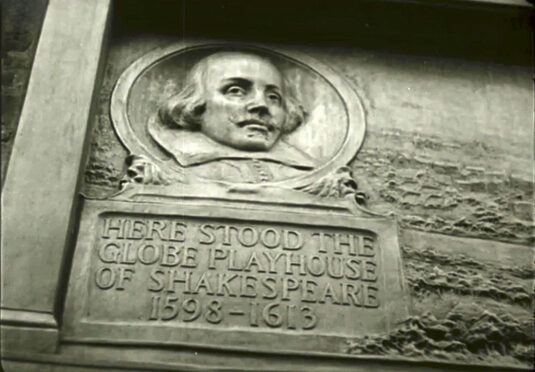
“They used to entertain the troops home from the Netherlands and West Indies”. A section of the aforementioned plaque.
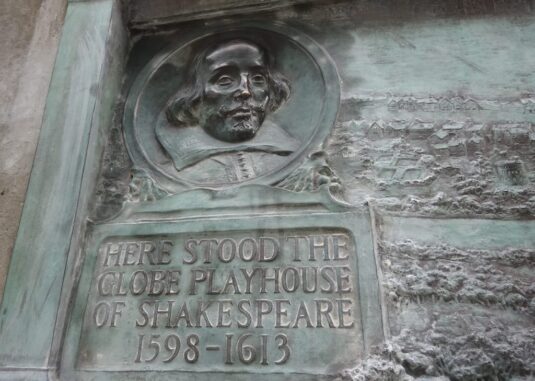
A livid hue to the colour of the plaque. SJ
- Capture 24
- 09 Sep 2026
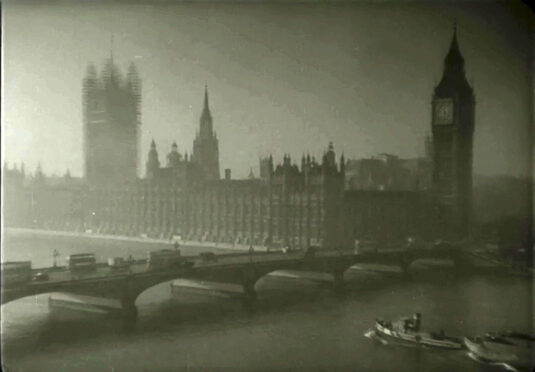
“It is all yours, and that is yours too, you have your own parliaments now, but that is the mother of them all. Mother of the American Congress too”. The Houses of Parliament and Westminster Bridge.
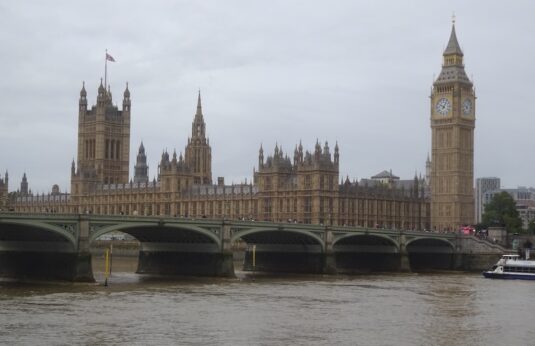
A view west from The Queen's Walk. SJ