
Blue Pullman
Date: 1960
Director: James Ritchie
Production Company: British Transport Films
Stars: The staff of British Railways
Location(s): Bedfordshire, Derbyshire, Lancashire, Leicestershire, London, Northamptonshire, Nottinghamshire
Region(s): London A-B, Midlands, North, South East A-D
Storyline:
Following development, technical trials and staff training, the Midland Pullman makes its inaugural journey from Manchester Central to London St. Pancras.
Additional Information:
Page compiled by Phil Wilkinson
This film is viewable on BFI Player for free at Blue Pullman

Can you help:
If you have any information regarding this production, the locations or, even better, some comparison shots please contact us. Images submitted must be in Landscape orientation, as would be seen on the cinema screen, not Portrait.
We are aware that there are films on the site that were added when the criteria for the inclusion of locations was very different from today and, as a result, there may be scenes missing from some productions. Please do not forward additional screen captures to us but bring the detail to our attention, for we do, and are, 're-addressing' these older entries as time allows.
- Capture 1
- 'Now' required
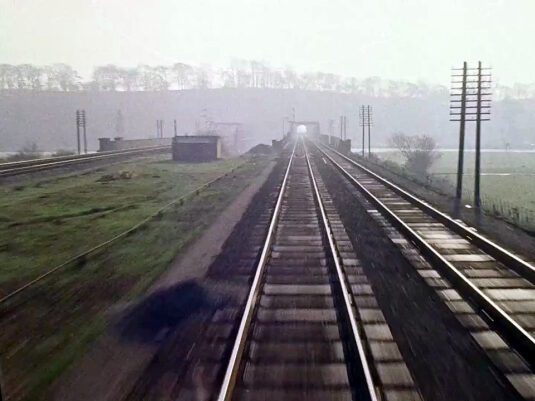
Driven by a senior Footplate Inspector, a Blue Pullman multiple unit is taken out on a test run during which engineers and technicians monitor progress. This is the Midland Main Line between Derby and Leicester to the south of Trent Junction in Derbyshire, approaching the viaduct that crosses the River Trent and the Nottinghamshire boundary with Redhill Tunnels beyond.
- Capture 2
- 'Now' required
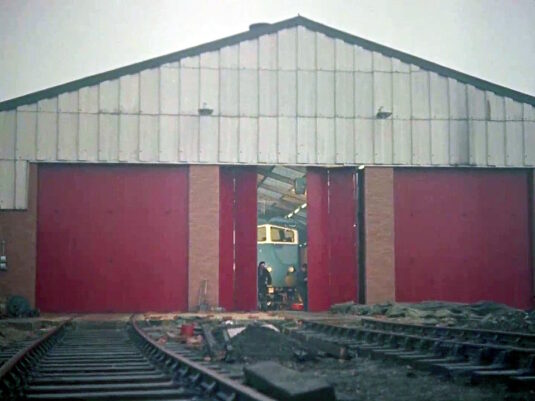
The doors are closed after the Blue Pullman enters the shed at the end of the trial.
- Capture 3
- 'Now' required
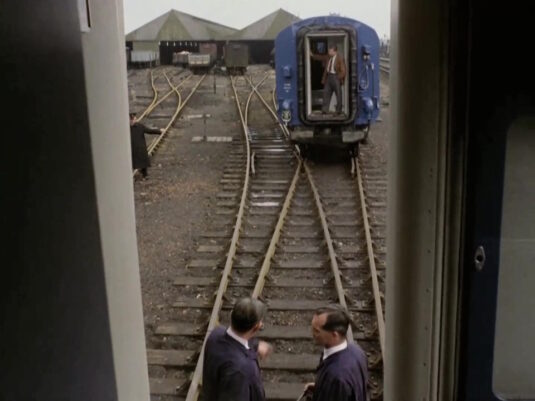
In a siding, vehicles are coupled together and jumper cables connected.
- Capture 4
- 'Now' required
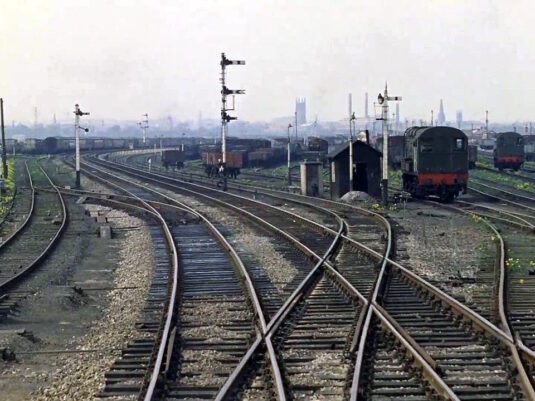
The Guard signals the Driver to start and the Blue Pullman pulls away from the shed for another test run.
- Capture 5
- 'Now' required
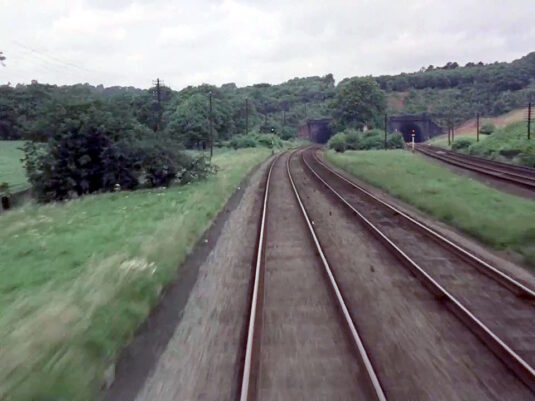
A Technician pulls the alarm cord to check the braking distance. This looks like the Down Fast line approaching Ampthill New Tunnel between Bedford and Flitwick in Bedfordshire.
- Capture 6
- 'Now' required
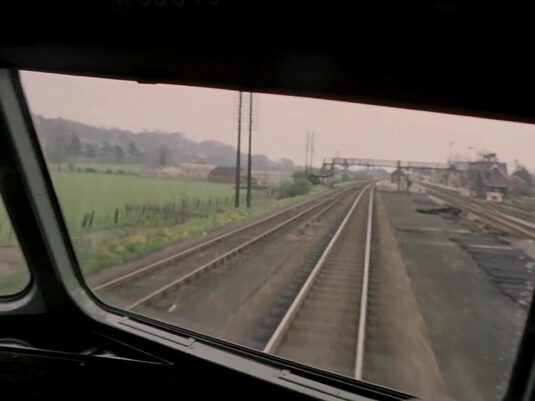
The units were conceived as part of British Railways' 1955 Modernisation Plan. Facing southward towards Duffield station on Station Road in Duffield, Derbyshire.
- Capture 7
- 'Now' required
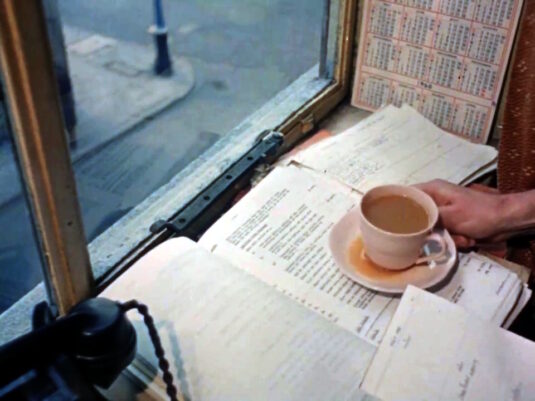
With the trials and training completed and last minute details checked, everyone enjoys a nice cup of tea.
- Capture 8
- 'Now' required
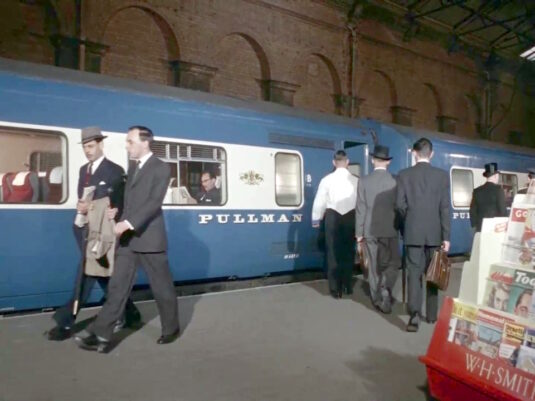
In Manchester, the first fare paying Passengers board the 7:45am service for London.
- Capture 9
- 26 Aug 2026
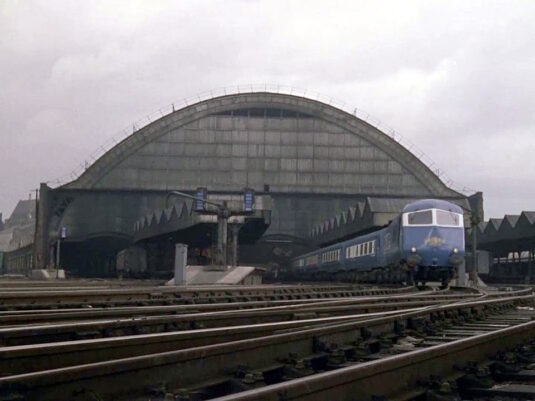
Attendants and the Guard step on board the luxury train before the signal is cleared for a right time departure. Manchester Central station on Station Approach at the corner of Lower Mosley Street and Windmill Street in Manchester, Lancashire.
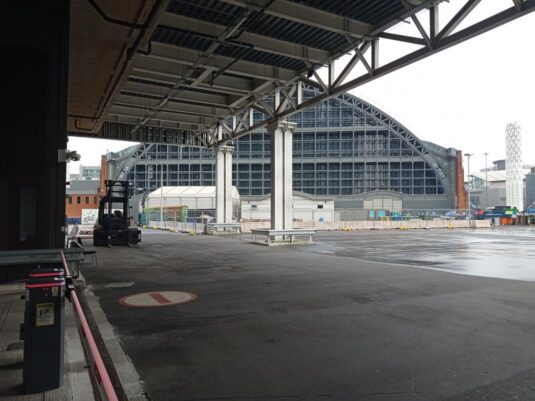
The Grade II* listed railway building finally closed to passengers in 1969, it is currently known as 'Manchester Central' an exhibition and conference centre. NW
- Capture 10
- 'Now' required
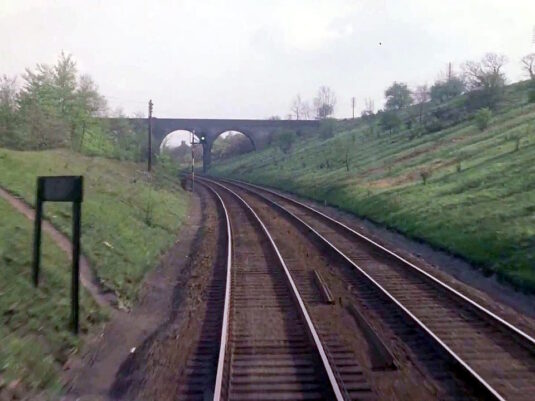
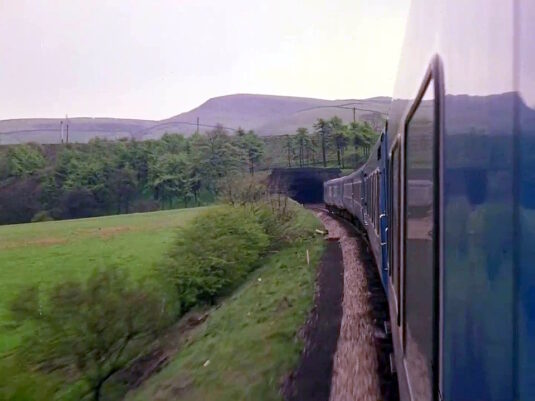
Breakfast is served as the journey gets under way, passing through the suburbs of south Manchester to reach the Derbyshire countryside. The Blue Pullman vehicles were built by Metropolitan-Cammell at their workshops in Birmingham.
- Capture 11
- 'Now' required
With the bacon, eggs, kippers and toast eaten and the washing up started, the Chef starts preparing that evenings dishes.
- Capture 12
- 'Now' required
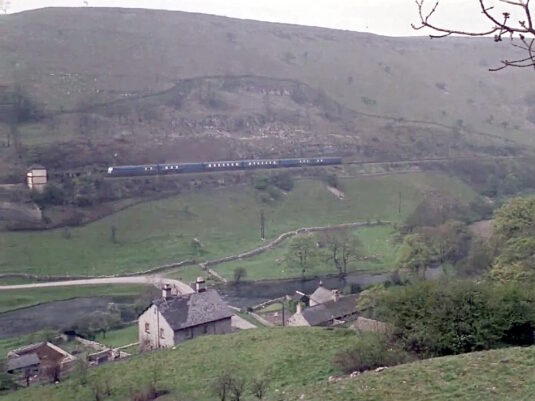
The service follows the since closed Midland Railway route from Manchester to Derby via Millers Dale, Bakewell and Matlock. Overlooking Upperdale, Derbyshire with Monsal Dale signal box visible in the left distance.
- Capture 13
- 'Now' required
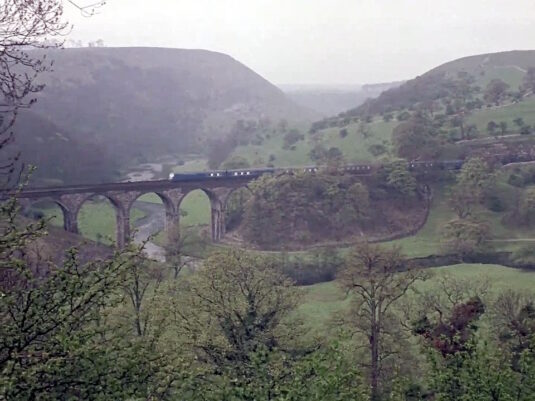
Looking towards Headstone Viaduct crossing the River Wye at Monsal Dale in Derbyshire with Fin Cop in the distance.
- Capture 14
- 'Now' required
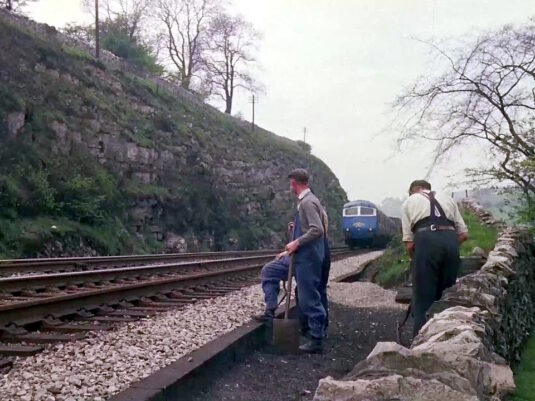
Track Workers step aside as the train approaches.
- Capture 15
- 'Now' required
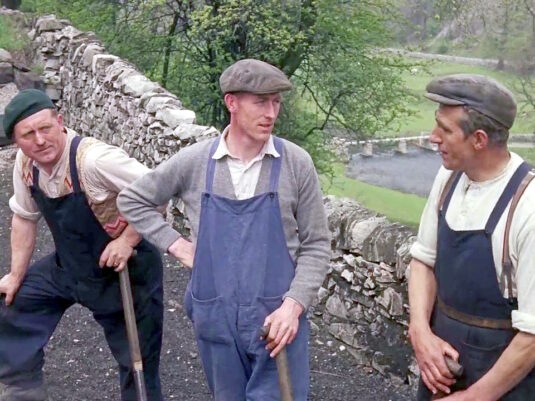
A comment about the new train is passed between the Men before returning to work.
- Capture 16
- 'Now' required
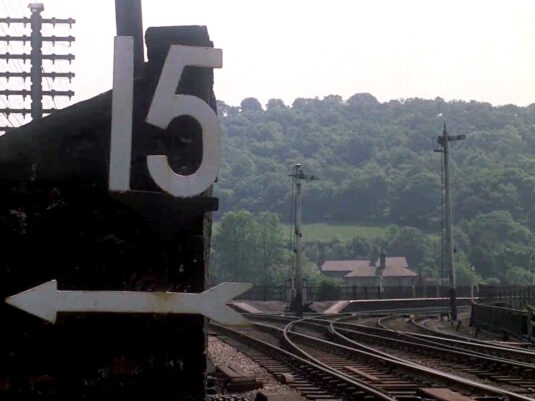
The Driver checks his watch as he slows for a speed restriction through a junction. Ambergate West Junction in Derbyshire with the station beyond the bridge over the River Amber.
- Capture 17
- 'Now' required
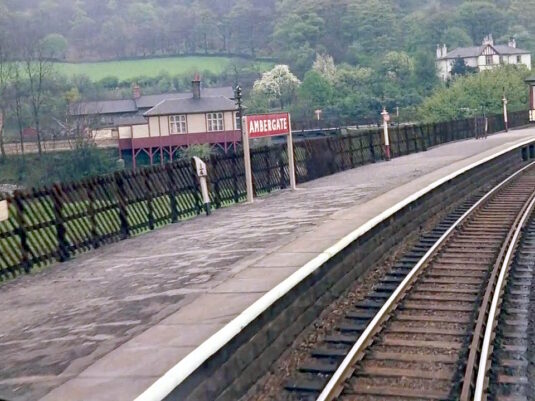
At 20 mph, the Blue Pullman creeps through the tightly curved station. At the junction of lines from Manchester, Sheffield and Derby, this is the triangular Ambergate station on Station Road, Ambergate.
- Capture 18
- 'Now' required
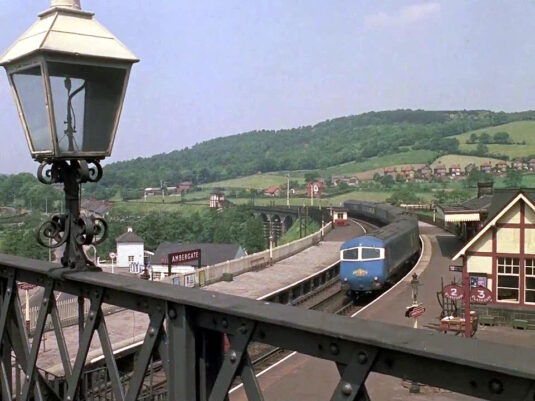
The accompanying Footplate Inspector notes that they're running 5 minutes late. Ambergate station seen from the footbridge crossing the southern end of the platforms at Ambergate Station Junction.
- Capture 19
- 'Now' required
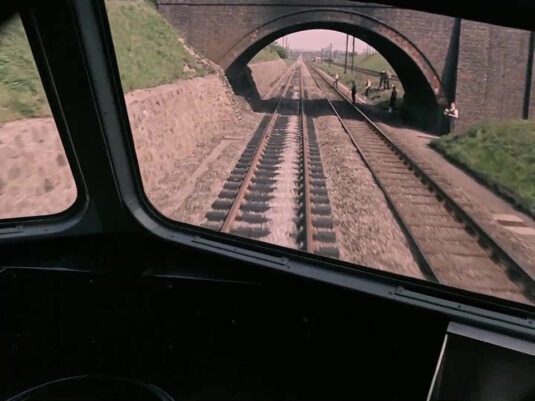
On the main line, signals clear to green allowing the train to be brought up to its top speed. The London Midland Region units were formed of six car and were first class only with double-glazed windows, air conditioning and a maximum speed of 90 mph.
- Capture 20
- 'Now' required
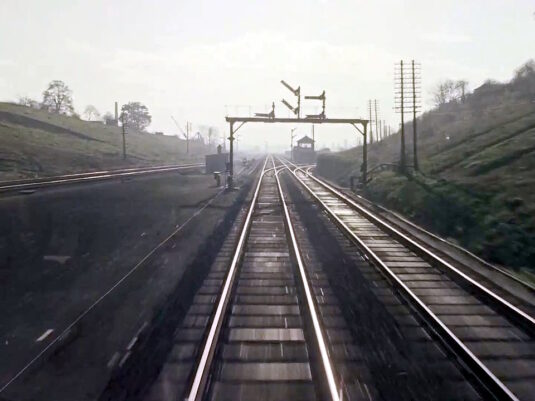
Tea, coffee and maybe something a little stronger is served as morning newspapers are read. Facing south at Knighton North Junction after emerging from Knighton Tunnel in the southern suburbs of Leicester.
- Capture 21
- 'Now' required
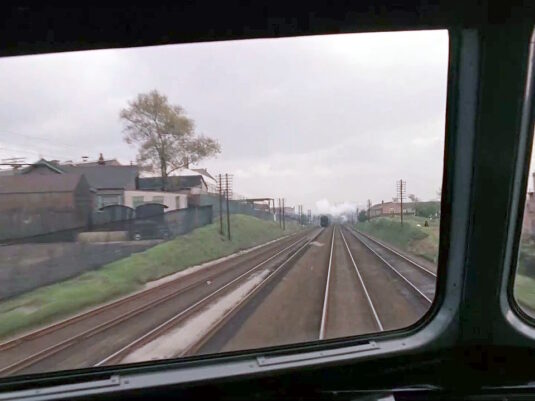
On the adjacent line, a steam hauled goods train approaches from the south. Heading south through Luton in Bedfordshire with Commer's Luton works on Biscot Road coming up on the left.
- Capture 22
- 'Now' required
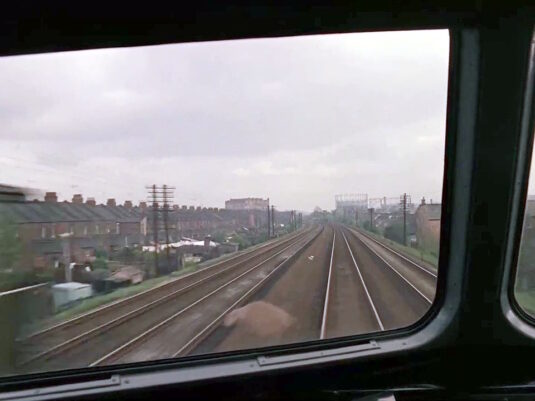
The freight train's brake van passes. Flanking the railway as it approaches Luton are the terraces of Highbury Road on the left and Bury Park Road to the right while in the distance the gasometers of the gasworks on Dunstable Road can just be made out.
- Capture 23
- 'Now' required
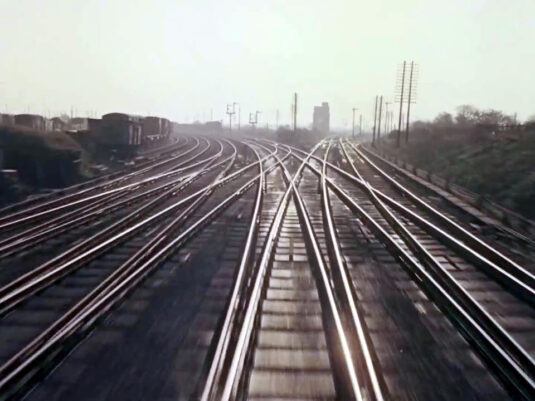
Passing another signal box, the Footplate Inspector eyes the speedometer. Facing south at Wigston North Junction in Leicestershire with the line to London on the left and the routes to Rugby and Nuneaton curving away to the right.
- Capture 24
- 'Now' required
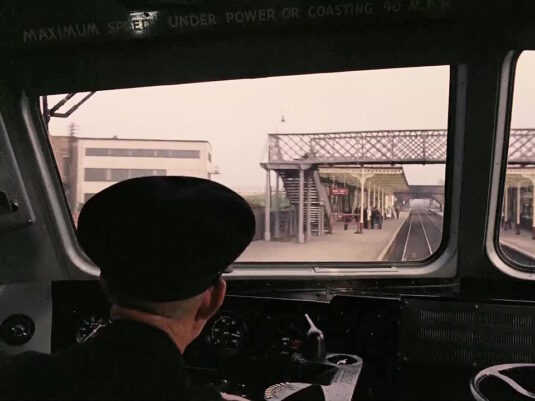
The Driver watches the amps increase as he notches up the power controller. This is approaching Loughborough Midland station in Leicestershire.
- Capture 25
- 'Now' required
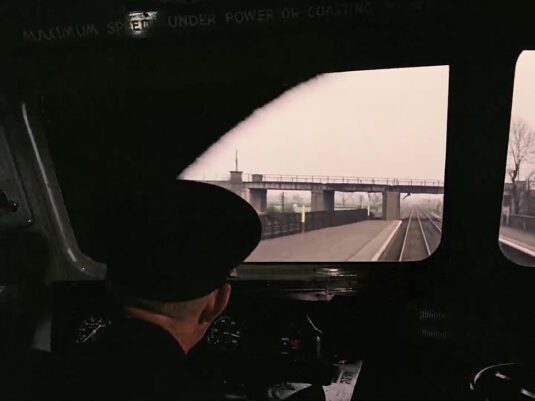
Passing beneath Nottingham Road bridge at Loughborough Midland, the bridge carrying the Great Central Line between Nottingham and Leicester comes into view.
- Capture 26
- 'Now' required
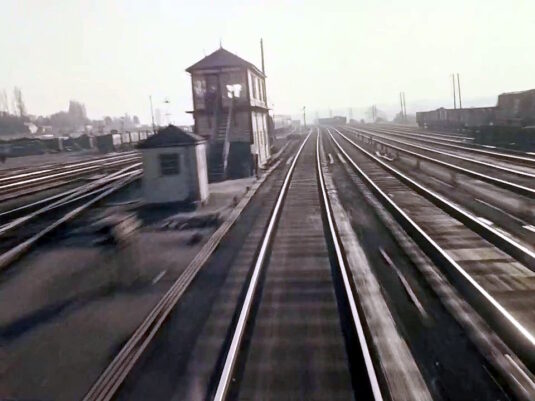
Passengers browse paperwork, gaze through the windows or complete crosswords as the train continues southward. Introduced in 1960, the units were withdrawn from the Midland Main Line in 1966.
- Capture 27
- 'Now' required
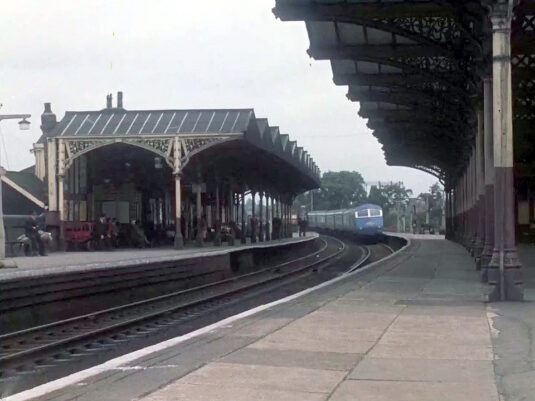
Dials in the cab read 2000 amps and 90 mph as the Inspector tells the Driver that they are now on time. Looking north at Kettering station on Station Road in Kettering, Northamptonshire.
- Capture 28
- 'Now' required
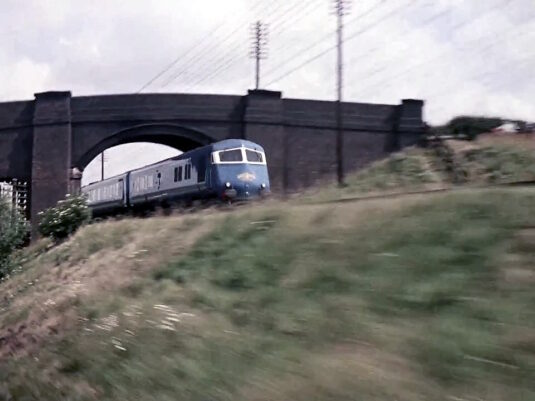
Although they had already disappeared from the Midland Main Line, the Blue Pullmans operated on other routes until May 1973 when they were withdrawn by British Rail.
- Capture 29
- 'Now' required
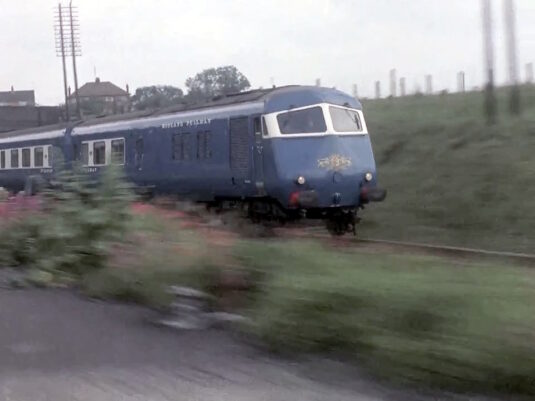
Through tunnels and cuttings, beneath bridges and across fields, the Blue Pullman speeds onward. Looking across the disused Up Fast line platform of the closed Oakley station in Bedfordshire with houses on Highfield Road in the left distance. At this point, the train is travelling over the Up Goods line.
- Capture 30
- 'Now' required
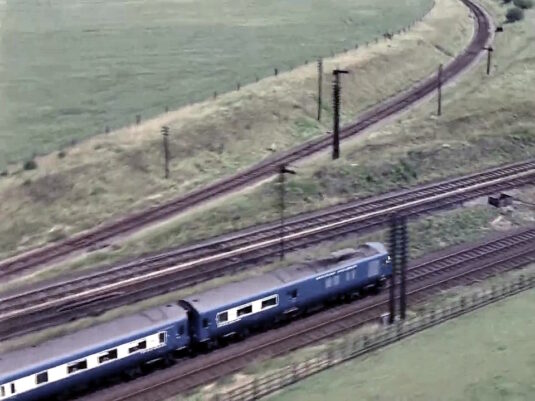
Irchester Junction to the east of Wellingborough in Northamptonshire with the Higham Ferrers branch heading eastward to the top right.
- Capture 31
- 'Now' required
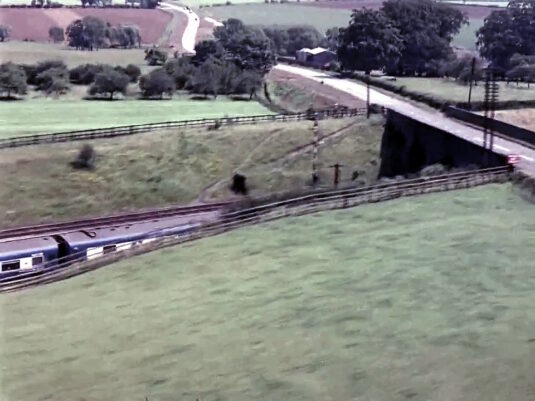
The Blue Pullman disappears into a cutting to pass beneath Higham Road as it runs between Little Irchester and Higham Ferrers.
- Capture 32
- 'Now' required
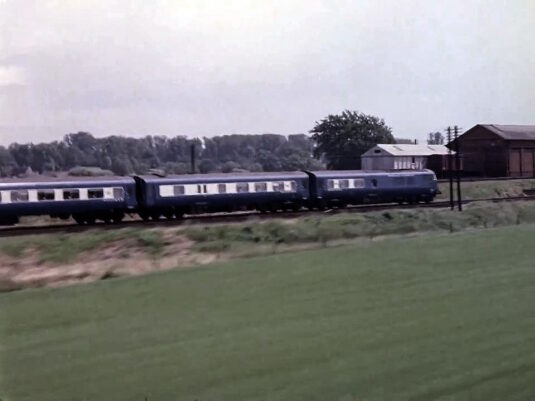
A little further southwards, the multiple unit approaches Irchester goods shed which can be seen to the right.
- Capture 33
- 'Now' required
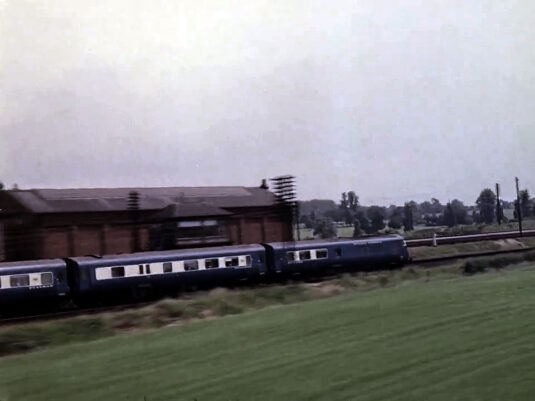
Passing Irchester goods shed, the cattle dock and pens of the, then, still open livestock facility come into frame.
- Capture 34
- 'Now' required
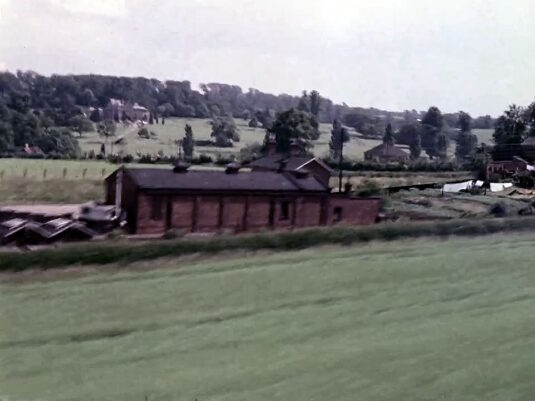
Blue Pullman units also feature in 'Decline and Fall . . . of a Birdwatcher', 'Be My Guest' and 'The Early Bird'.
- Capture 35
- 'Now' required
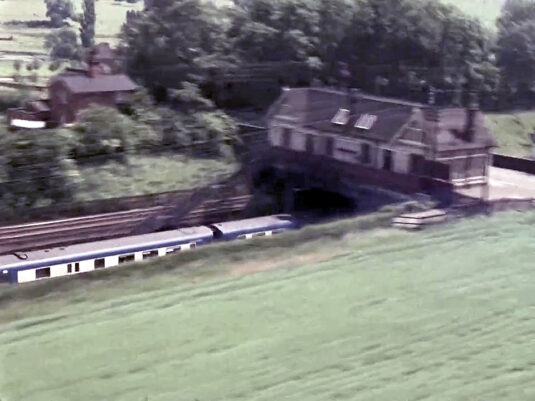
On the bridge stands the station building of the, then, recently closed Irchester station on Station Road at Irchester, Northamptonshire.
- Capture 36
- 'Now' required
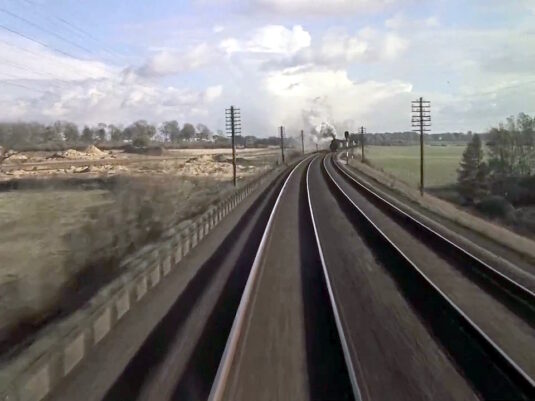
Another goods train approaches as the Blue Pullman crosses a viaduct.
- Capture 37
- 23 Aug 2026
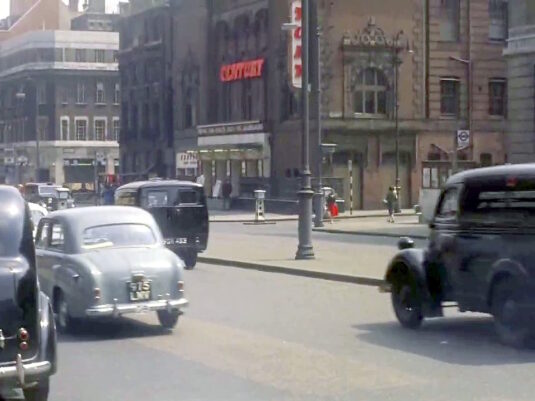
Traffic on London streets passes St. Pancras station as the morning Blue Pullman from Manchester nears the terminus. Euston Road in London NW1, looking towards the Century cinema at the corner of Tonbridge Street and the northern end of Argyle Street to the left.
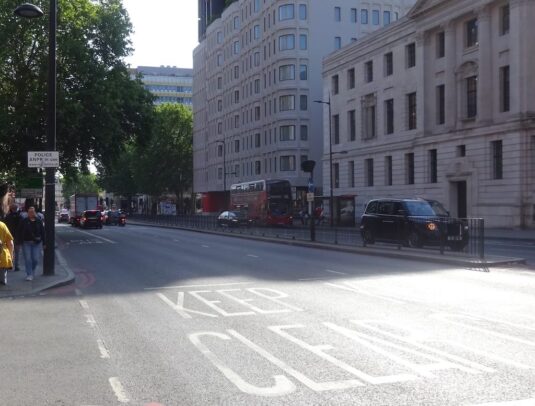
Argyle House is still there behind the trees just to the left of the Camden Town Hall annex, now The Standard Hotel, which replaced the Century cinema, formerly the Regent Theatre. SJ
- Capture 38
- 23 Aug 2026
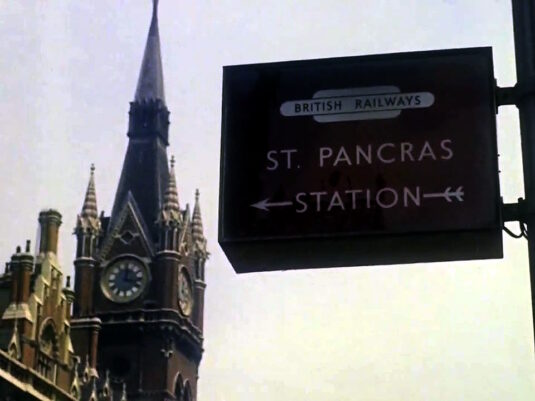
The camera moves to find the clock tower of St. Pancras station as the time approaches 11 o'clock.
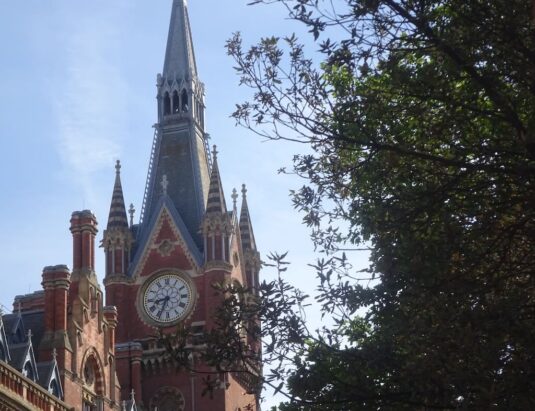
Some green now intrudes. SJ
- Capture 39
- 23 Aug 2026
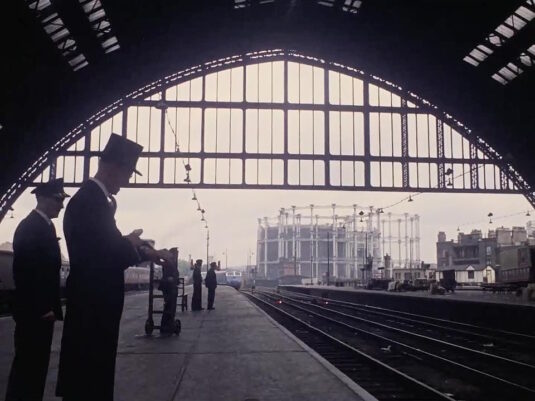
Inside the train shed, the Station Master checks his watch as the Blue Pullman draws into the platform on time. Platform 4 at St. Pancras station on Euston Road NW1.
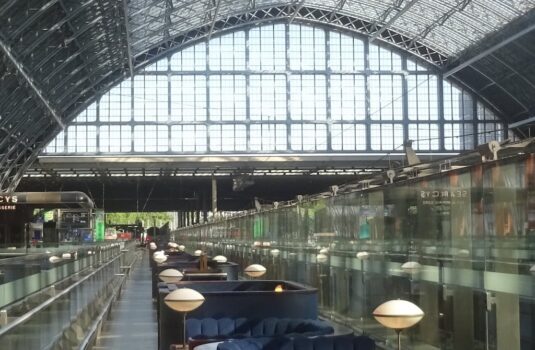
Many changes since 1960 but the north end of the shed is intact. SJ