
Hunted in Holland (Children’s Film Foundation)
Date: 1961
Director: Derek Williams
Production Company: Wessex Films
Stars: Sean Scully, Walter Randall, Thom Kelling
Location(s): Amsterdam, Essex, London, North Holland, South Holland
Region(s): London H-L, Netherlands, South East E-L
Storyline:
Whilst visiting his penfriend in Holland, a young lad becomes involved with a gang of diamond thieves.
Additional Information:
Screen captures and uncredited now shots by Phil Bailey
Filmed under the working title of ‘Lend Me Your Clogs’, the film was originally to have featured Carolien Marie van Eelen as Annike.
Mr van Helder’s boat, called ‘Zeehond’ in the film, was in fact the ‘Deo Juvante’, built in 1929 and originally called ‘Irene’. The name was changed in 1954, and in 1977 a further name change saw her become ‘Broedertrouw 2’.
Can you help:
If you have any information regarding this production, the locations or, even better, some comparison shots please contact us. Images submitted must be in Landscape orientation, as would be seen on the cinema screen, not Portrait.
We are aware that there are films on the site that were added when the criteria for the inclusion of locations was very different from today and, as a result, there may be scenes missing from some productions. Please do not forward additional screen captures to us but bring the detail to our attention, for we do, and are, 're-addressing' these older entries as time allows.
- Capture 1
- 03 Aug 2023
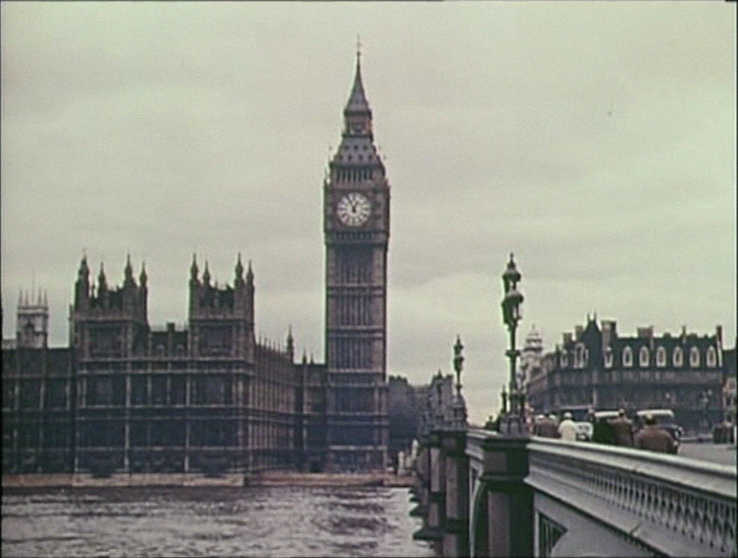
An establishing shot of Westminster Bridge and the Houses of Parliament in SE1.
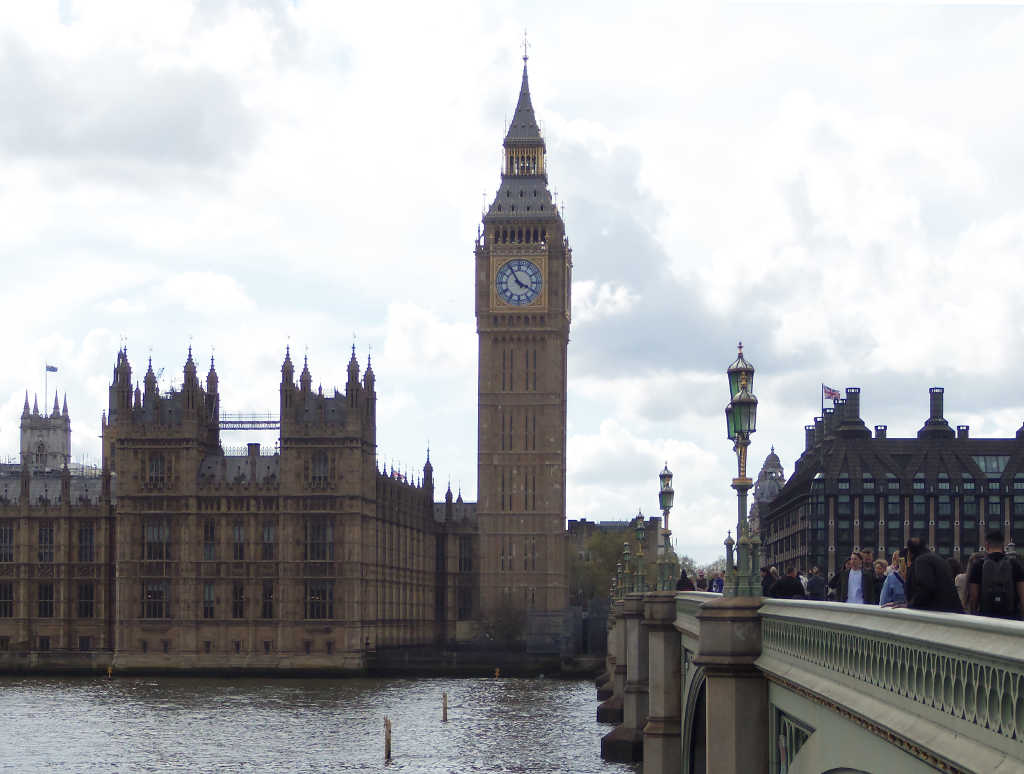
Crowds of tourists on Westminster Bridge today.
- Capture 2
- 03 Aug 2023
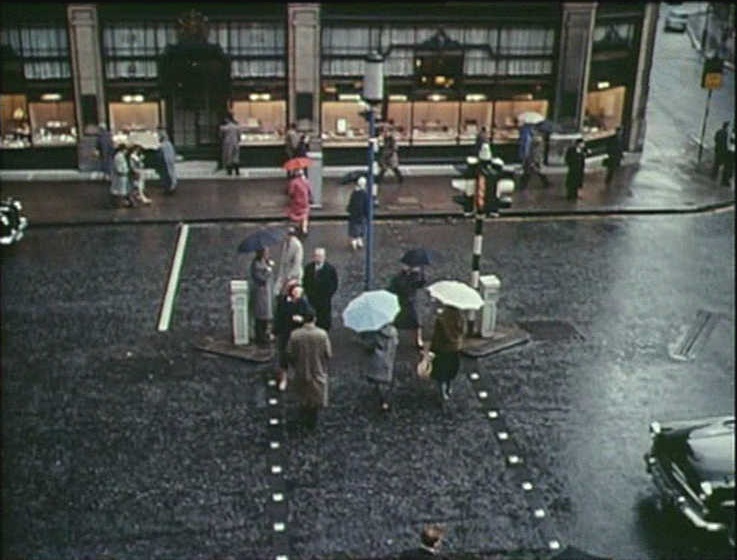
A jeweller's shop. Regent Street, London W1, with Glasshouse Street leading away on the right.
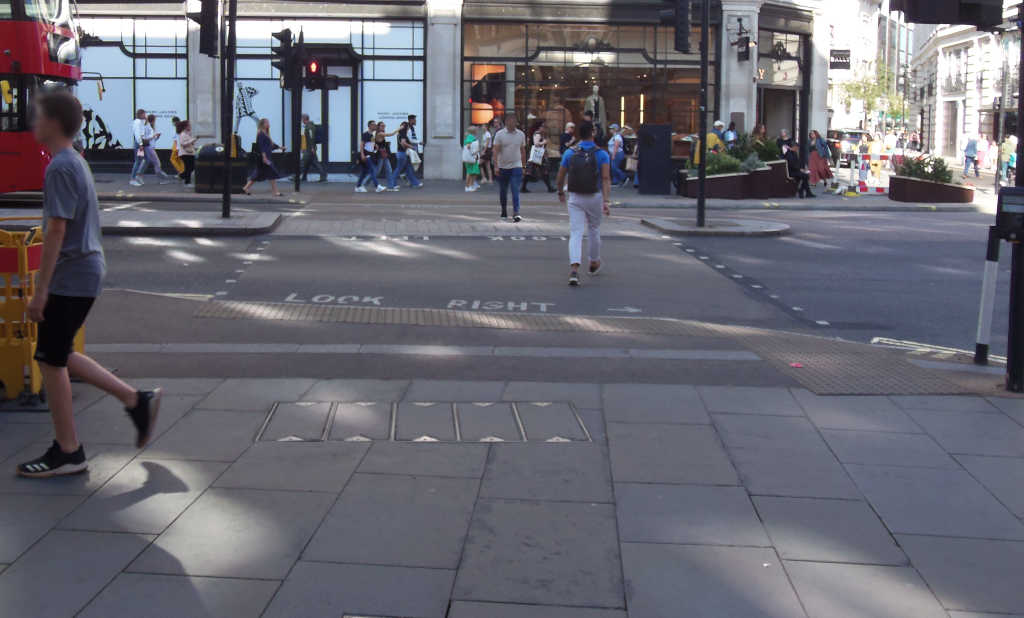
A view from ground level. No longer a jewellers.
- Capture 3
- 03 Aug 2023
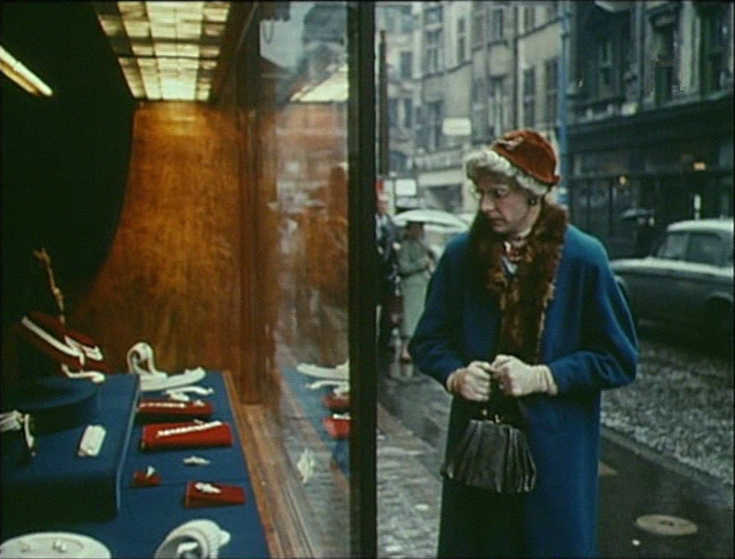
A crook (John Roden), disguised as an old lady, eyes items in a jeweller's window. Old Bond Street, London W1, close to the junction with Piccadilly. This is outside what was then the Embassy Club. The same location features in capture 16 of 'Colonel March Investigates'.
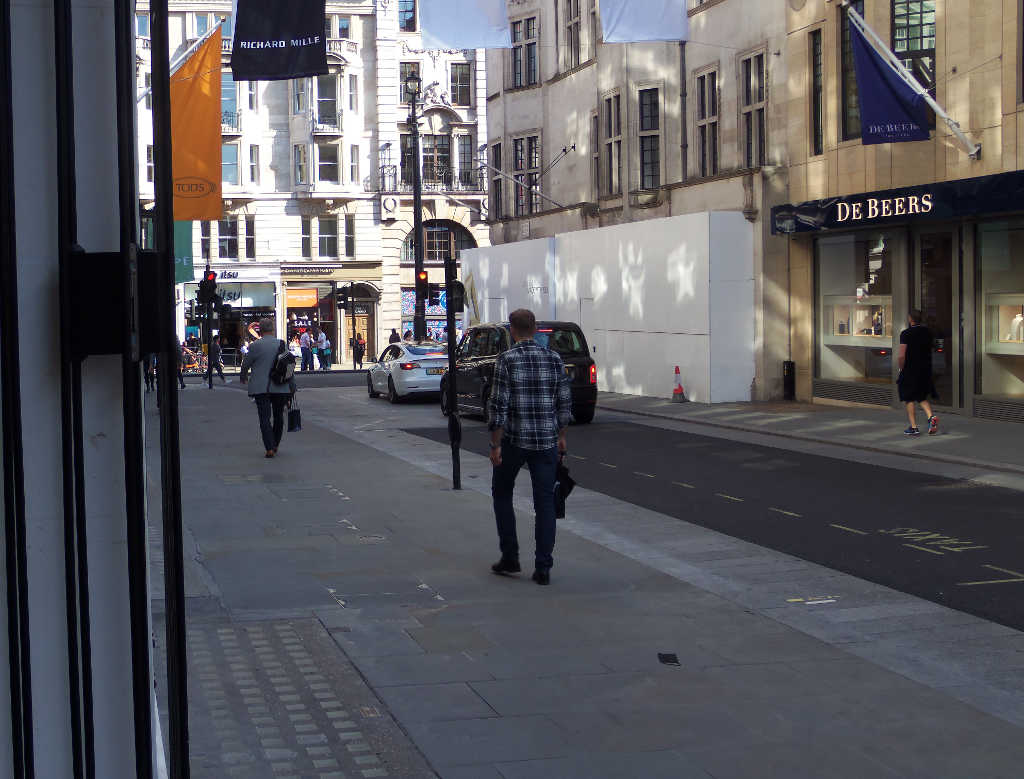
Wider pavements now.
- Capture 4
- 'Now' required
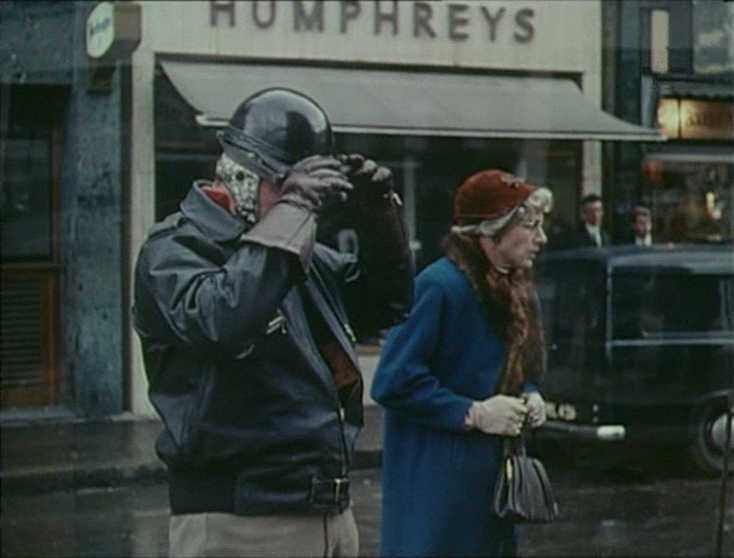
A man in motorcycle helmet and goggles approaches. This isn't the same place, and doesn't appear to be Bond Street at all.
- Capture 5
- 03 Aug 2023
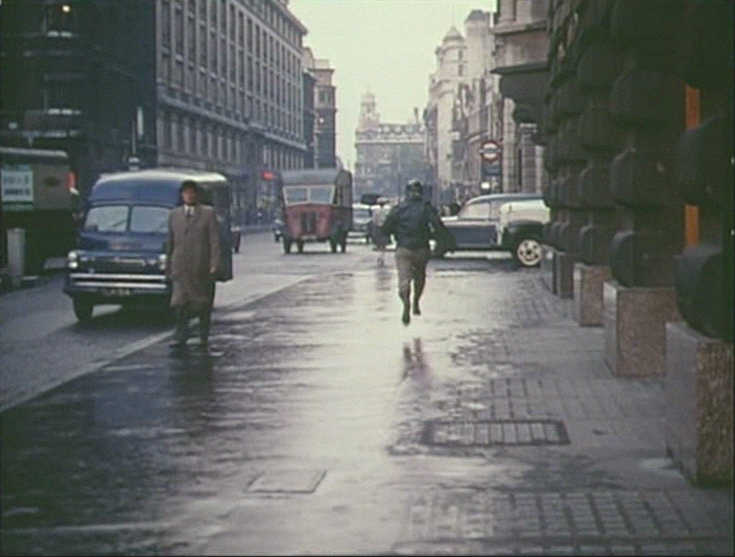
The man puts a brick through the jeweller's window and, empty handed, runs away. Richard Lovejoy spotted that this is Moorgate EC2. The distinctive frontage to the right is the London Metropolitan University building at 84 Moorgate. Moorgate tube station is barely identifiable to the left, and in the distance we can see buildings in Finsbury Place.

A crowded street scene today, with many new buildings. The distinctive columns of 84 Moorgate are still there, but covered by hoardings whilst major refurbishment is carried out.
- Capture 6
- 03 Aug 2023
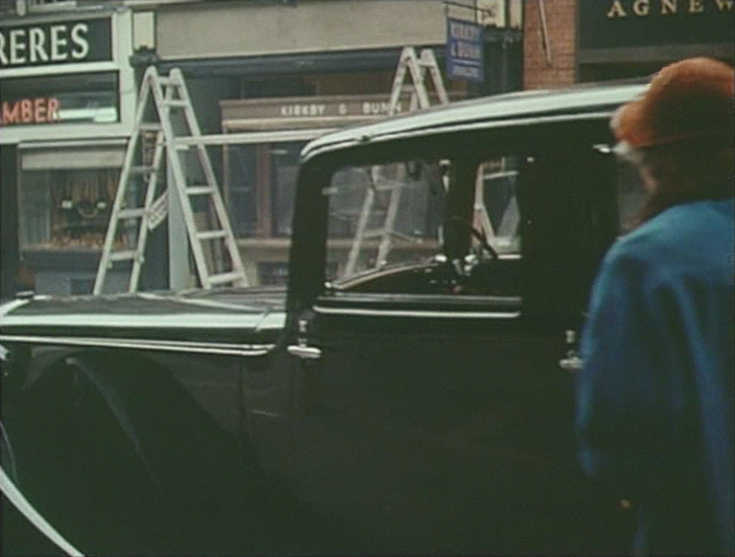
A car pulls up beside crook number 1, who has secreted a diamond bracelet in his handbag. We are back in Old Bond Street, looking across to Kirkby and Bunn at number 44.
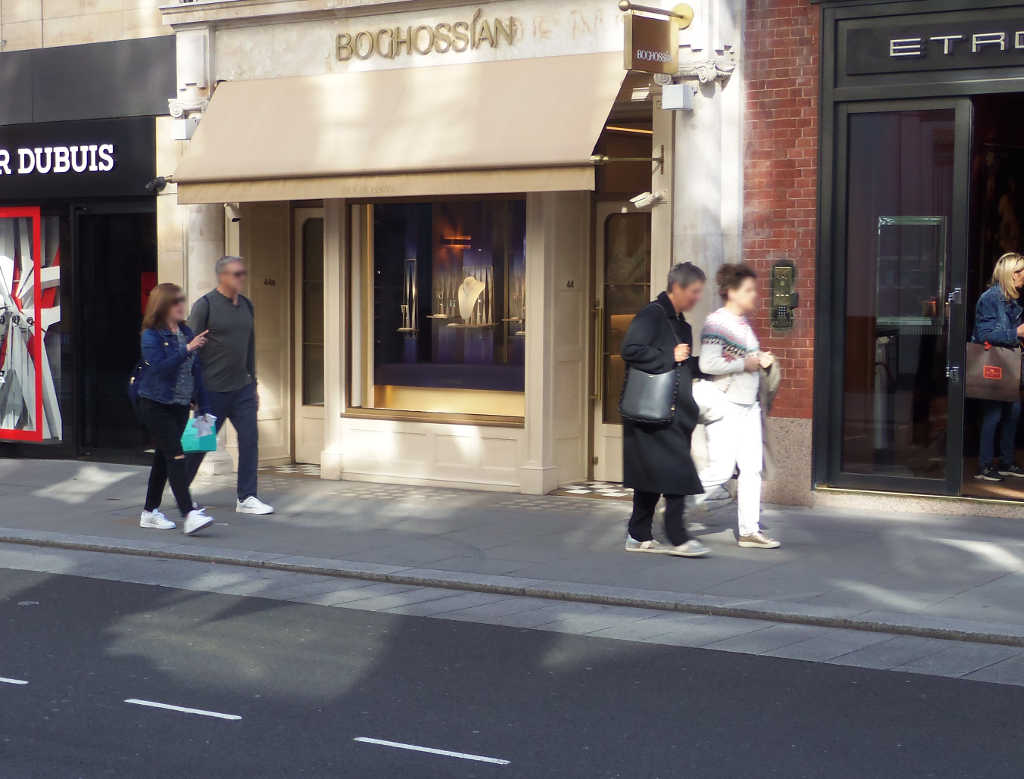
The businesses have changed, the shop fronts not so much.
- Capture 7
- 'Now' required
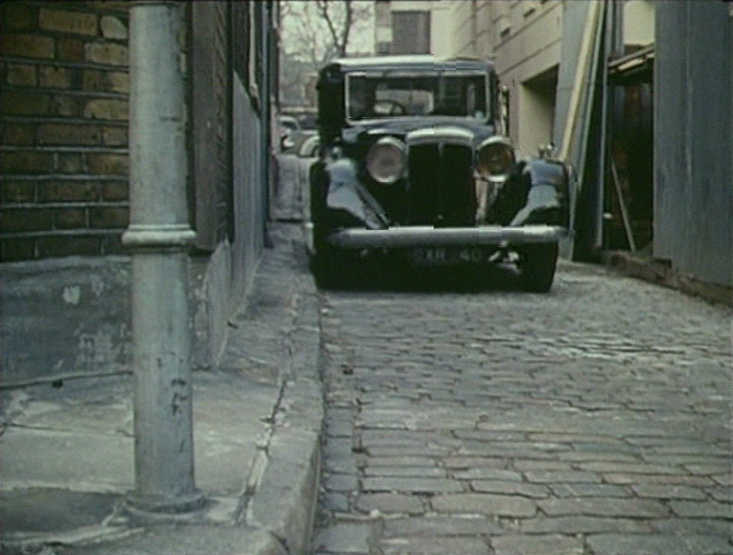
In the car, crook number 1 sheds his disguise. The car pulls into a narrow street, and the bracelet is passed to a man with a walking stick.
- Capture 8
- 'Now' required
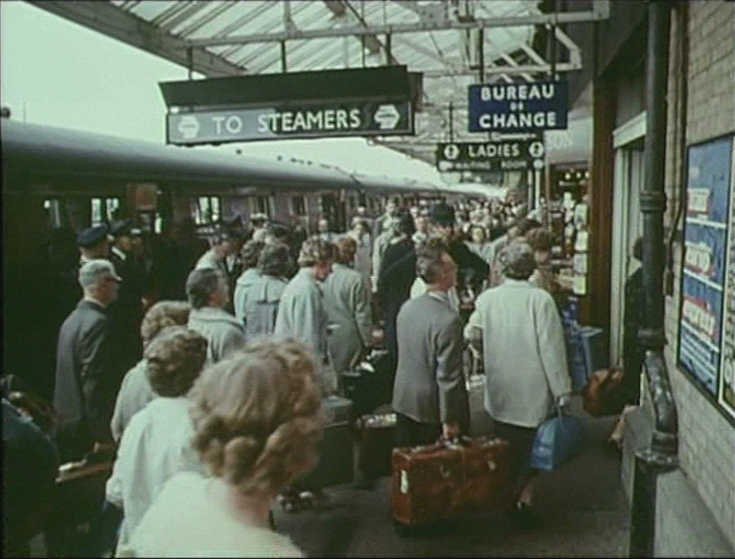
Passengers leave the train at Harwich, Essex, and head for the ferry.
- Capture 9
- 'Now' required
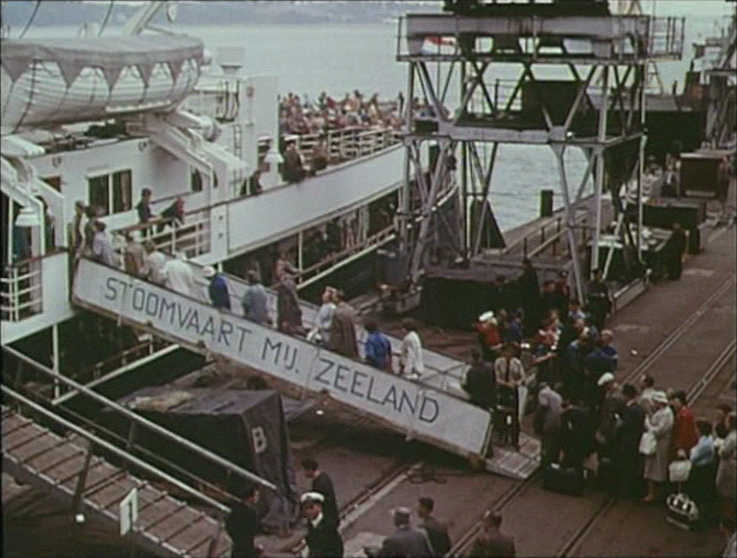
Passengers board the ferry.
- Capture 10
- 'Now' required
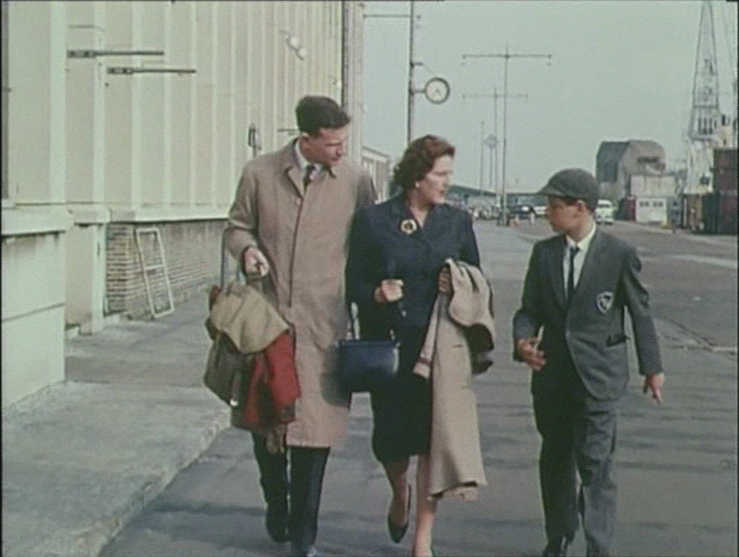
Tim Smith (Sean Scully), accompanied by his parents, has cleared customs and heads along the quay to the ferry.
- Capture 11
- 'Now' required
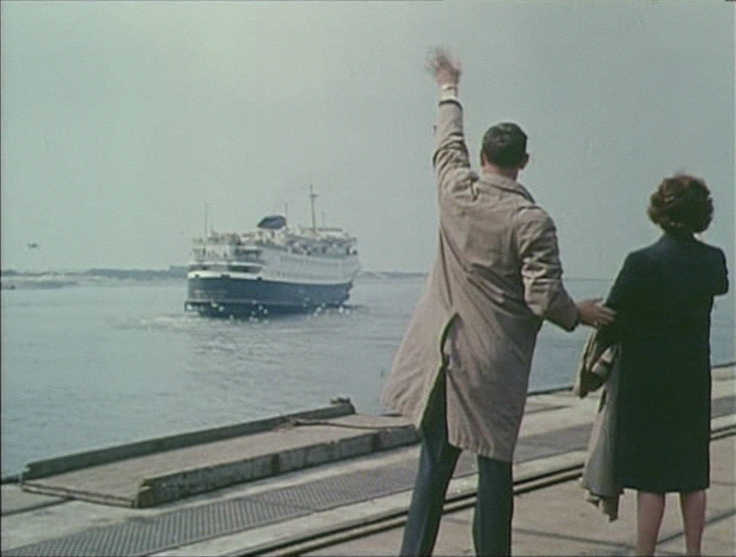
Tim's parents wave goodbye as the ship sails. The Koningin Wilhelmina was brand new at the time of filming. Built in 1960, she was used on the Harwich-Hook of Holland route from February 1960 until June 1978, when she was sold to the Ventouris Group. She was scrapped in 2001.
- Capture 12
- 'Now' required
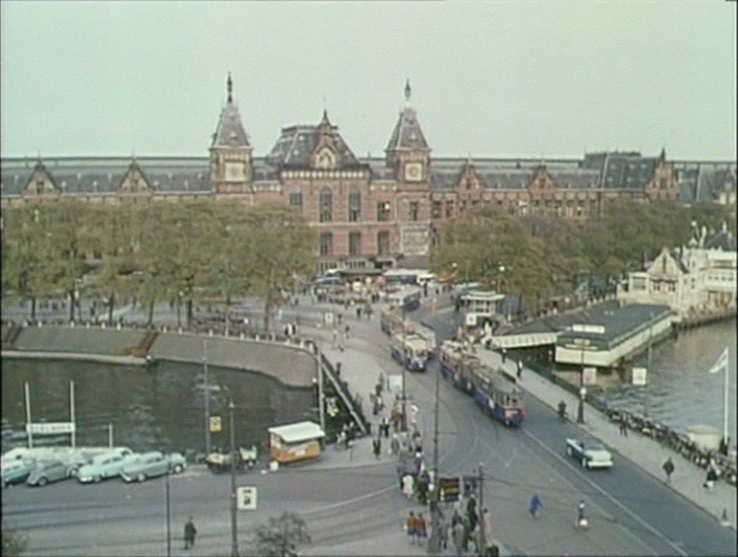
Centraal Station in Amsterdam, Noord Holland; a view of the facade from the southwest.
- Capture 13
- 'Now' required
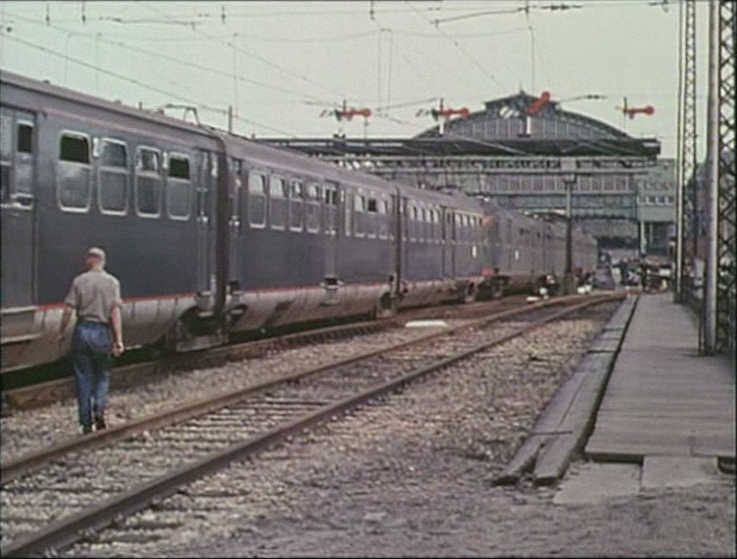
A train pulls into Amsterdam CS. Manuel Gurtner explains that here we see a 3-car electric multiple unit (EMU) of the NS series Mat '36 of the Nederlandse Spoorwegen (Dutch Railways), but the Jacobs bogies prove that this EMU was originally built as 2-car unit (No. 211 – 263) that was later extended.
- Capture 14
- 'Now' required
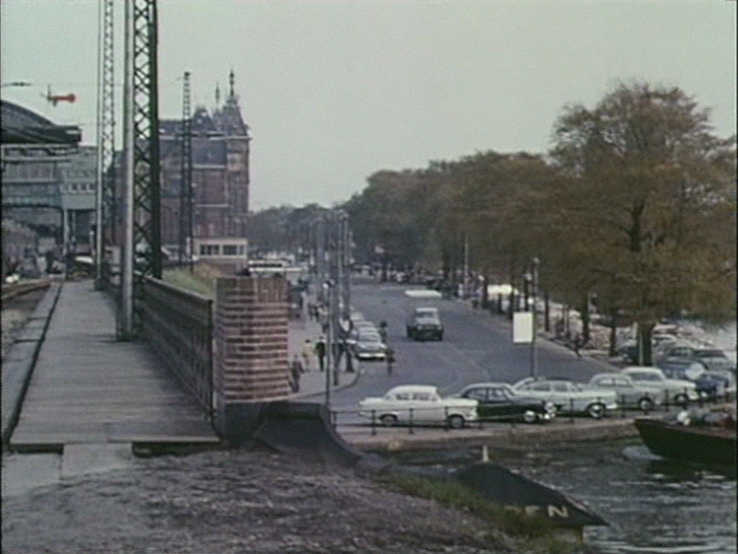
The camera pans from the train to a view of Stationsplein...
- Capture 15
- 'Now' required
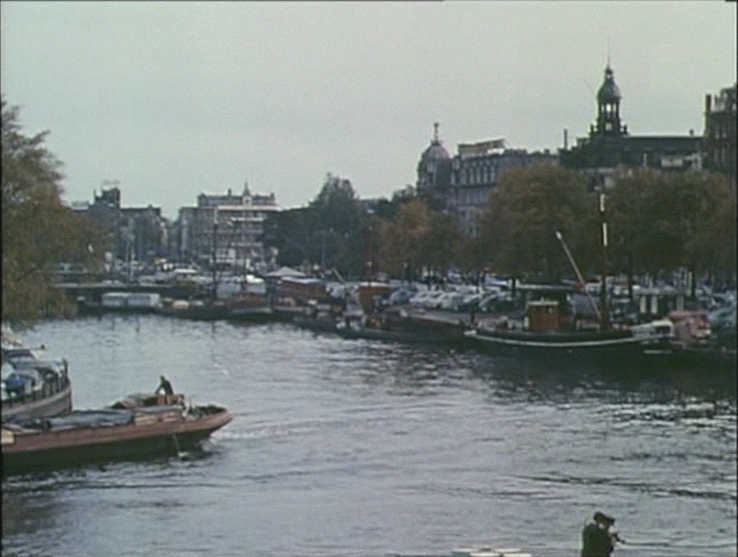
...and further to Prins Hendrikkade.
- Capture 16
- 'Now' required
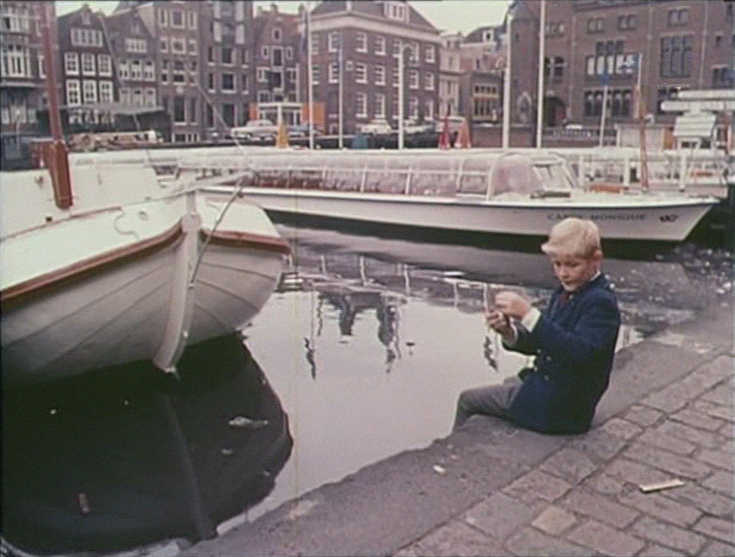
Tim's pen friend Piet van Helder (Jacques Verbrugge) is fishing from the quay at Damrak. Behind him is the Beurs van Berlage.
- Capture 17
- 'Now' required
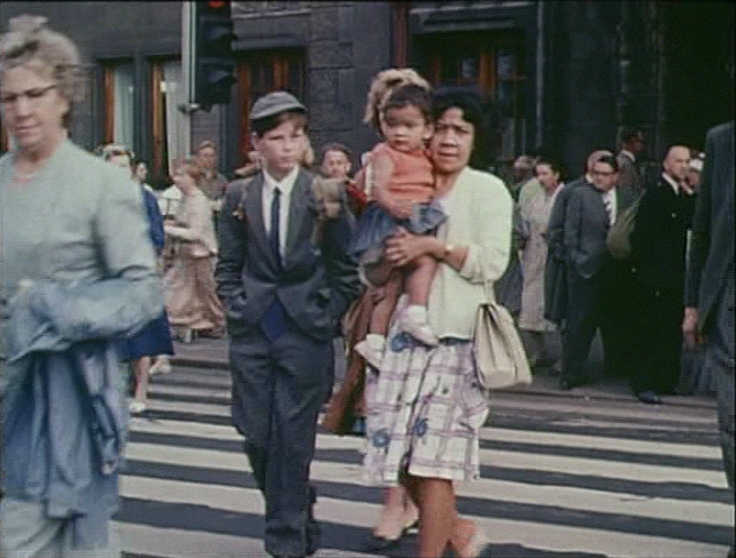
Tim crosses a road. This appears to be the west entrance to the station.
- Capture 18
- 'Now' required
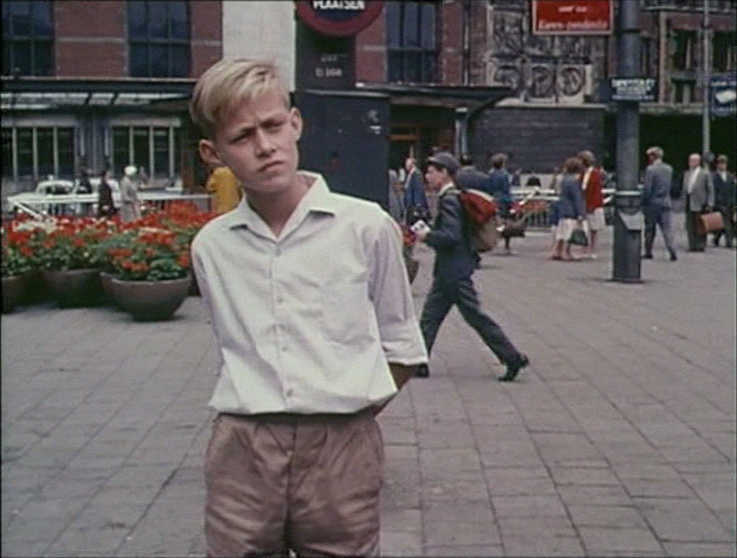
He starts to look for Piet. Stationsplein.
- Capture 19
- 'Now' required
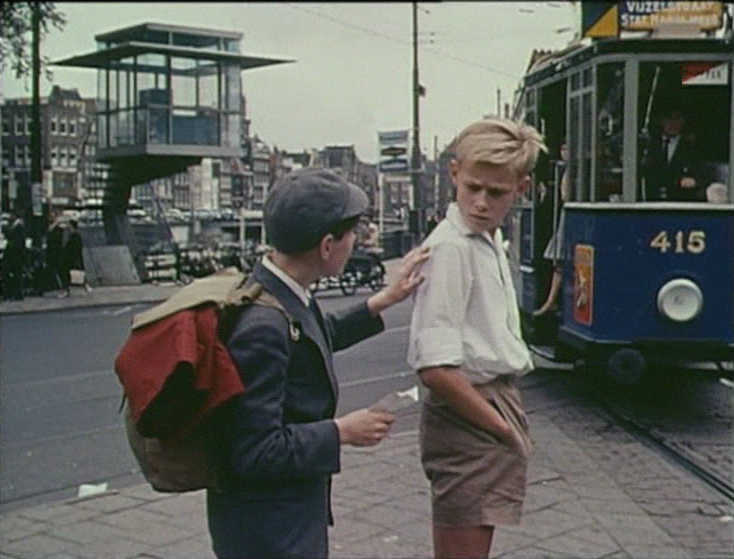
He taps a boy on the shoulder only to find he's not Piet. View southeast from around the northern end of Damrak. The structure on the left was a control booth for tram signalling, popularly known as 'De Duiventil' (the dovecote). It was removed in 1982.
- Capture 20
- 'Now' required
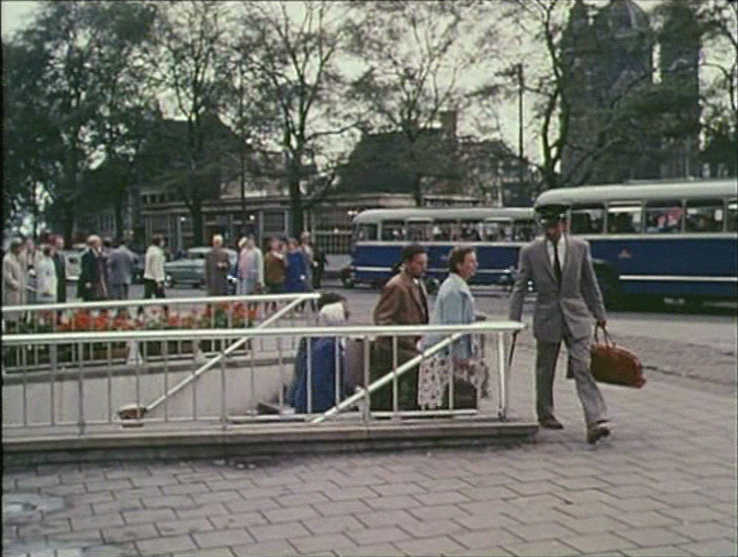
A tour guide (Walter Randall) comes up from the station entrance. Top right is the church of St Nicolaas, and central in the background is the Noord-Zuid Hollandsch Koffiehuis, in its original location. The Koffiehuis was dismantled in 1972 to make way for the construction of the Metro, and was re-erected in its present location in 1980.
- Capture 21
- 'Now' required
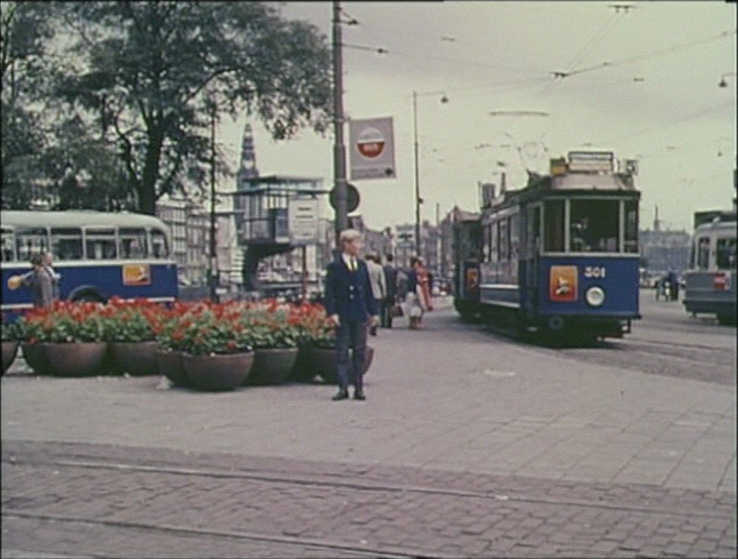
Piet looks for Tim. A wider view from roughly the same place as capture 19, with the tower of the Oude Kerk visible in the background.
- Capture 22
- 'Now' required
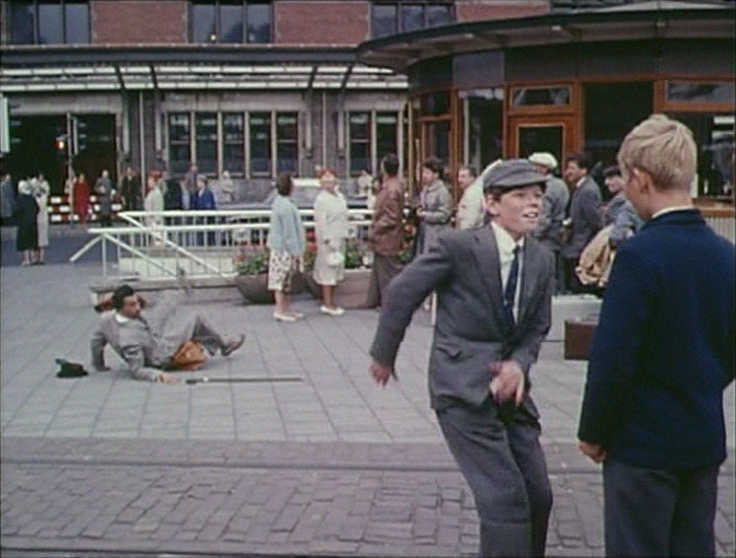
Tim spots Piet and rushes over, accidentally knocking over the tour guide. Behind we can see what today is the main entrance to the station. The round building on the right, built in 1955, formed part of the earlier station entrance; the steps connected to the main station hall via a pedestrian tunnel. Building, steps and tunnel disappeared in the early 1970s to make way for the Metro.
- Capture 23
- 'Now' required
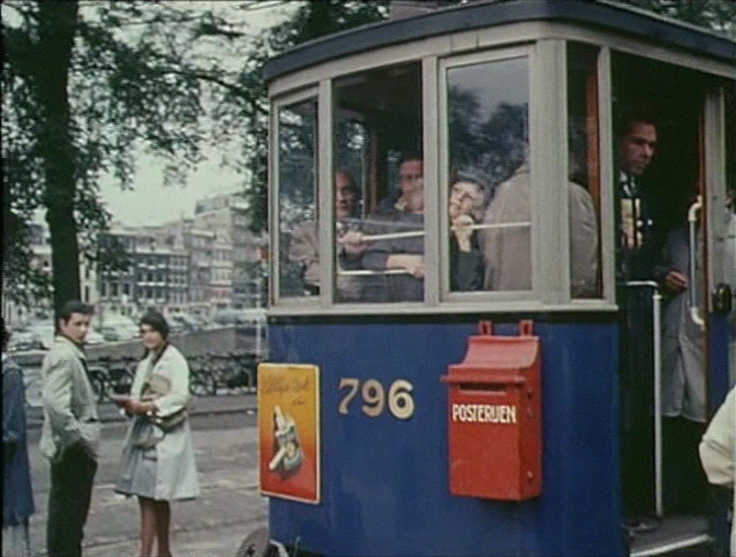
The boys board a tram in front of the station. To the left Prins Hendrikkade 26 to 21 are visible. Thanks to www.traminfo.nl, we know that tram trailer number 796 was in service between 1918 and 1967.
- Capture 24
- 'Now' required
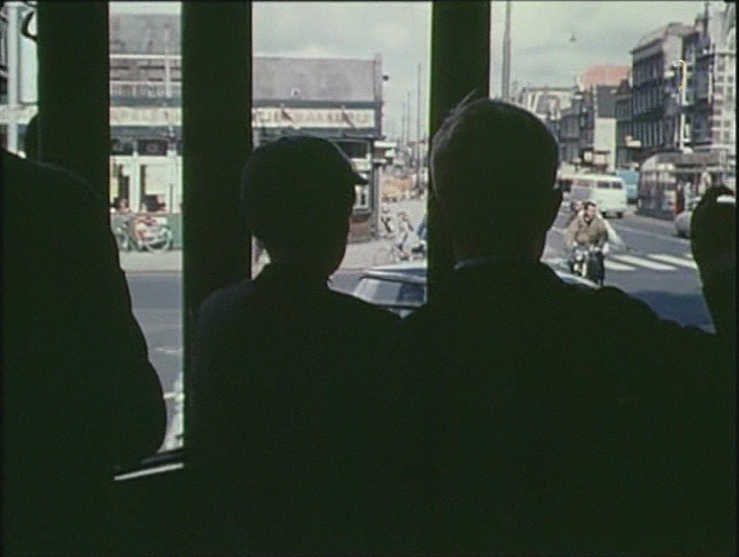
The boys look out on Amsterdam's streets from the back of the tram. Continuity won't help here -- this is a view into Vijzelgracht from the corner with Weteringschans. The poffertjes bakery on the left was demolished in March 1961, and everything else has gone except the house at Vijzelgracht 63, visible on the extreme right.
- Capture 25
- 'Now' required
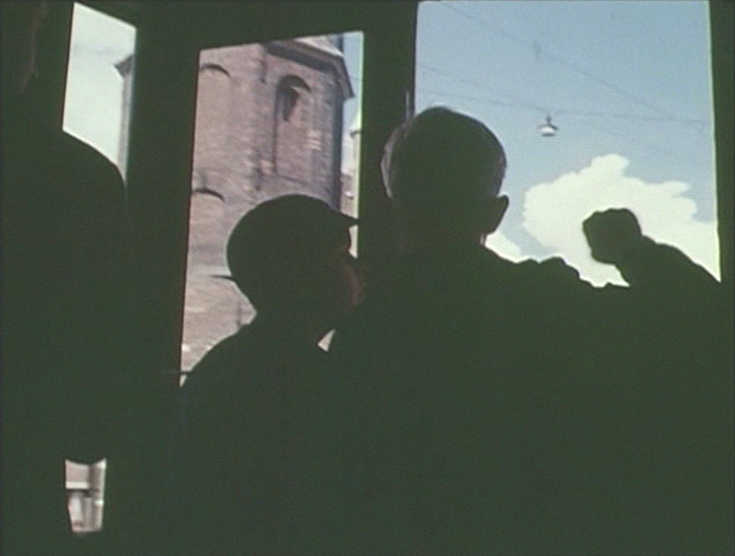
They pass the Munttoren.
- Capture 26
- 'Now' required
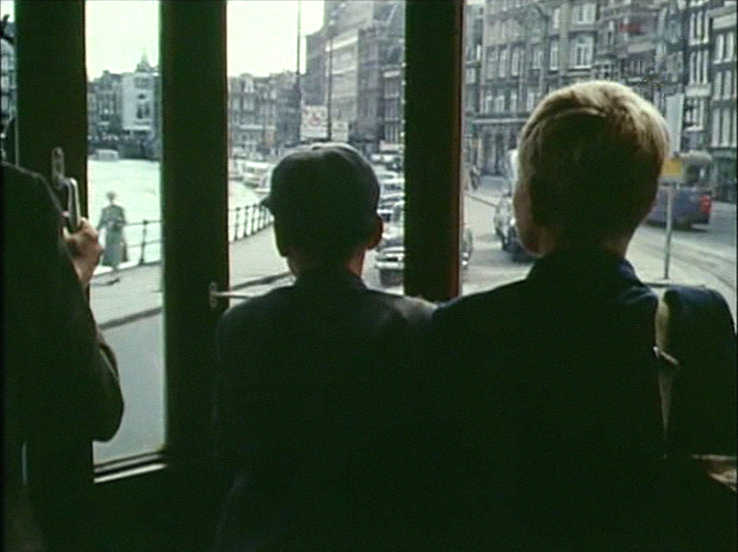
Rokin, seen from the junction with Langebrugsteeg.
- Capture 27
- 'Now' required
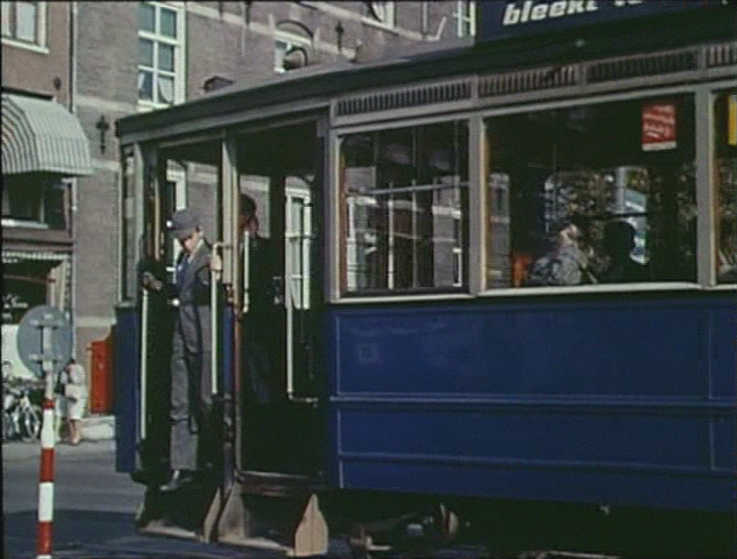
They get off another tram at the bridge where Utrechtsestraat crosses Keizersgracht, with a view of what is now the Hotel Armada behind. John Le Mesurier saluted here in 'Operation Amsterdam'.
- Capture 28
- 'Now' required
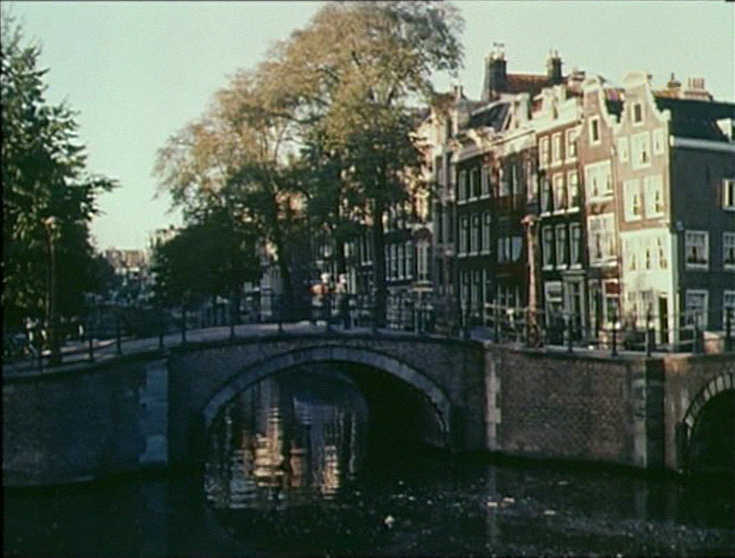
After a short walk they arrive at another bridge. This is bridge number 39 over Reguliersgracht, seen from the south side of Keizersgracht.
- Capture 29
- 'Now' required
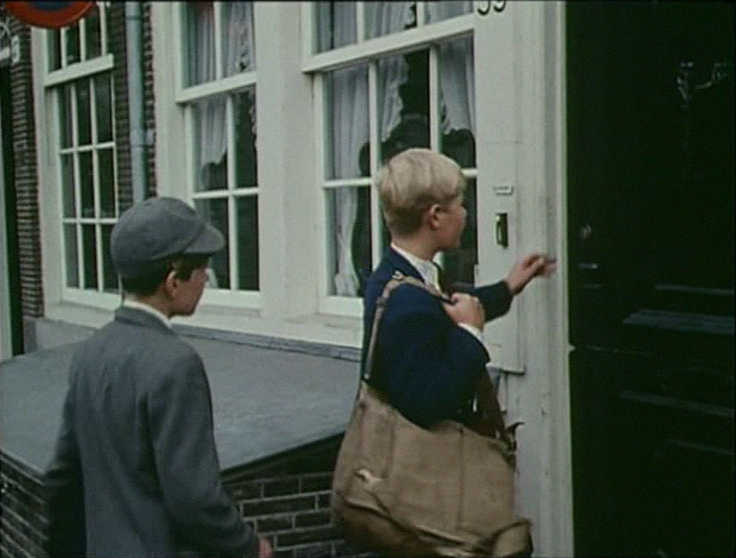
Piet leads Tim to the door of Reguliersgracht 39.
- Capture 30
- 'Now' required
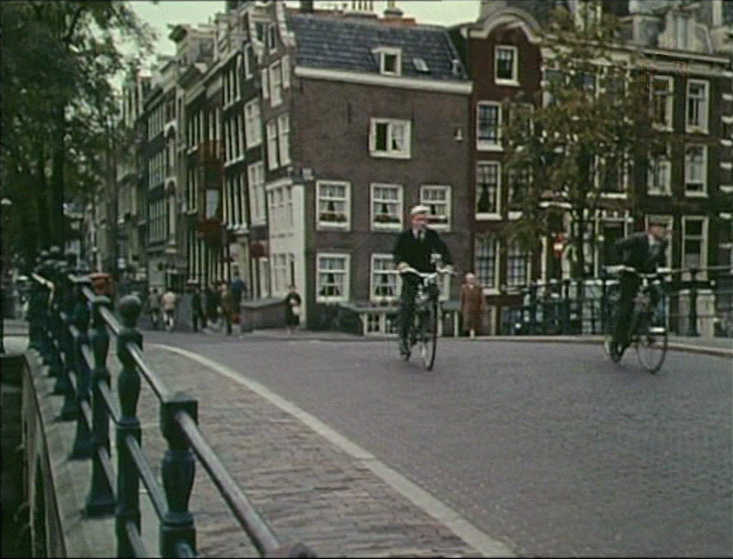
The boys set off on bicycles over bridge number 38, then officially known as Oetgenssluis.
- Capture 31
- 'Now' required
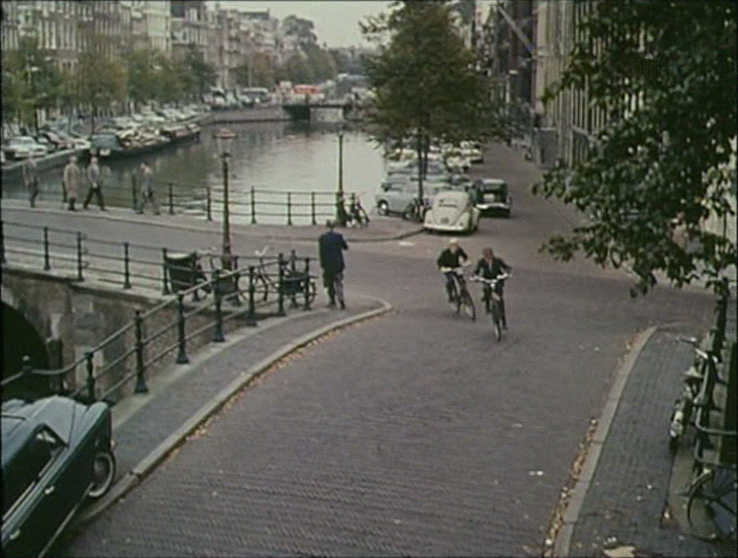
As they turn onto bridge number 40, we have a view back along Keizersgracht to the bridge at Utrechtsetraat.
- Capture 32
- 'Now' required
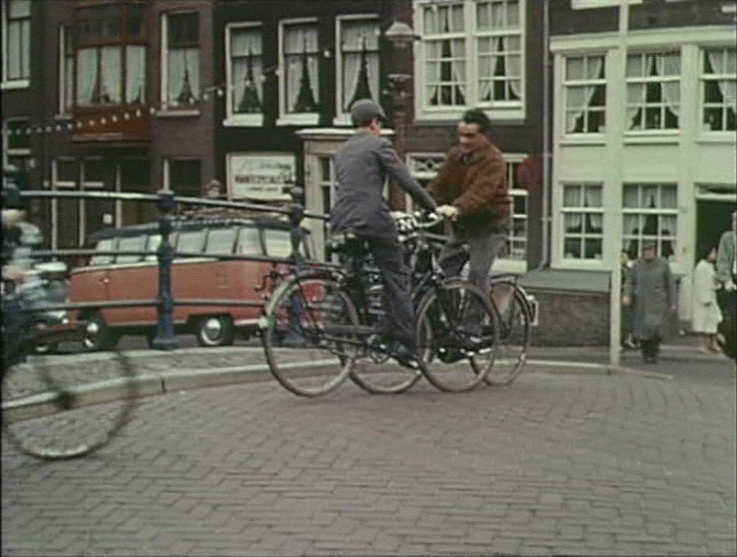
On the wrong side of the road, Tim collides with another cyclist. The boys are back on Bridge 39 again, with Reguliersgracht 39 in the background.
- Capture 33
- 'Now' required
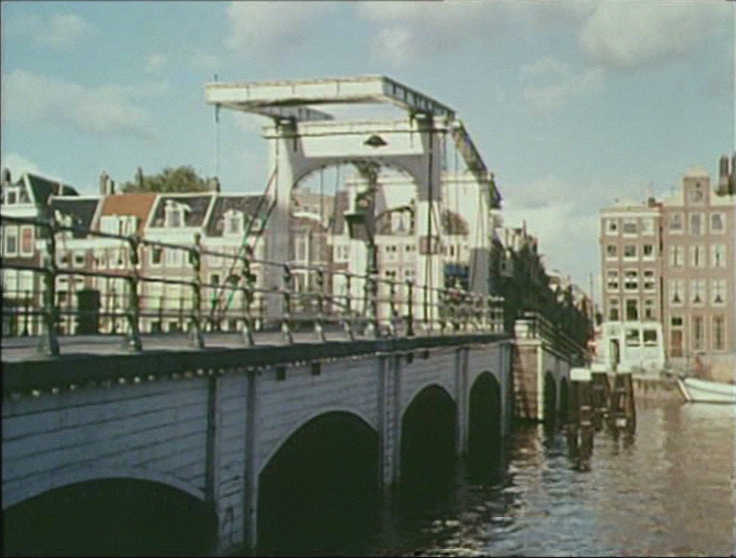
Naturally, they have to include the Magere Brug across the Amstel in their tour. A view west in this case toward Nieuwe Kerkstraat.
- Capture 34
- 'Now' required
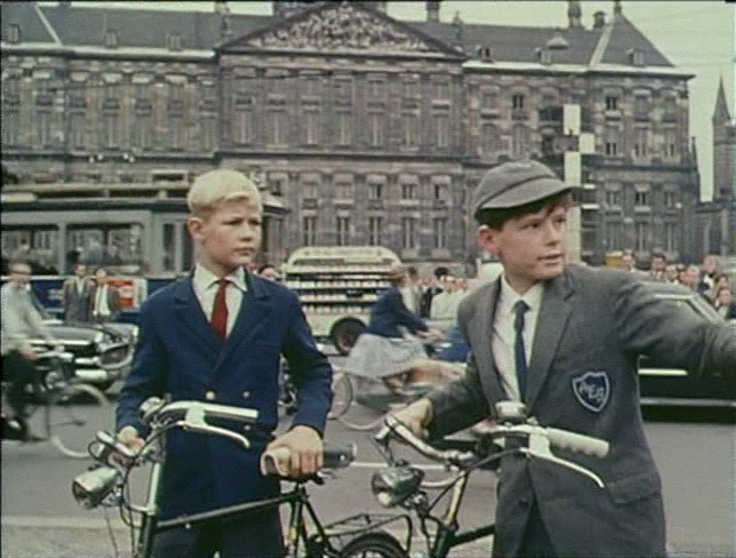
The Royal Palace.
- Capture 35
- 'Now' required
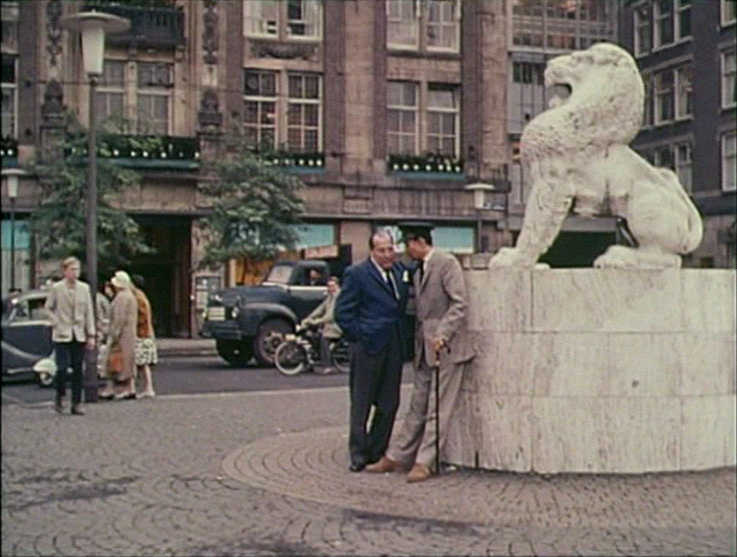
They spot the tour guide talking to a known local villain (John Soer). Dam Square, with De Bijenkorf in the background. Jan Willem Rädecker's stone lion forms part of the National Monument, and dates from 1956.
- Capture 36
- 'Now' required
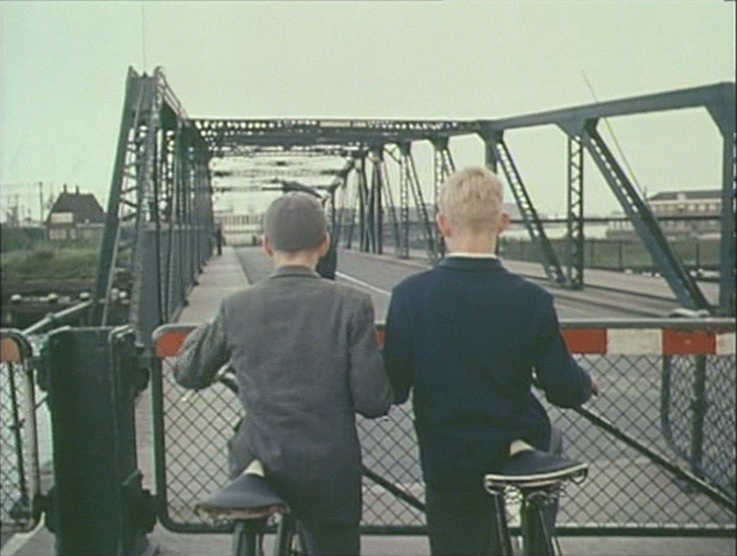
They wait to cross a swing bridge. This was the Havenmeestersbrug, between Oosterdokskade and Dijksgracht. Originally a pedestrian bridge, it was rebuilt in 1907 in the form seen here. It was closed around 1970 when bridge number 485, north of the railway on the banks of the IJ, was opened. The turntable base can still be seen just south of the new Oosterdoksdraaibrug, a pedestrian swing bridge opened in 2005. The old naval buildings in Kattenburgerstraat are visible on the right of the shot.
- Capture 37
- 'Now' required
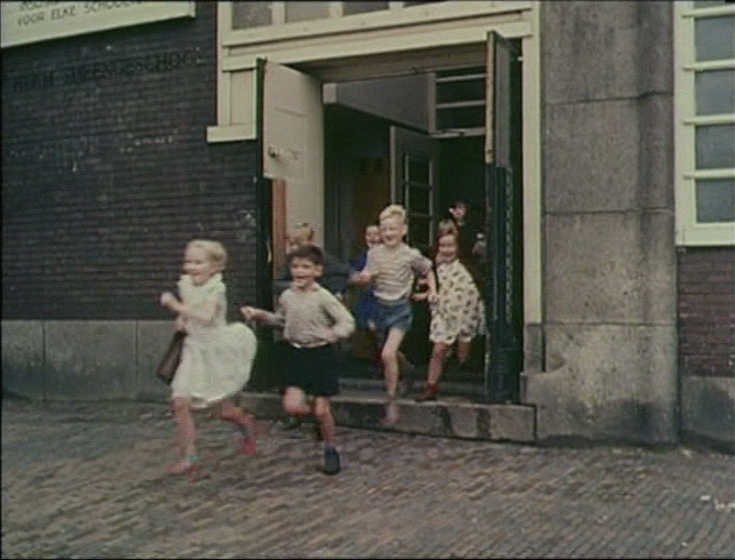
School's out! Mr Harm Smeengeschool, Droogbak 1c. Built in 1924-5 in, appropriately, the Amsterdam school of architecture, the school building is now a registered monument. Today the building houses the Rainbow Group, who provide social assistance for homeless and drug-addicted people.
- Capture 38
- 'Now' required
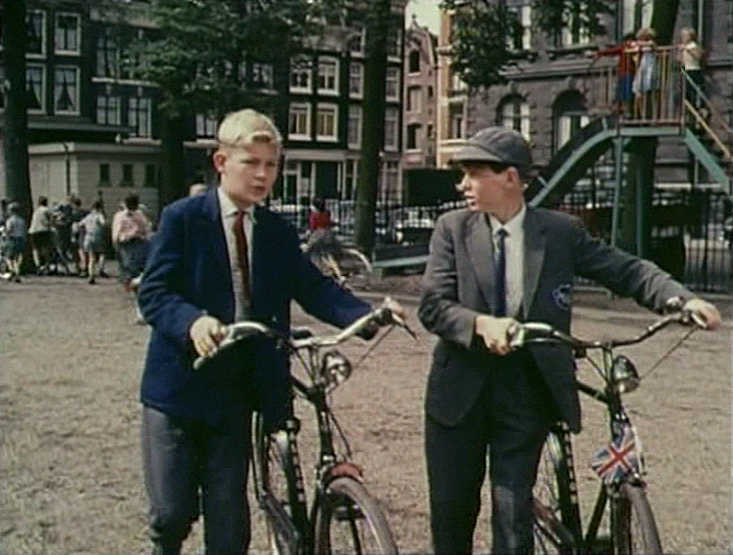
Tim and Piet wait for Piet's sister. The view away from the school to houses in Droogbak on the left and the Ministry of Labour building on the right.
- Capture 39
- 'Now' required
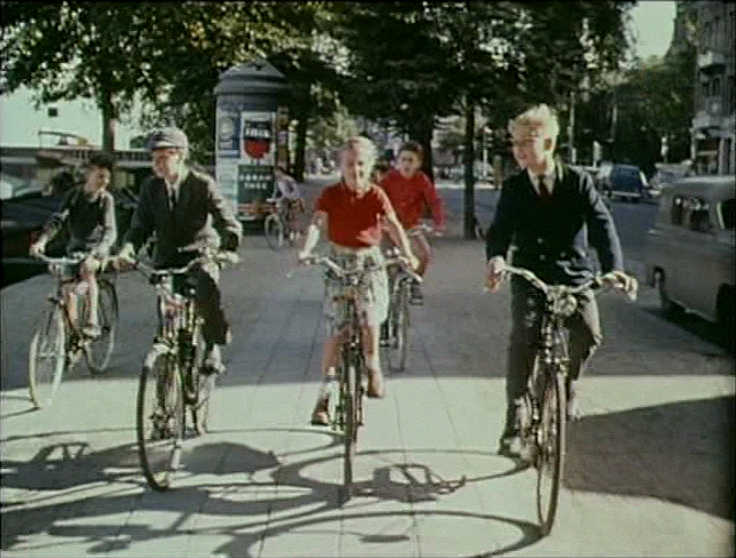
Tim and Piet, with Piet's sister Annike (Sandra Scully) between them, ride along Amsteldijk on the west bank of the river Amstel, just north of the Nieuwe Amstelbrug.
- Capture 40
- 'Now' required
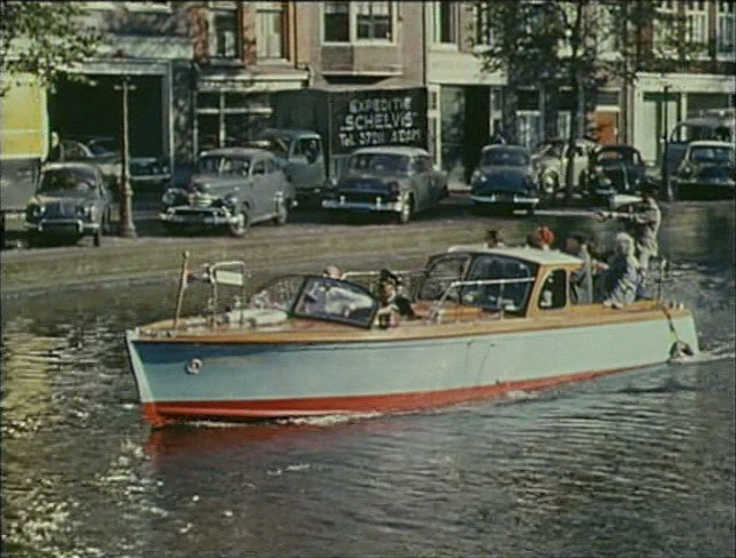
Looking across, they see the tour guide again, talking a party through a canal tour. This isn't a view across the Amstel, though. A view east across Prinsengracht, with numbers 645 to 653 in view. Numbers 647 to 651 have since been demolished, and the current view features a block built in 1981.
- Capture 41
- 'Now' required
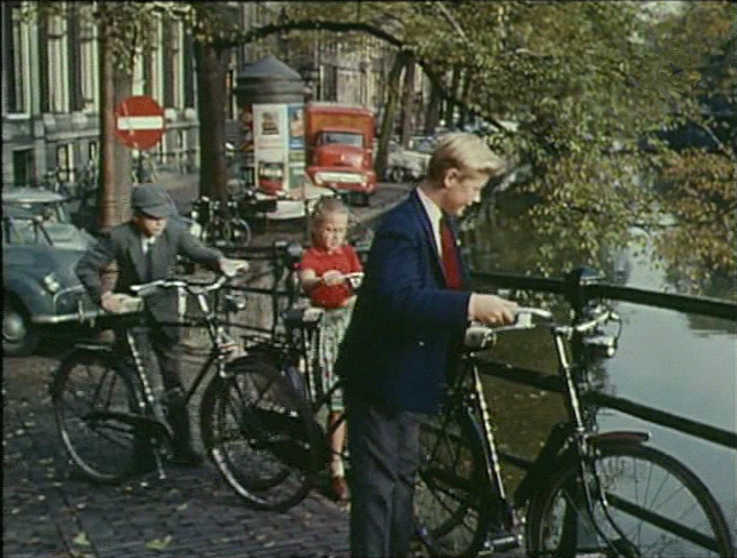
The children park their bikes. I'd have expected this to be Keizersgracht and Reguliersgracht again, but there's a 'pepper pot' transformer housing behind them. They appear to be on bridge number 48, which carries Berenstraat across Keizersgracht, and we are looking north. Bridge 48 today has railings that don't match the screen grab, but the bridge was rebuilt in 1980, and the older bridge had the 3-bar railings seen in the film.
- Capture 42
- 'Now' required
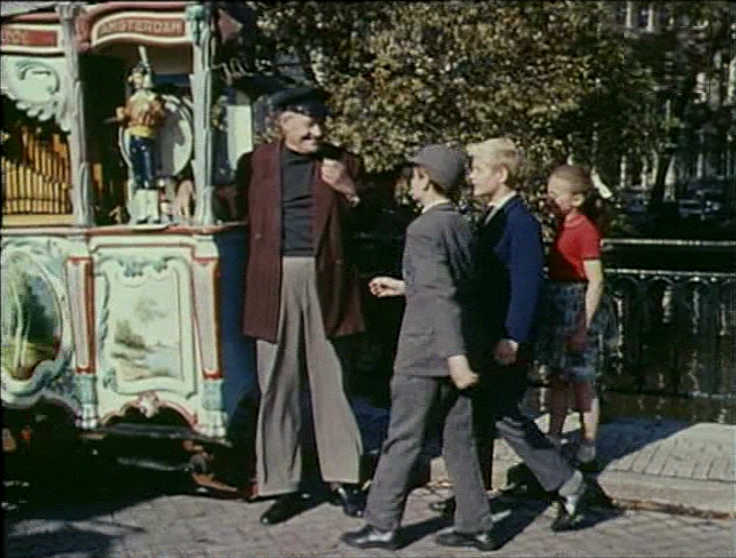
They walk across what is clearly a different bridge to meet Piet's grandfather (Jean Lemaire) at the pierement. This is bridge 46, then known as Quellijnbrug, across Keizersgracht at Leidsegracht.
- Capture 43
- 'Now' required
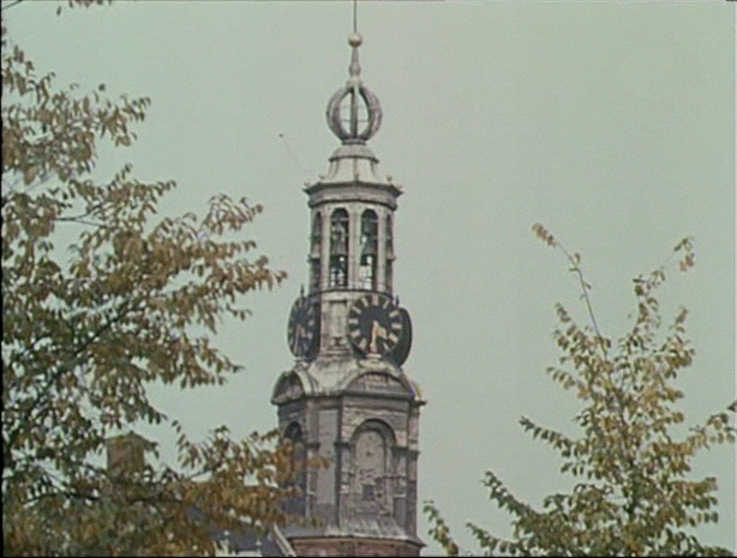
A glimpse of the top of the Munttoren.
- Capture 44
- 'Now' required
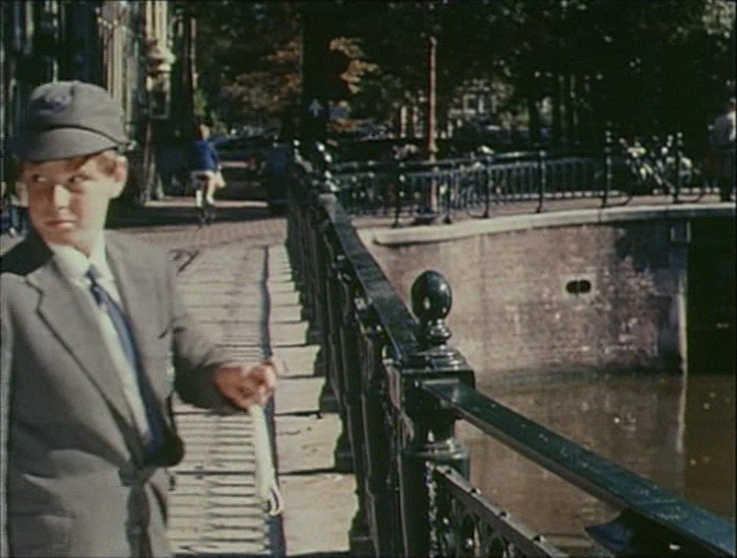
Whilst the others are distracted, Tim surreptitiously disposes of the herring he's been given. A view along the west side of Leidsegracht from Keizersgracht. We can see the distinctive windows of Leidsegracht 16 just above and to the right of Tim's head. On the right of the shot we can see bridge number 44, then known as the Hemonybrug. Like the other two bridges at this crossing, bridge 44 was originally an arch bridge, but was replaced with the concrete slab bridge seen here at the end of the 19th century, after the centre arch of bridge 46 collapsed into the canal. All three bridges were then rebuilt as arch bridges in 1978.
- Capture 45
- 'Now' required
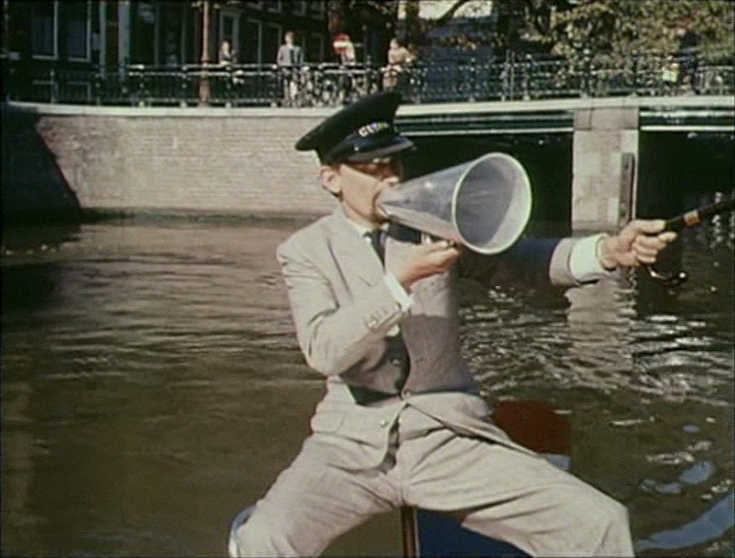
As Tim is about to drop the herring, the tour guide is approaching. Continuity is a bit random at times in this film, but we do seem to be looking at the south side of bridge 46, with a view of Keizersgracht 454 to 462 behind.
- Capture 46
- 'Now' required
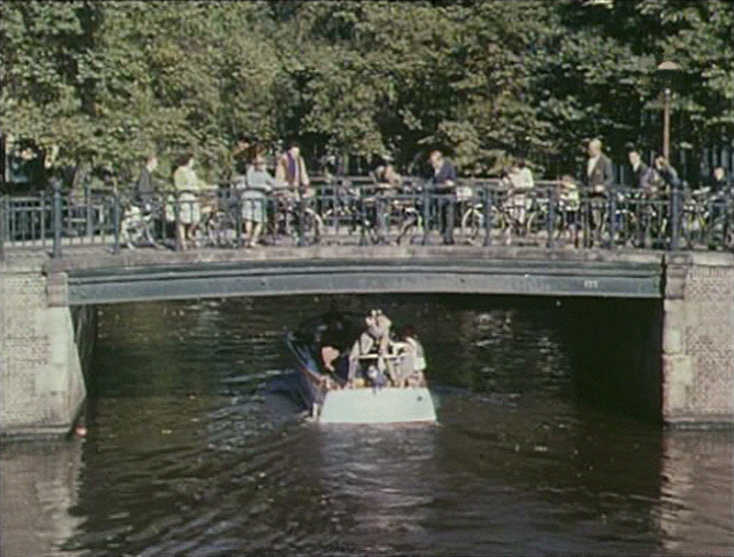
Tim's discarded herring fell into the tour guide's voice cone. As he disappears, shaking his fist, under another bridge, we can just make out that this is bridge 122 over Leidsegracht at Prinsengracht.
- Capture 47
- 'Now' required
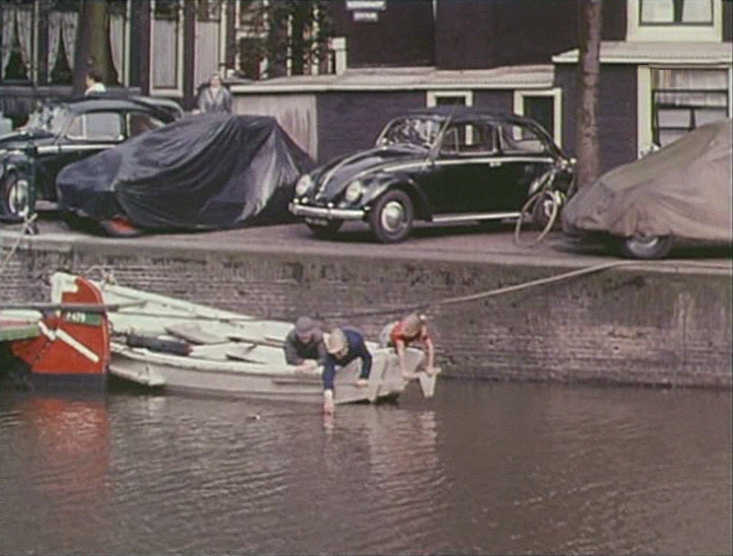
The tour guide dropped his cane; the children fish it out of the canal. A view north across Keizersgracht to number 421, with Leidsegracht 20-24 on the left of the shot.
- Capture 48
- 'Now' required
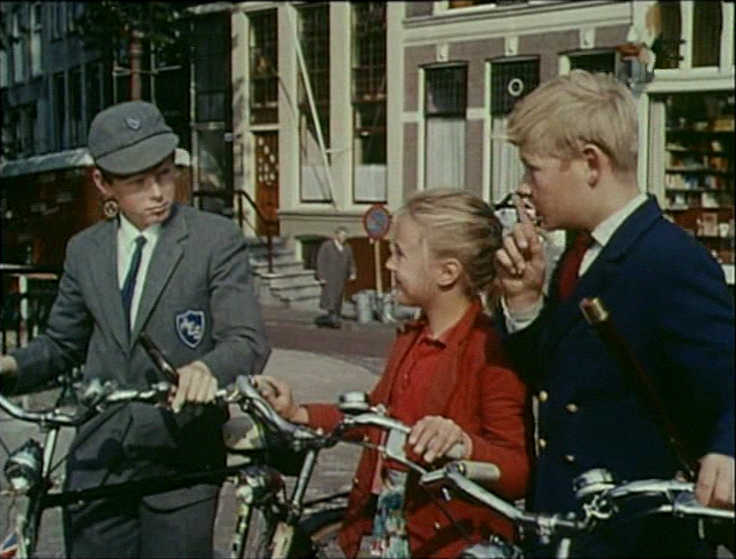
The children have recovered the stick, and inside it they've found the diamond bracelet from the robbery. They decide to keep it secret. Keizersgracht 417 behind them.
- Capture 49
- 'Now' required
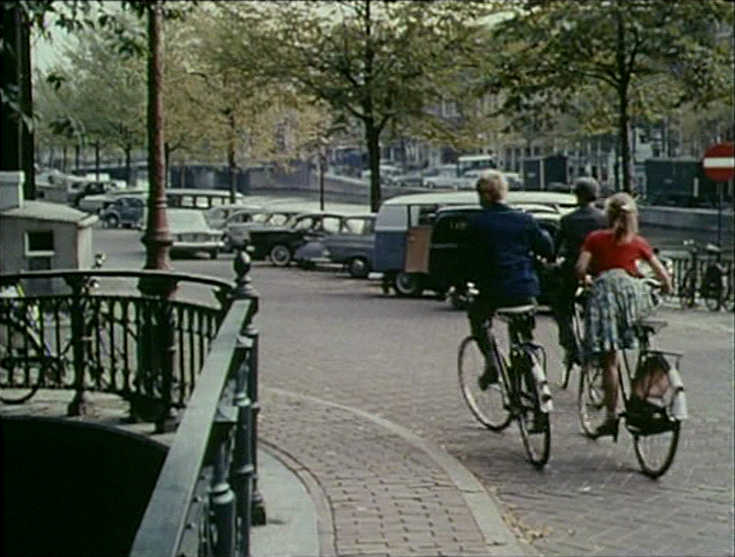
They ride away south on Keizersgracht from Leidsegracht.
- Capture 50
- 'Now' required

The tour guide found his stick, now empty, at Leidsegracht; he turns to see the children and their grandfather walking away east along Keizersgracht at the junction with Reguliersgracht.
- Capture 51
- 'Now' required
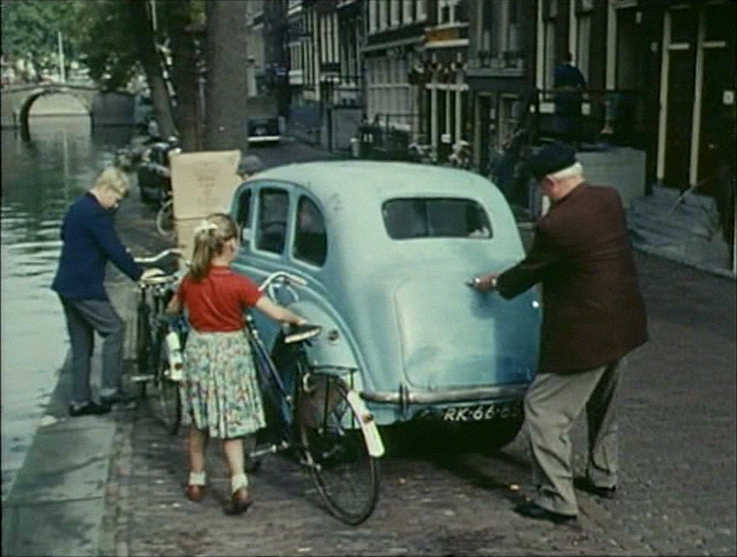
Grandfather enlists the help of the children to wash his car. A view north along Reguliersgracht with bridge 31, Tante Saarbrug, in Herengracht in the background on the right.
- Capture 52
- 'Now' required
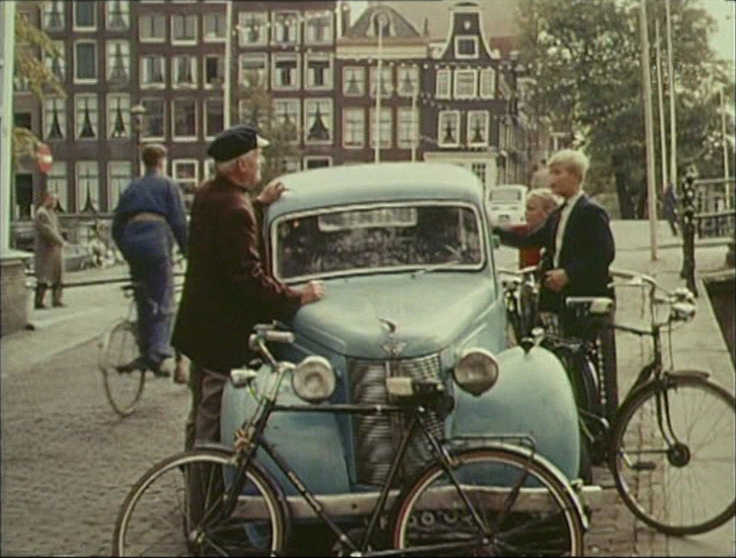
Opposite view to capture 50, the view south on Reguliersgracht, with Keizersgracht 716 to 724 in the background.
- Capture 53
- 'Now' required
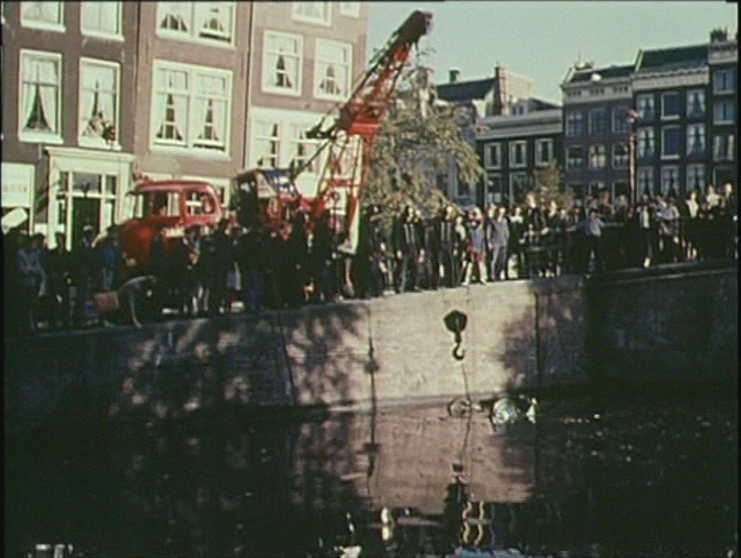
The following day. Overnight, the villains have taken revenge by pushing Grandpa's car into the canal. A crane hoists it out. View east across Reguliersgracht.
- Capture 54
- 'Now' required
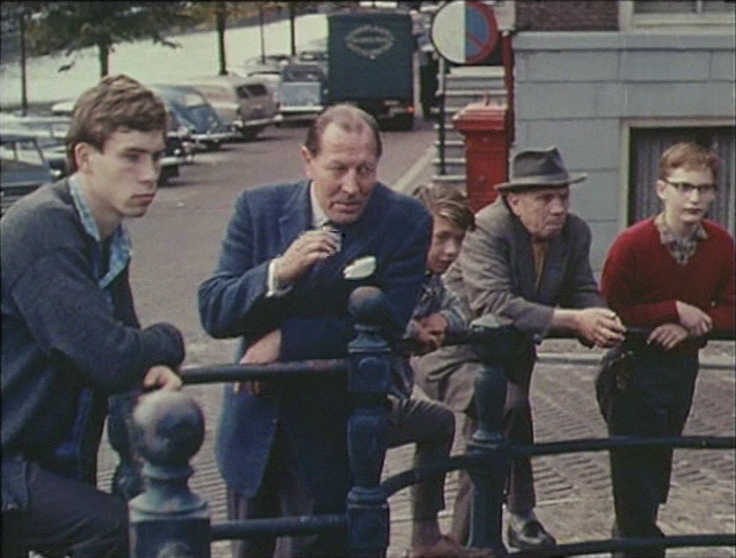
The Man in Blue watches in satisfaction from the other side of Reguliersgracht, outside number 38.
- Capture 55
- 'Now' required
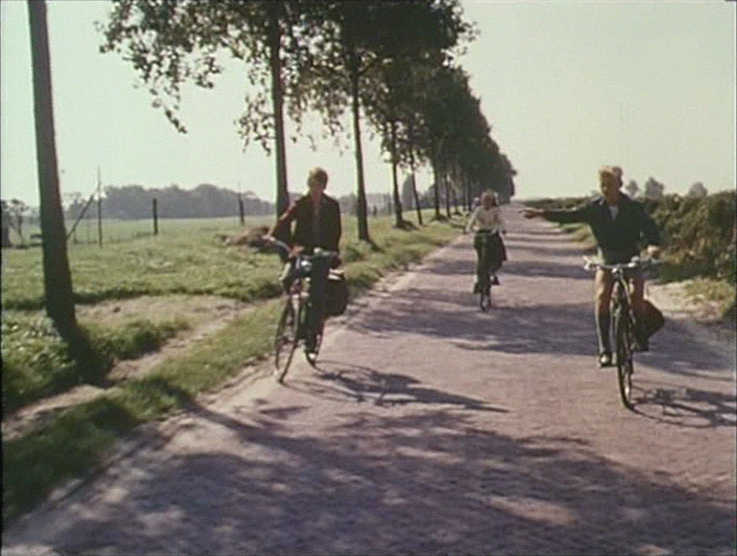
The children decide to take the bracelet to Piet's uncle in Alkmaar. They have cycled out of Amsterdam and are soon in open country.
- Capture 56
- 'Now' required
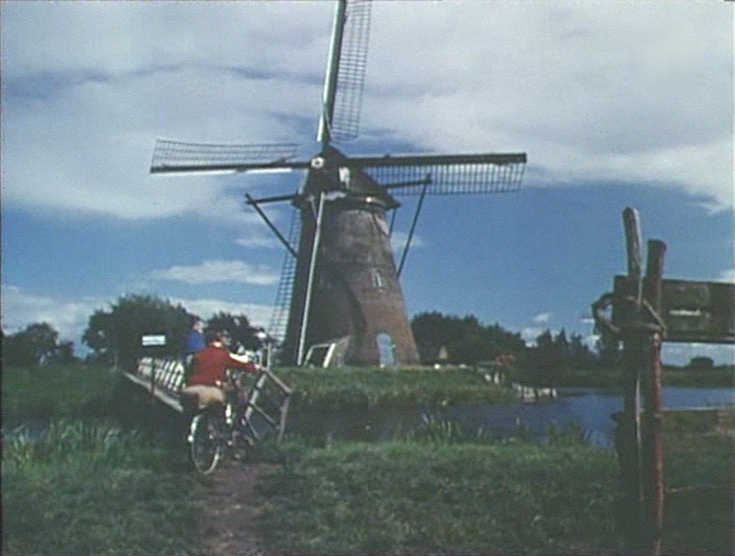
Dusk is gathering as they reach a windmill. Kinderdijk, Zuid-Holland; the bridge pins this down as Nederwaard windmill number 5.
- Capture 57
- 'Now' required
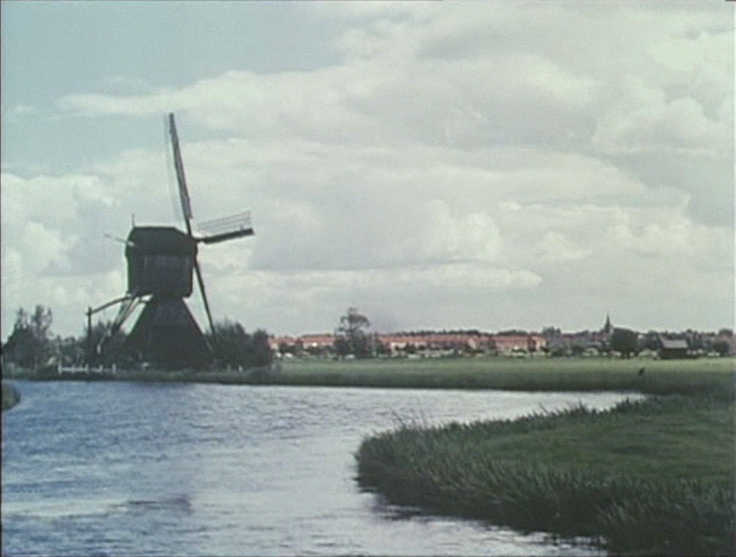
Nearby is another mill; this is the museum mill 'De Blokker', seen from the northwest. The spire of the Grote Kerk in Alblasserdam can be seen on the right, suggesting that this view is actually from the vicinity of Overwaard windmill number 4. De Blokker was burnt down in 1997 and rebuilt.
- Capture 58
- 'Now' required
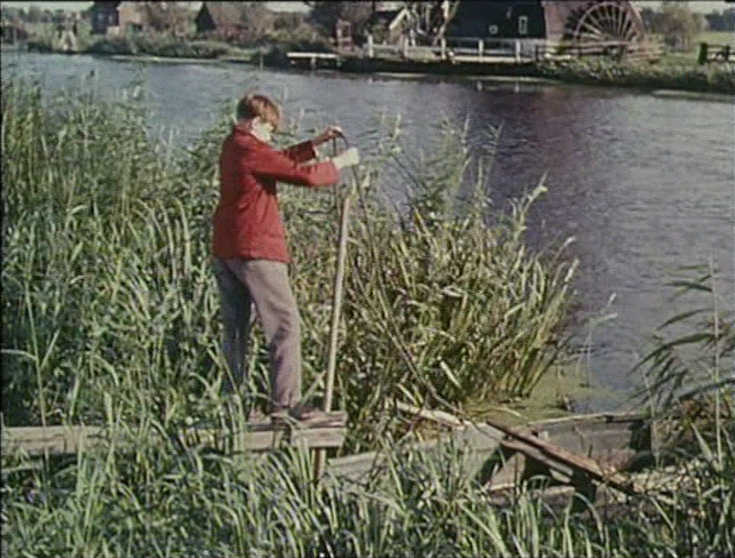
The next day, Tim sets off in a boat to buy provisions. De Blokker is in the background.
- Capture 59
- 'Now' required
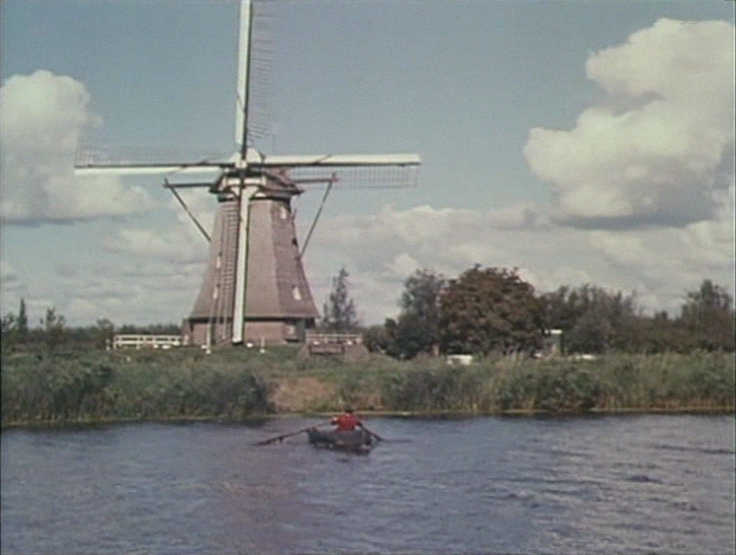
As he pulls away from the bank, instead of the earlier round mill we see an octagonal one; this is Overwaard windmill number 4.
- Capture 60
- 'Now' required
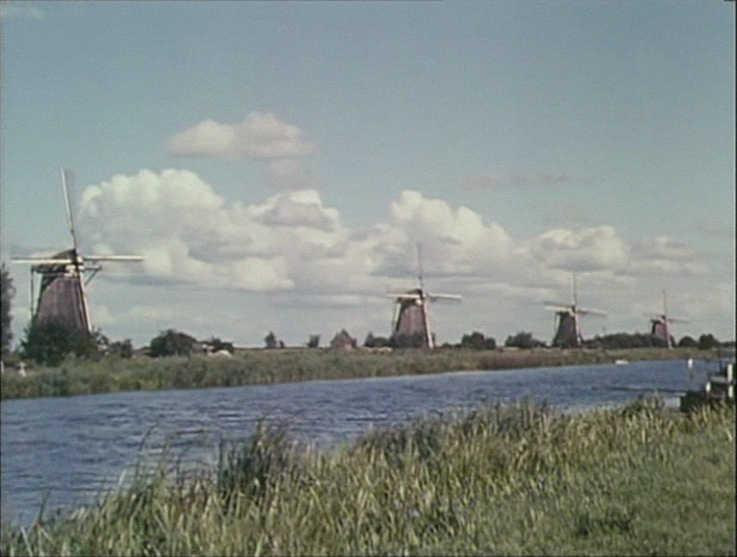
The camera pulls back to reveal a whole row of windmills. Overwaard 4 is now out of shot to the left, and here are Overwaard windmills 5,6,7 and 8.
- Capture 61
- 'Now' required
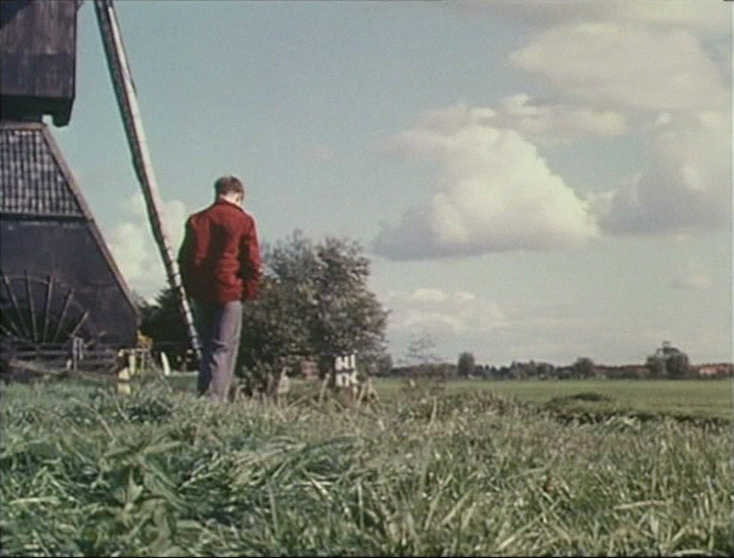
He lands on the other side of the channel and sets off to the shops. De Blokker is here, so we are still close to Overwaard mill number 4.
- Capture 62
- 'Now' required
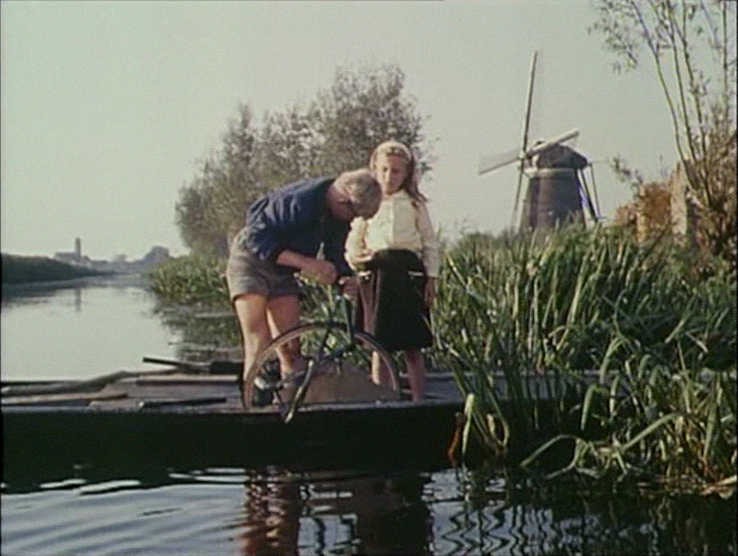
Meanwhile, Piet is repairing a puncture. In the background, on the left, we can see the tower of the Kinderdijk-Middelweg Community Reformed church at Molenstraat 149. The mill visible here, then, is Nederwaard mill number 3, and Piet and Anneke are just by Nederwaard number 4, out of shot to the right.
- Capture 63
- 'Now' required
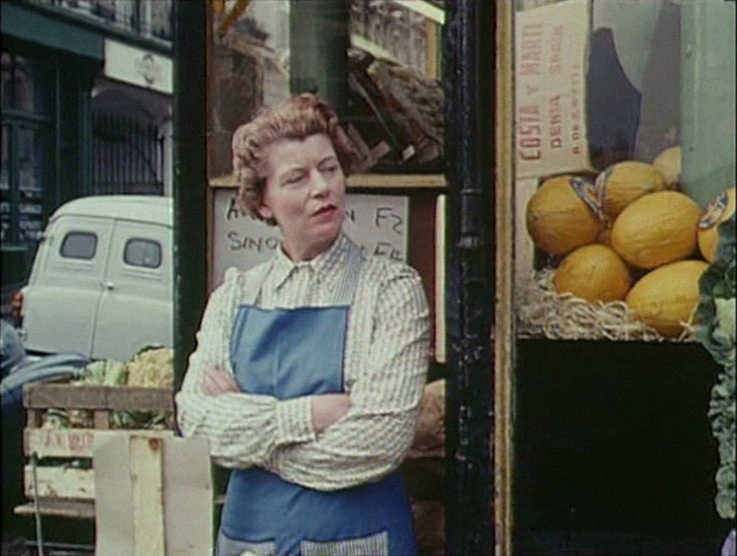
Tim finds a shop but is quite unable to communicate.
- Capture 64
- 'Now' required
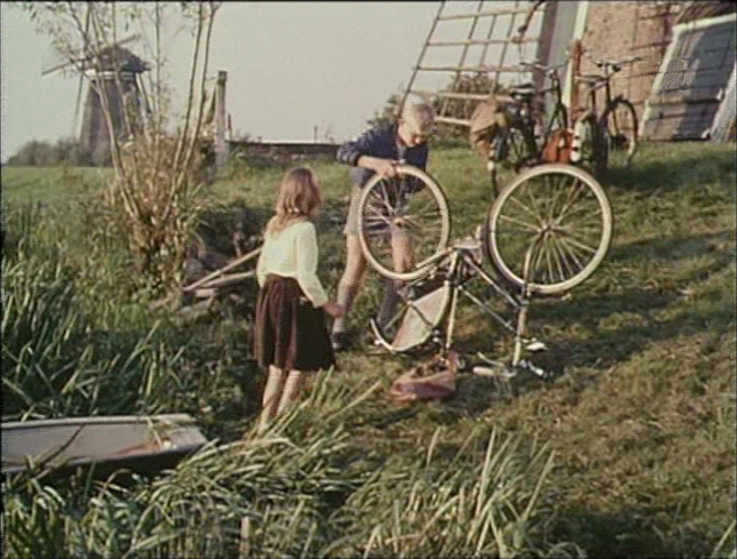
Back at Nederwaard number 4, Piet has nearly finished his puncture repair.
- Capture 65
- 'Now' required
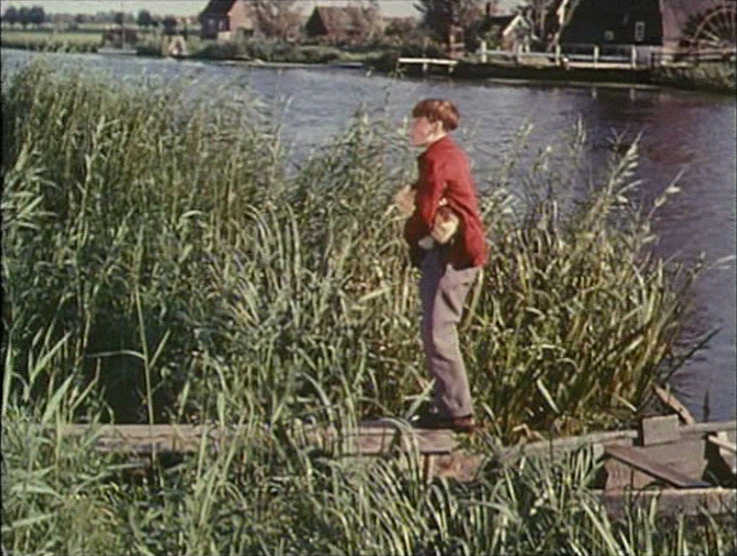
Tim has returned with bread, butter, cheese and milk. Judging by the view of 'De Blokker', he's come back to the right spot...
- Capture 66
- 'Now' required
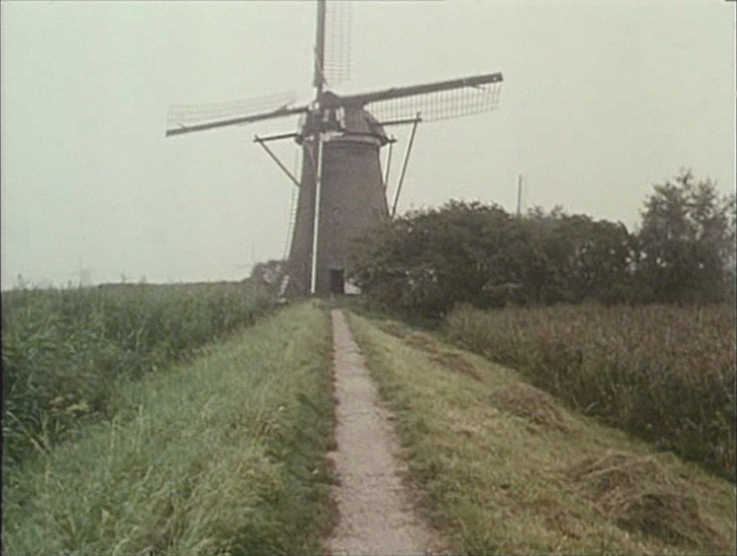
...but no. He finds himself looking at, I think, Nederwaard windmill number 7.
- Capture 67
- 'Now' required
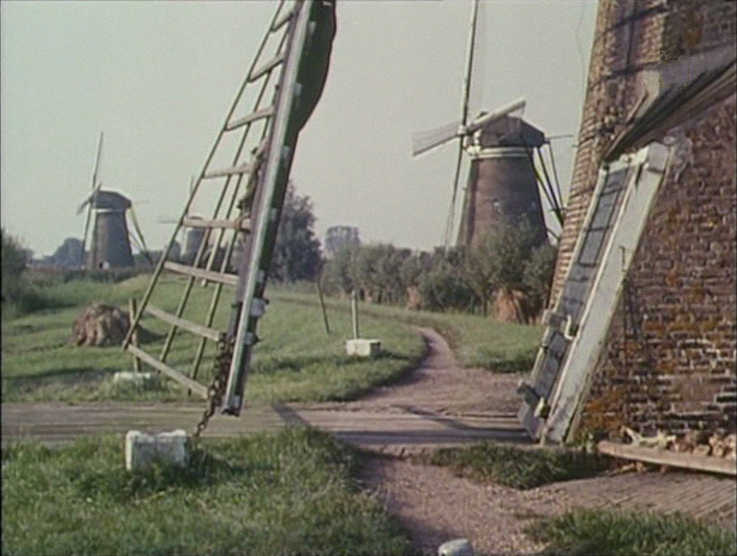
Four round windmills in a staggered row, so probably Nederwaard 4 closest, with Nederwaard 3,2 and 1 beyond.
- Capture 68
- 'Now' required
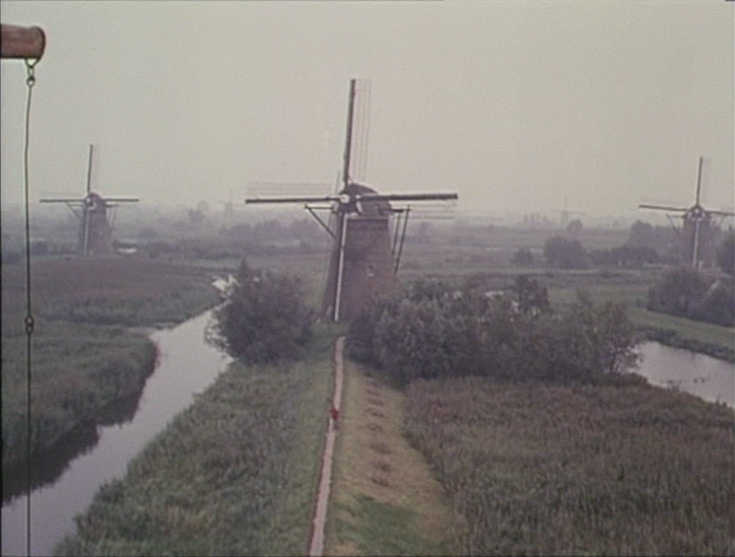
He runs from Nederwaard 6, in a shot evidently taken from the top of Nederwaard 7, with Nederwaard 4 (left) and Nederwaard 5 (right) behind, and almost lost in the far background the Hoge Molen (left) and the Kleine Molen (right).
- Capture 69
- 'Now' required
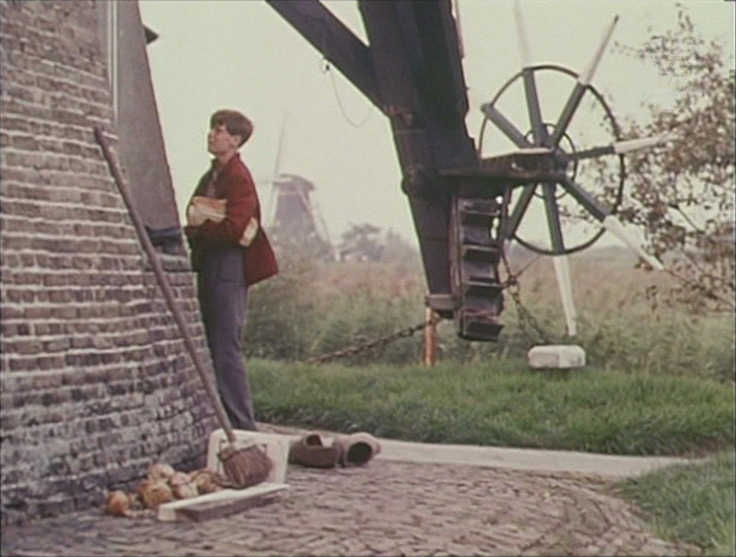
Nederwaard 3 perhaps? If so, that'll be Overwaard 1 behind.
- Capture 70
- 'Now' required
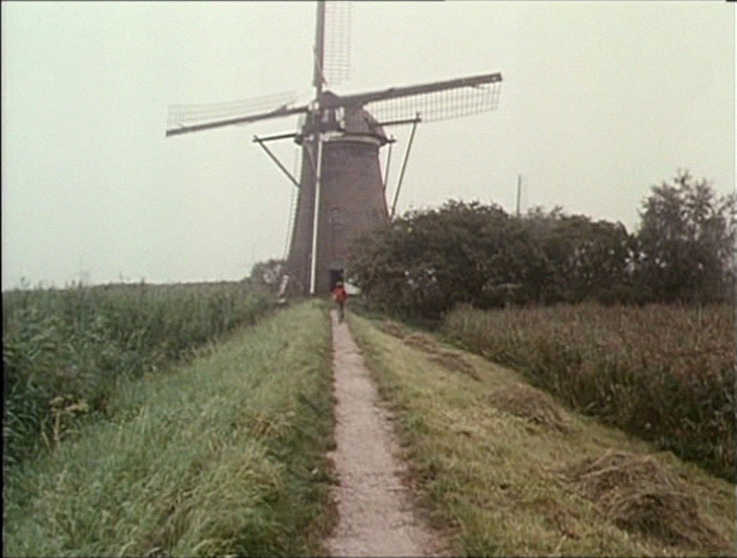
Back to Nederwaard 7...
- Capture 71
- 'Now' required
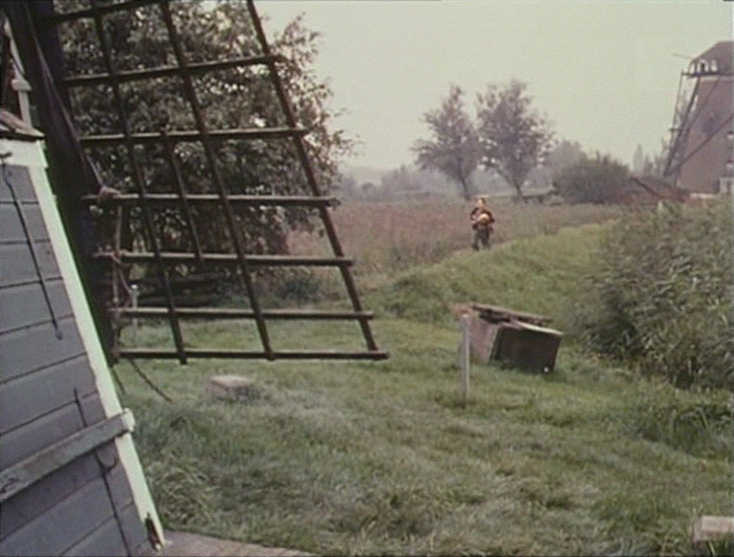
Ground-level view from Nederwaard 7 toward Nederwaard 6.
- Capture 72
- 'Now' required
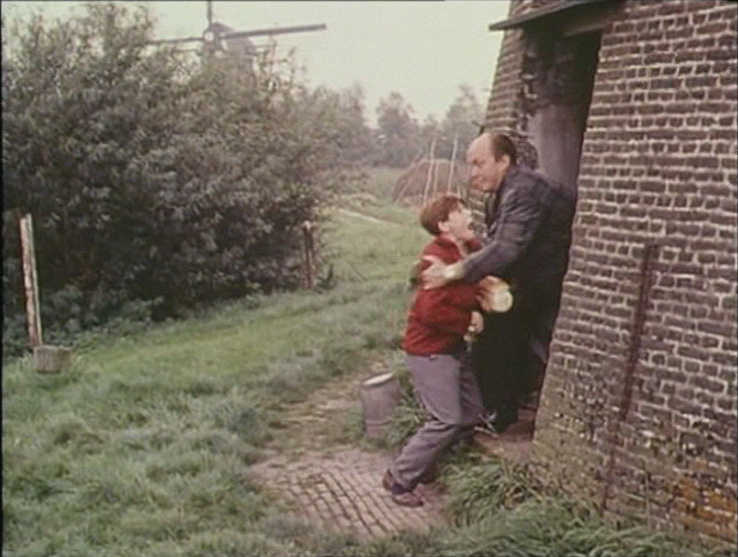
Tim is grabbed by one of the thugs. Probably Nederwaard 7.
- Capture 73
- 'Now' required
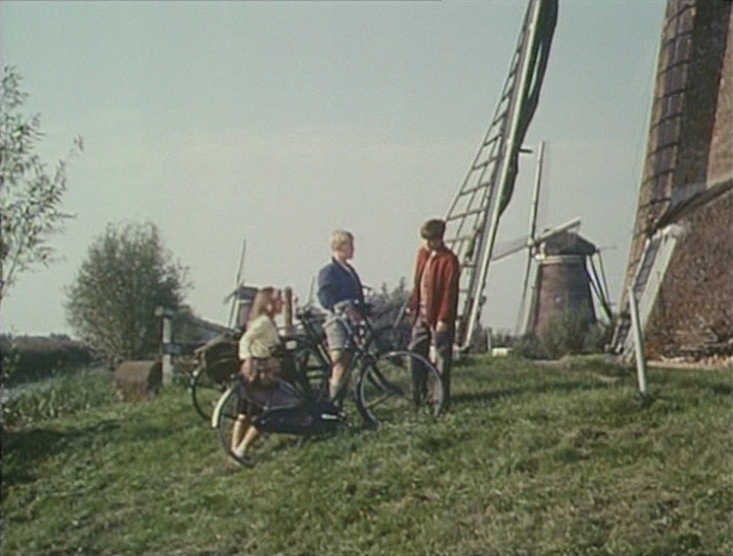
He eventually finds Piet and Anneke back at Nederwaard windmill number 4.
- Capture 74
- 'Now' required
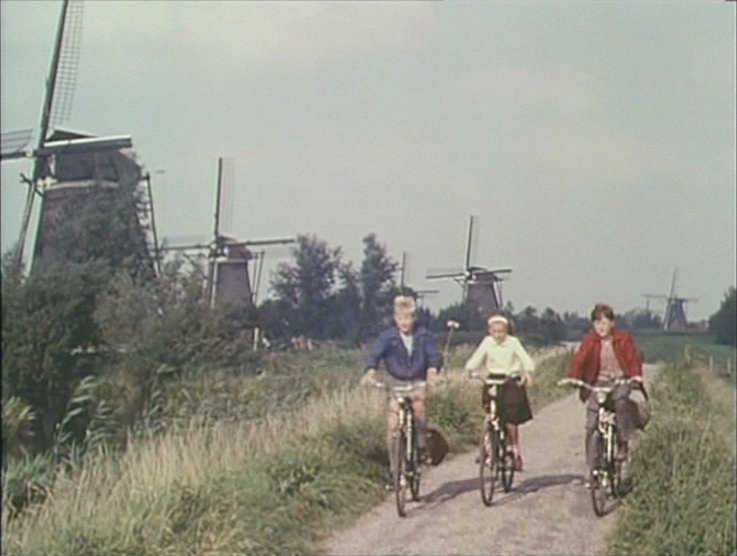
They set off towards Alkmaar. Molenkade, Kinderdijk, with Nederwaard 8 nearest, on the left.
- Capture 75
- 'Now' required
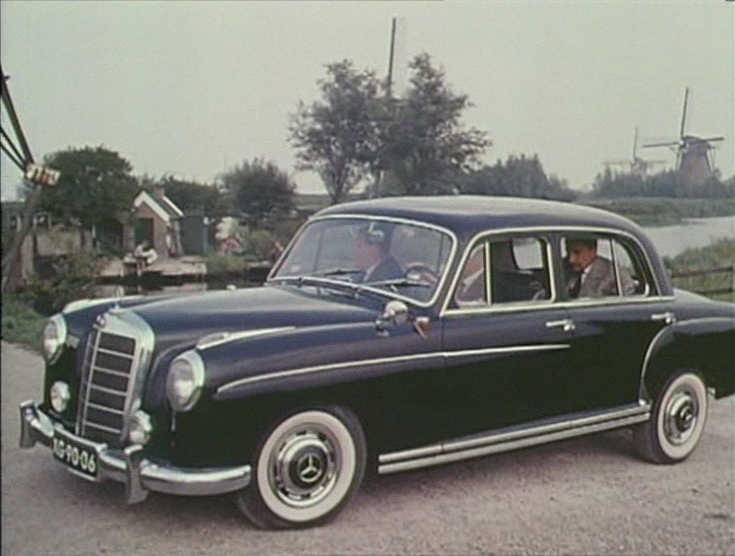
A Mercedes carrying the tour guide turns off from Molenkade by Nederwaard 8.
- Capture 76
- 'Now' required
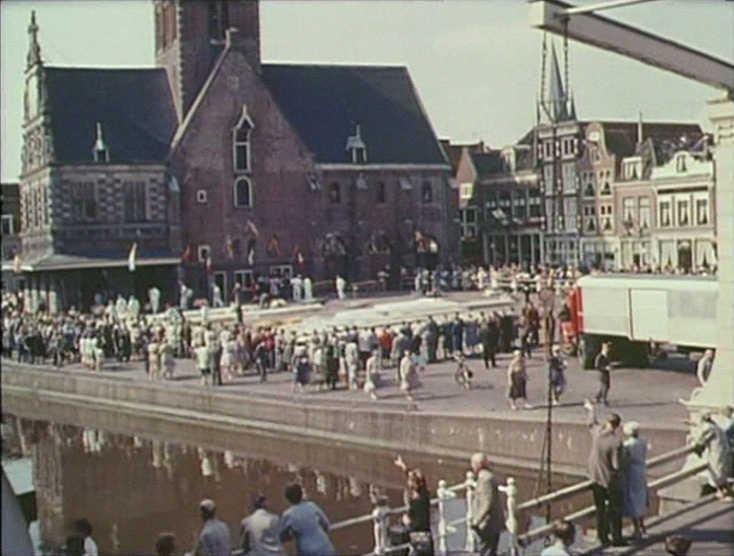
Alkmaar, Noord-Holland. An establishing shot of the main square by the Waag. Also seen in 'If It's Tuesday This Must Be Belgium'.
- Capture 77
- 'Now' required
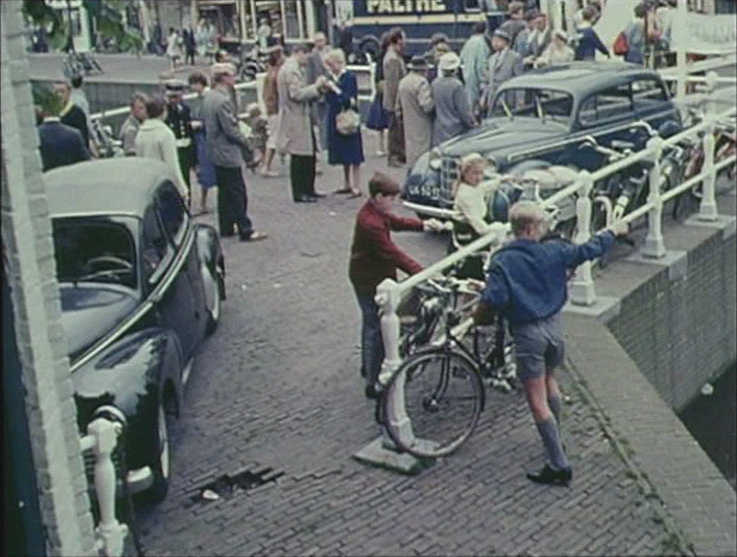
The children leave their bikes by the Bathbrug.
- Capture 78
- 'Now' required
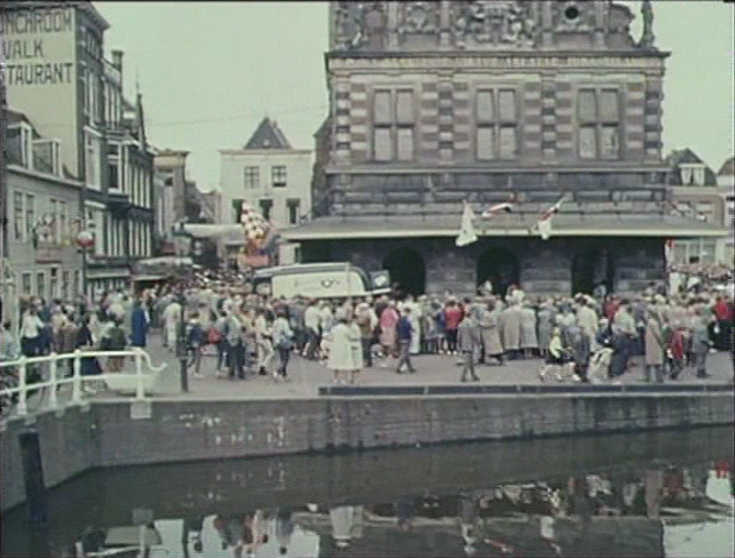
They run across in front of the Waag...
- Capture 79
- 'Now' required
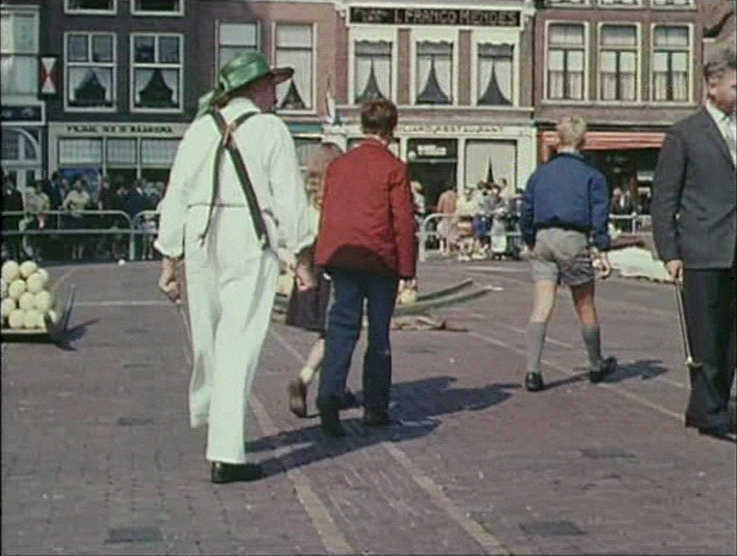
...and past a great quantity of cheese, into Waagplein. Here with a view of Houtil 24 to 32 behind.
- Capture 80
- 'Now' required
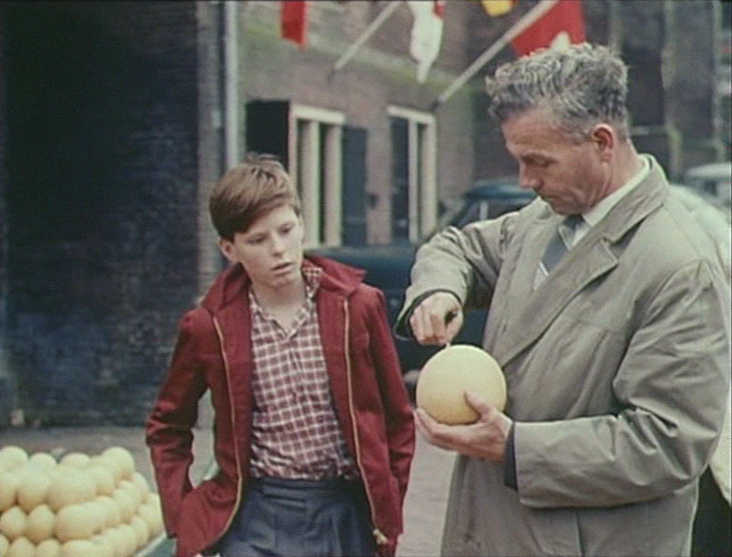
Tim watches as a man takes a sample from a cheese. Much the same spot as the previous capture, but with a view towards the side of the Waag.
- Capture 81
- 'Now' required
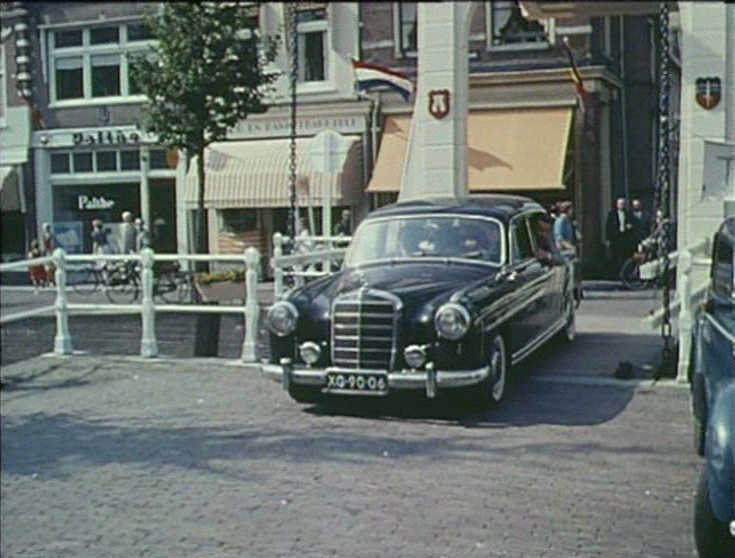
The villains arrive at the Bathbrug.
- Capture 82
- 'Now' required
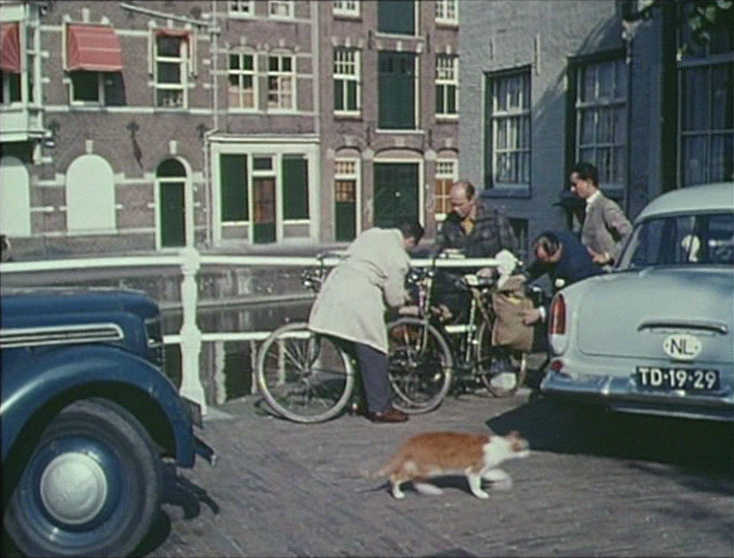
They quickly find the children's bicycles. A view northest, with Fnidsen 76 to the right. Across the canal, to the left, is a row of houses all of which have been replaced since 1960.
- Capture 83
- 'Now' required
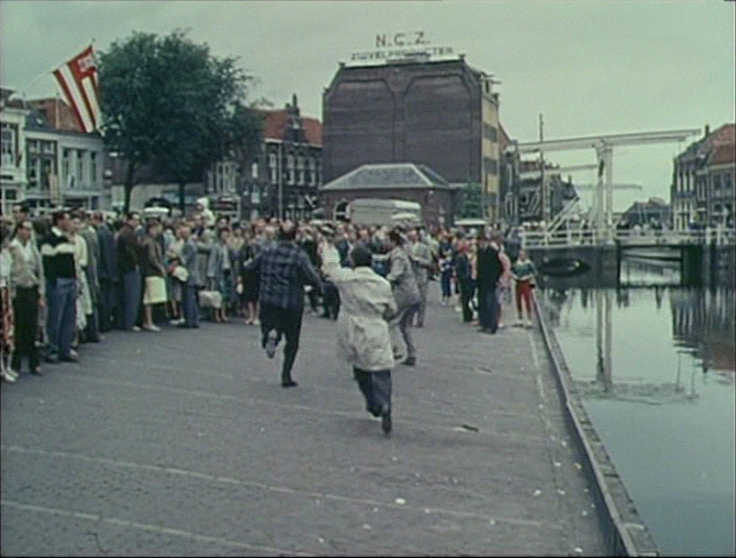
They spot the children and give chase. A view north along the edge of Waagplein towards the Schapenbrug. The NCZ Dairy Products building in the centre of the shot has gone, replaced by a block of shops and flats built in 1986.
- Capture 84
- 'Now' required
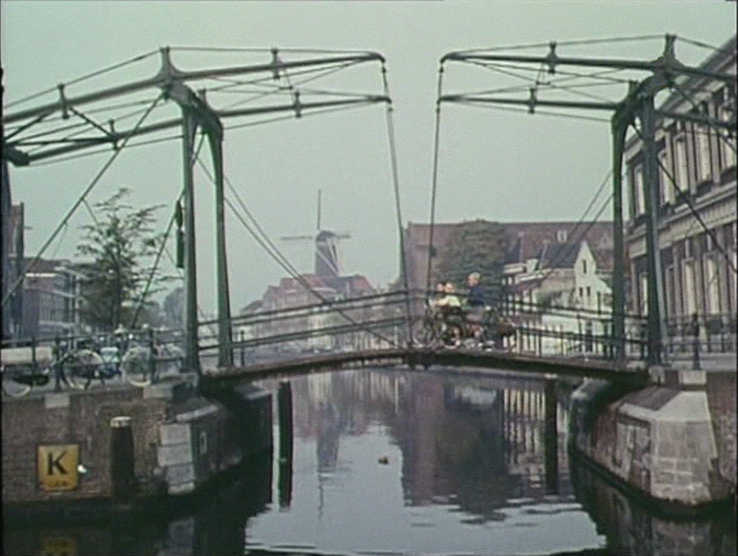
After an exciting cheese-based escape, the view cuts to another bridge; this is the Korte Havenbrug at the junction of Korte Haven and Lange Haven in Schiedam, Zuid-Holland. We are looking west, and the mill in view is De Drie Koornbloemen on Vellevest.
- Capture 85
- 'Now' required
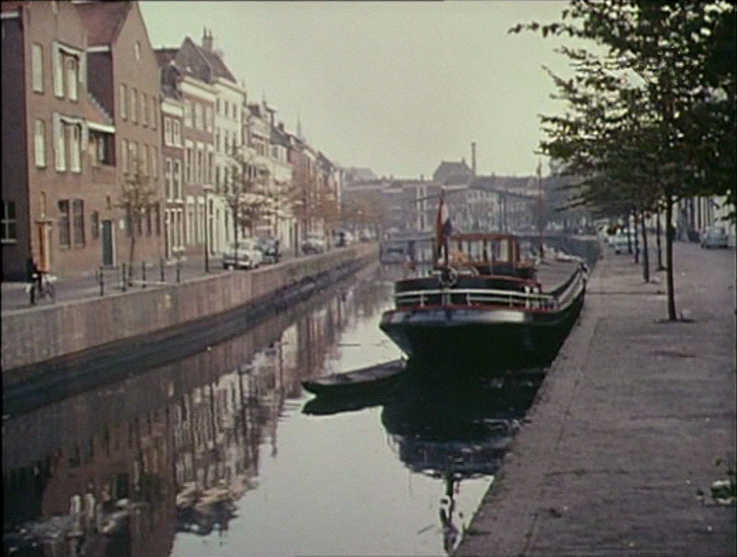
The children cross the Korte Havenbrug and see Piet and Anneke's father's boat moored in Lange Haven. View south with the Appelmarktbrug behind.
- Capture 86
- 'Now' required
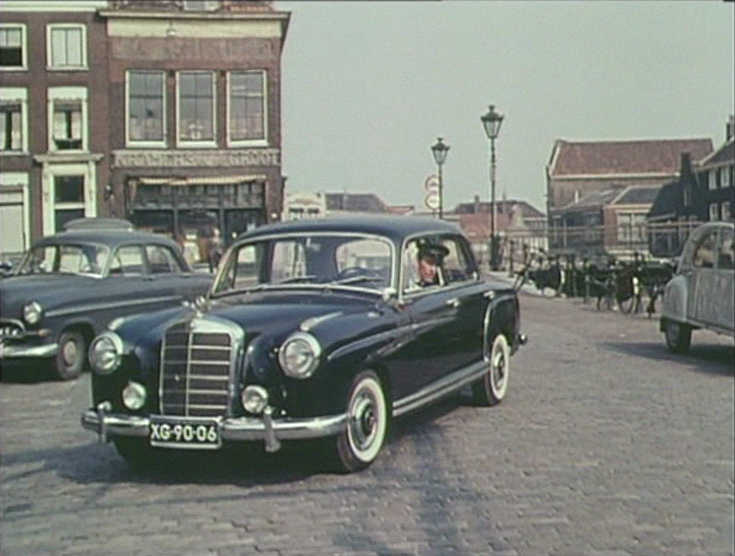
The villains' chauffeur has continued to follow the children; he too is now in Schiedam. View north along Lange Haven from the Korte Havenbrug to Dam, with the Beursbrug on the right. On the left, the building at Dam 2 bears the sign for Kramers & De Groot, coffee, tea, tobacco and cigar merchants; Kramers & De Groot were in business here until at least 1953, but by 1964 the sign had disappeared.
- Capture 87
- 'Now' required

The children walk across the Korte Havenbrug, where the chauffeur has just followed, again. Told you the continuity was a bit random. A glimpse on the left of the Schiedam Corn Exchange, dating from 1792.
- Capture 88
- 'Now' required
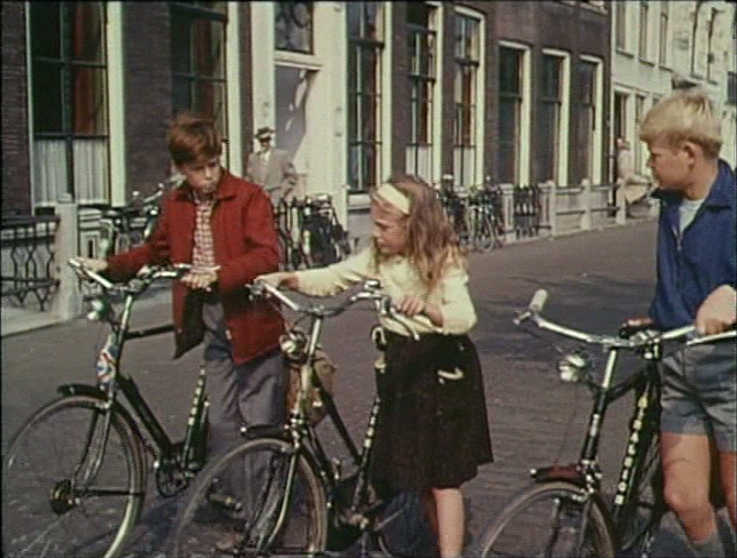
They walk along Lange Haven to number 129...
- Capture 89
- 'Now' required
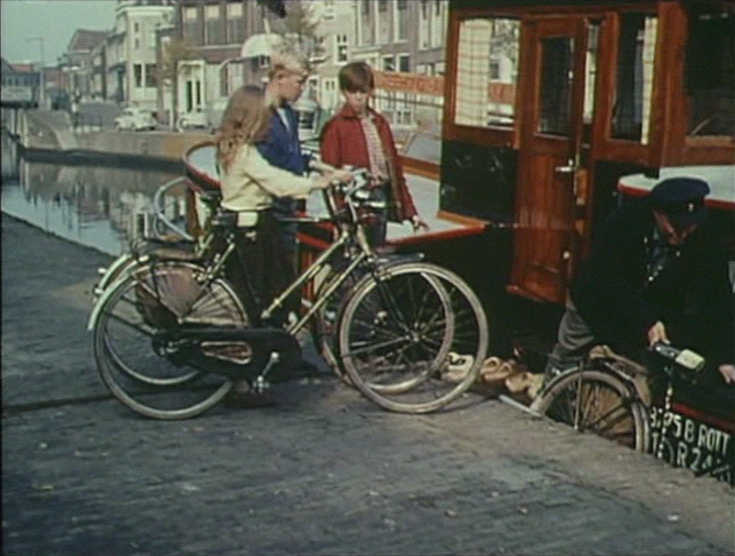
...where Mr van Helder's boat is moored. Mr van Helder (Thom Kelling) helps them bring their bikes aboard.
- Capture 90
- 'Now' required
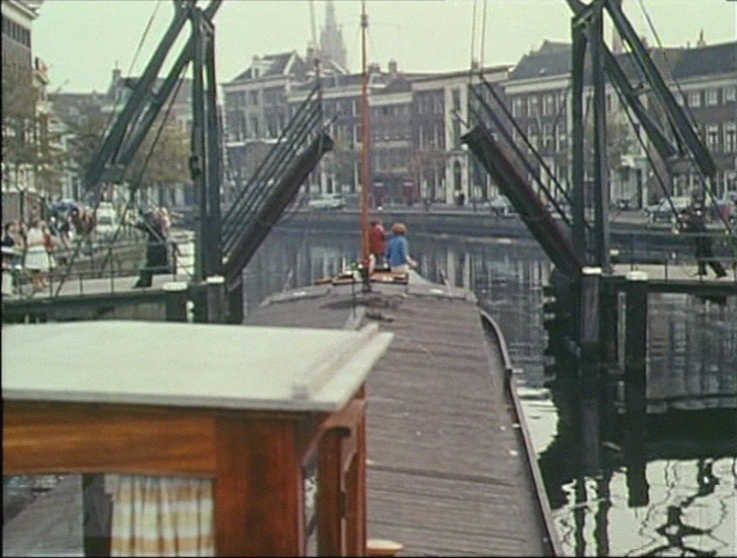
Shortly afterwards they are under way, passing through the Appelmarktbrug and heading south. The church in the background, the Sint-Liduinakerk of Frankelandsekerk on Nieuwe Haven, was demolished in 1969.
- Capture 91
- 'Now' required
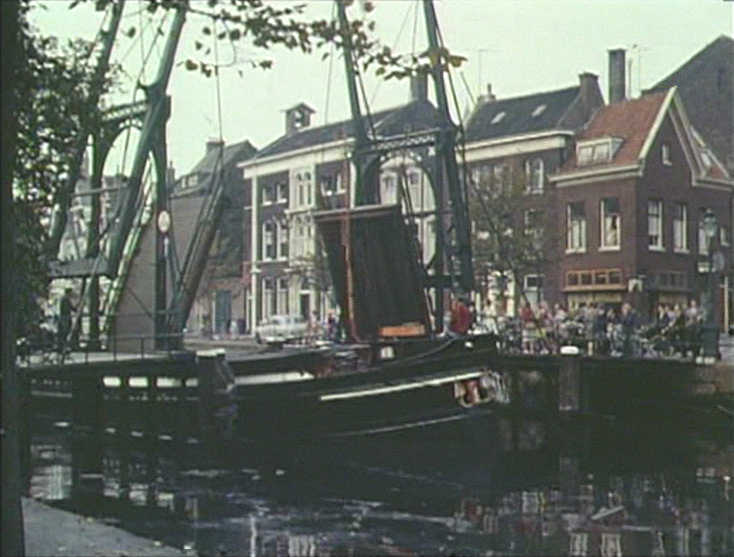
Opposite view, looking northeast across Lange Haven.
- Capture 92
- 'Now' required
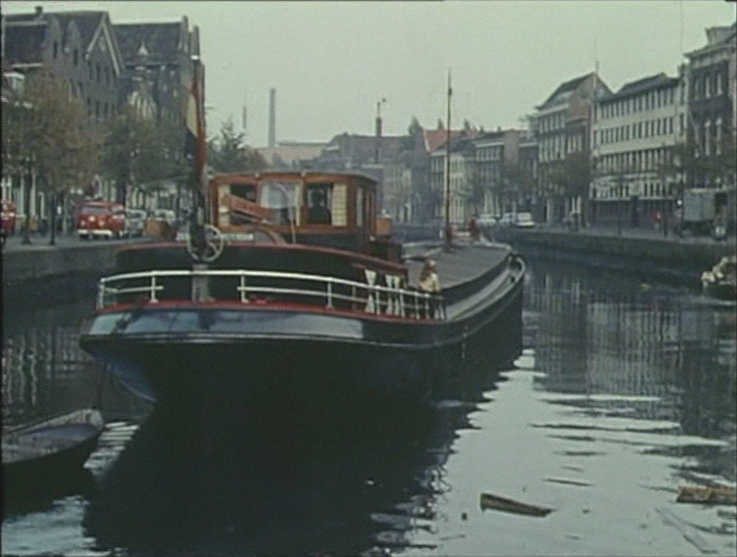
Further along Lange Haven, heading southeast and approaching the bridge at Taansteeg.
- Capture 93
- 'Now' required
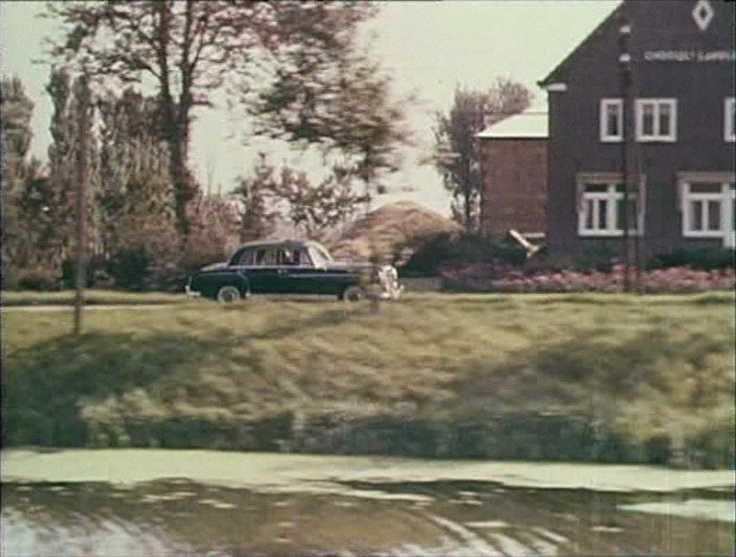
The villains follow in the Mercedes.
- Capture 94
- 'Now' required
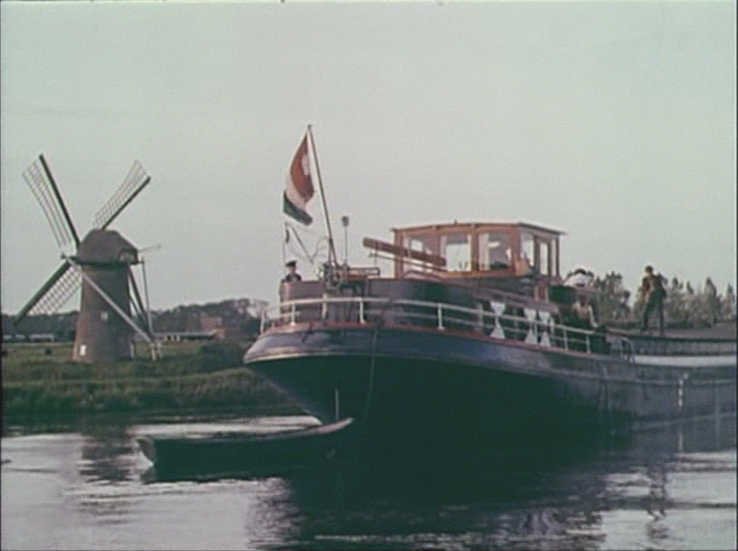
The boat stops for a while by a windmill. This is Knipmolen at Voorschoten, Zuid-Holland, so they are on the Rijn-Schie canal. Knipmolen was newly restored in 1960, having been replaced by an electric pumping station in 1949 and allowed to fall into disrepair.
- Capture 95
- 'Now' required
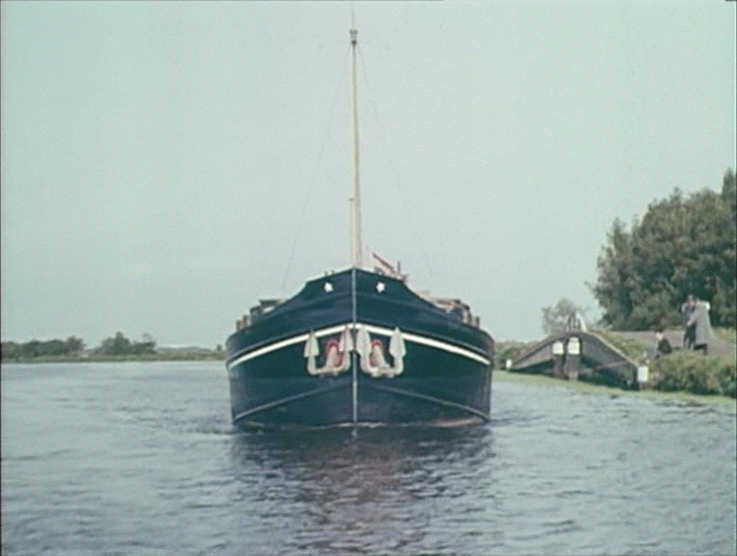
This little bridge is over the Weegsloot at Starrenburg, Zuid-Holland.
- Capture 96
- 'Now' required
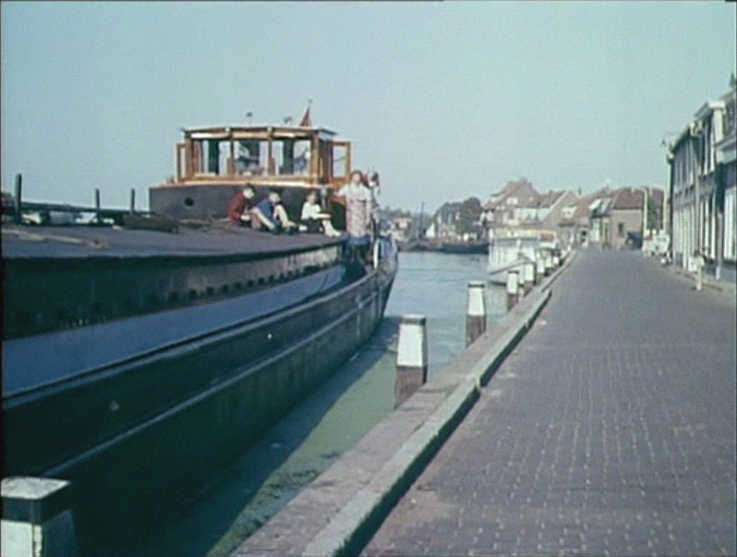
They pause in a town. Leidsekade in Leidschendam, Zuid-Holland, looking northeast along the Rijn-Schie canal.
- Capture 97
- 'Now' required
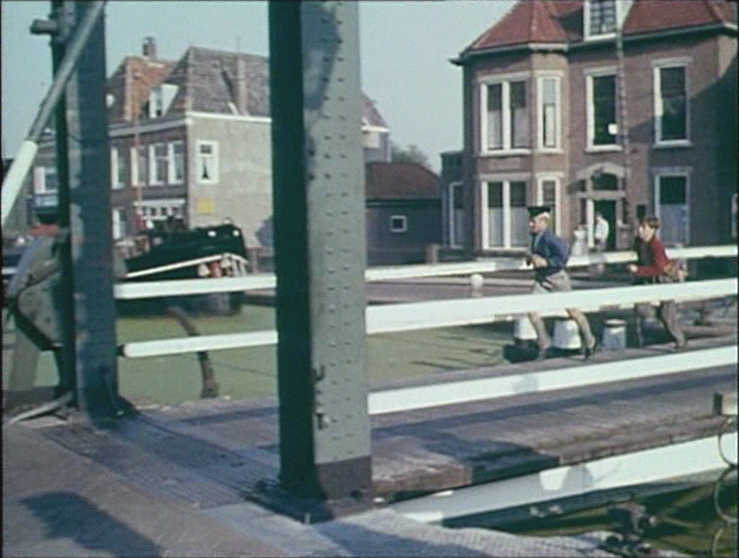
Tim and Piet run to open the manually-operated lifting bridge at Kerkstraat. View east to Leidsekade. The building on the right has gone, replaced by a block of shops, offices and flats built in 1983.
- Capture 98
- 'Now' required
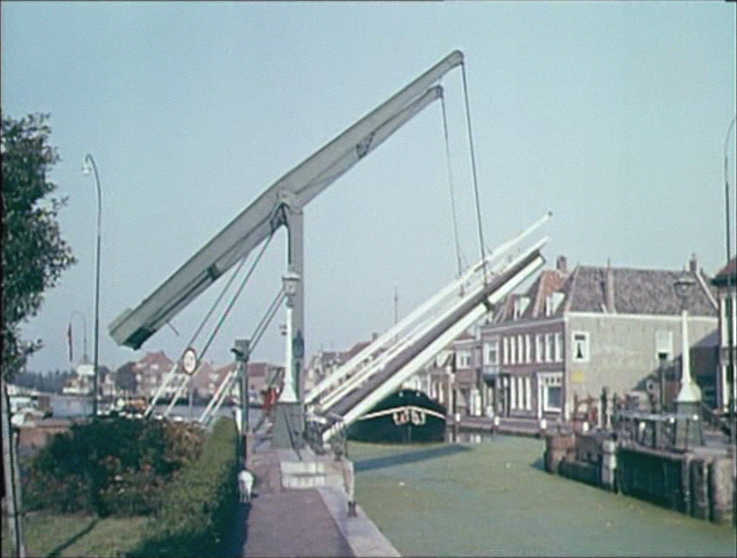
The boat heads through the open bridge. This bridge, built in 1887, is the northern of two associated with the lock here. Both were hand-operated until 2006, when they were converted to electric power.
- Capture 99
- 'Now' required
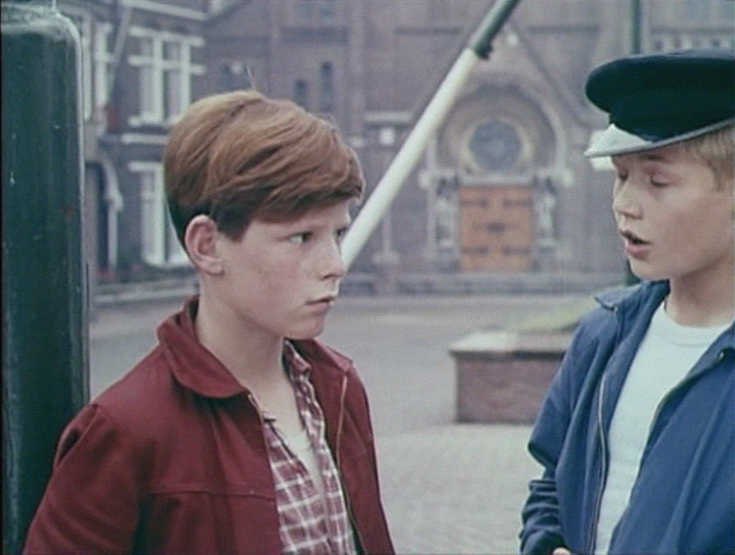
Tim confesses to Piet that he's scared. View from the bridge towards the church of St Peter and St Paul on Sluisplein.
- Capture 100
- 'Now' required
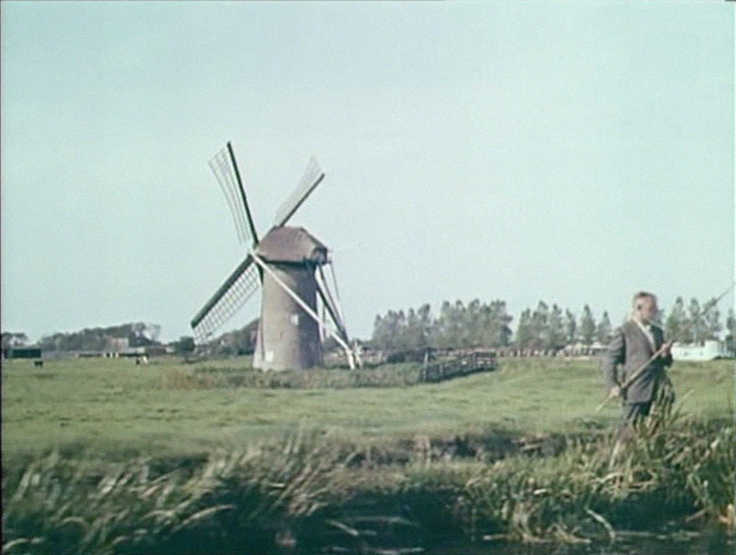
Under way again, they pass Knipmolen at Voorschoten once more.
- Capture 101
- 'Now' required
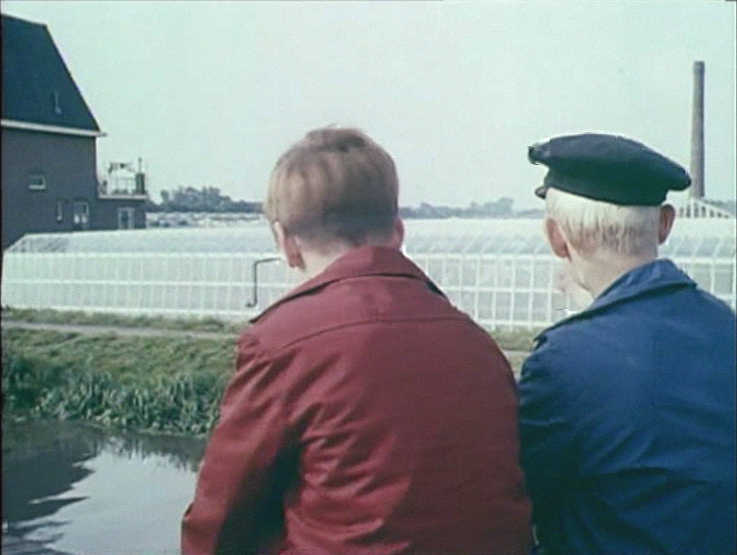
Passing a market garden establishment, they stop to get tomatoes. These greenhouses were beside the southern end of Trekvliet, where it joins the Rijn-Schie canal just south of Leiden.
- Capture 102
- 'Now' required
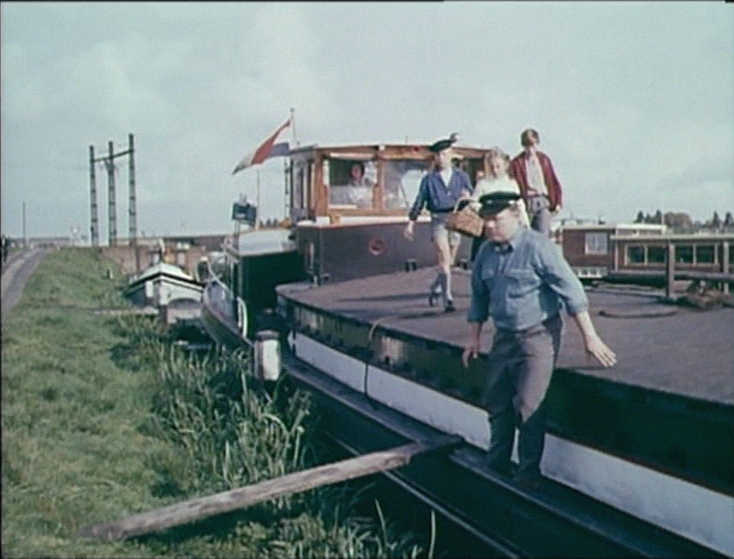
The children disembark. Behind the boat, the tram line from Leiden to Voorschoten passes over a lifting bridge.
- Capture 103
- 'Now' required
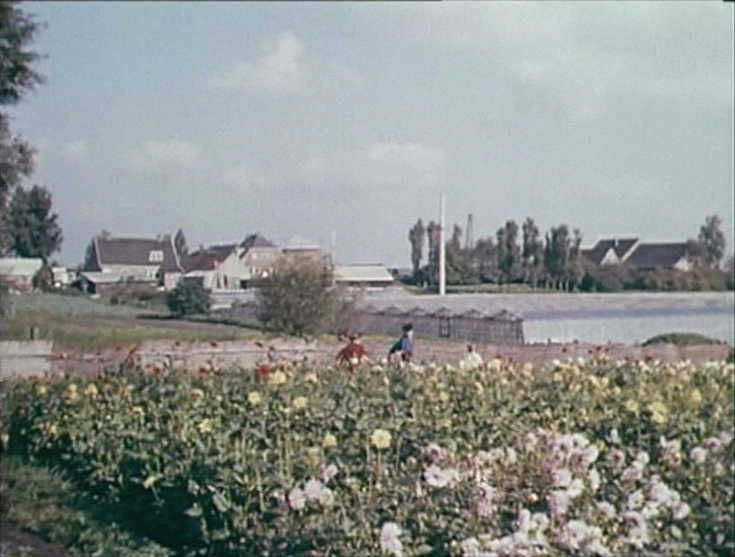
They make their way to the greenhouses. These are not the same greenhouses as seen in the previous shot.
- Capture 104
- 'Now' required
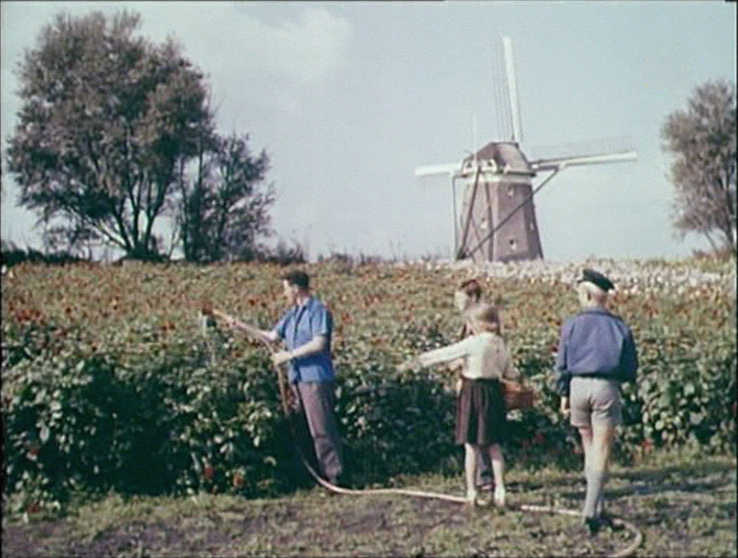
They pause along the way to re-enact Louis Lumière's "L'Arroseur Arrosé", standing on the gardener's hosepipe. An octagonal ground-sailer mill in the background should give a clue to the location. There are several possible candidates in the surrounding area, but none is completely convincing.
- Capture 105
- 'Now' required
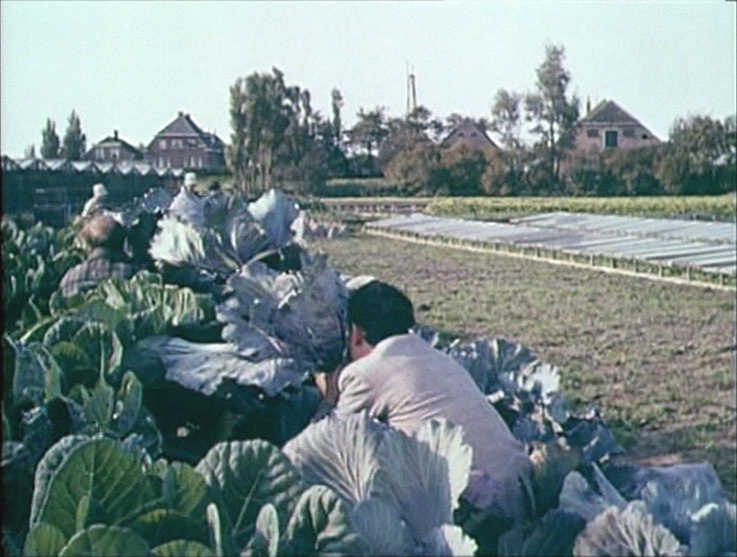
The villains are hiding amongst the cabbages.
- Capture 106
- 'Now' required
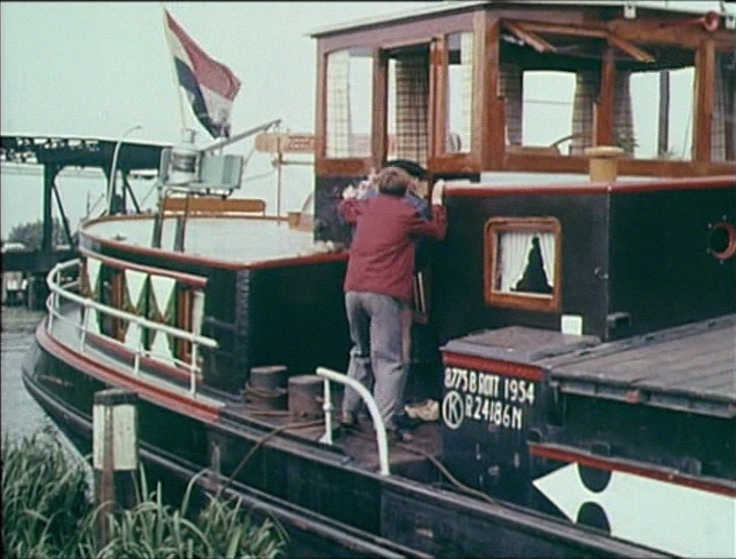
A chase, an escape, a setback, but the villains are now locked in the hold. Tim and Piet head back into the cabin. The boat has moved slightly since it arrived at the greenhouses, but it's still moored in Trekvliet, and we can now see the superstructure of the lifting bridge carrying the tramline. The tramline closed in 1961, and the bridge was removed soon after. There's a nice contemporary photo of that bridge at https://nl.pinterest.com/pin/341358846738865026/ with the 'blue tram' crossing it.
- Capture 107
- 'Now' required
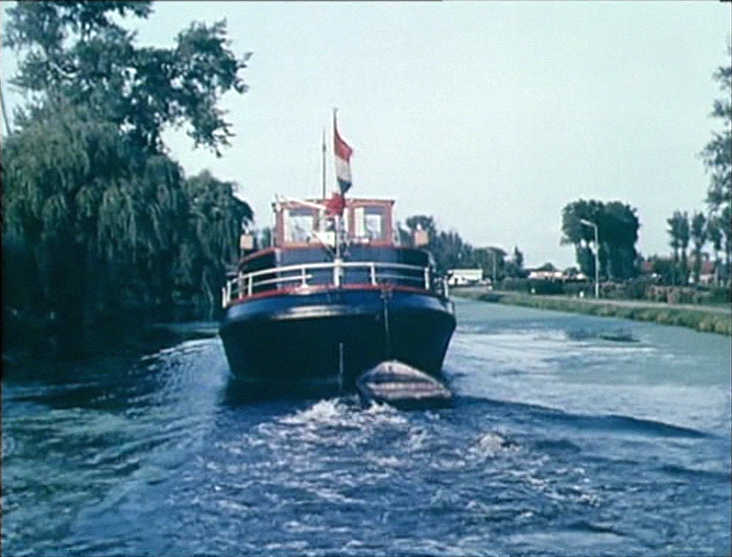
Under way again, with Tim and Piet driving, as Mr van Helder was knocked on the head by the tour guide.
- Capture 108
- 'Now' required
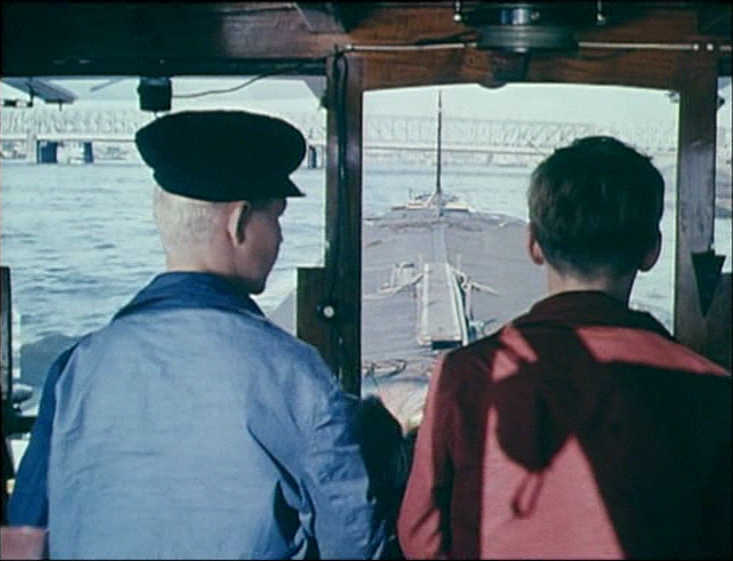
Following Piet's map, the boys have reached Rotterdam, Zuid-Holland, and are on the Nieuwe Maas. Ahead of them is the old Willemsbrug road bridge between the Stadsdriehoek neighbourhood and Nordereiland. The bridge was demolished in 1981, replaced by the current Willemsbrug further upstream.
- Capture 109
- 'Now' required
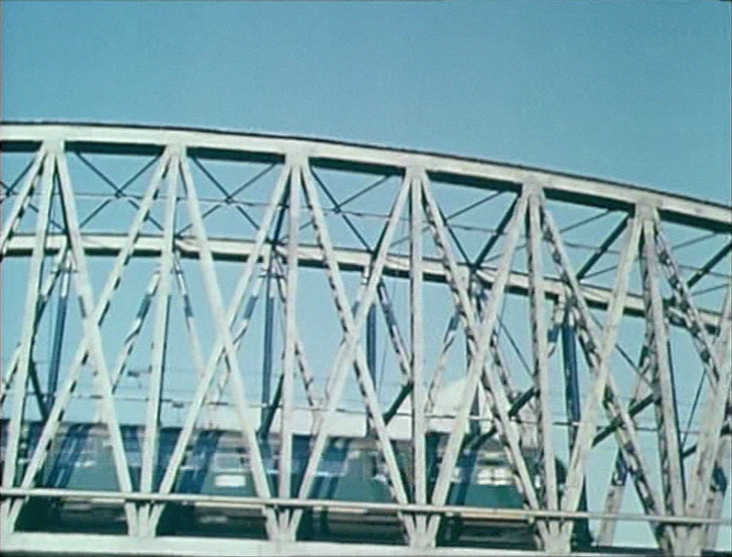
As they pass under the Willemsbrug, the Willemsspoorbrug, the railway bridge that ran parallel to the road bridge, comes into view. This bridge too has gone, demolished in 1984 after the opening of the railway tunnel that replaced both it and the Koningshavenbrug ('De Hef'). The northernmost pier was left in place, and forms a support for Auke de Vries' abstract sculpture 'Maasbeeld' -- known locally as the Washing Line.
- Capture 110
- 31 May 2024
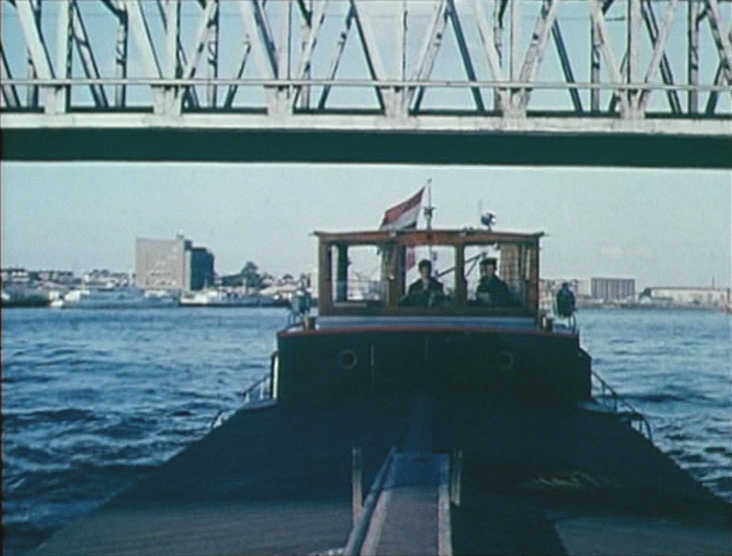
A view astern on the Nieuwe Maas as they pass under the railway bridge. There's no view of the road bridge behind, so they are now travelling west on the river and we are looking east again. The area in view here has been extensively redeveloped, mostly in the 1980s and 90s and there is little in the shot that is visible today. The large building to the left of the boat is an exception; this is the Havenziekenhuis, the hospital for seafarers and tropical diseases on Haringvliet, built in 1937 and still standing.
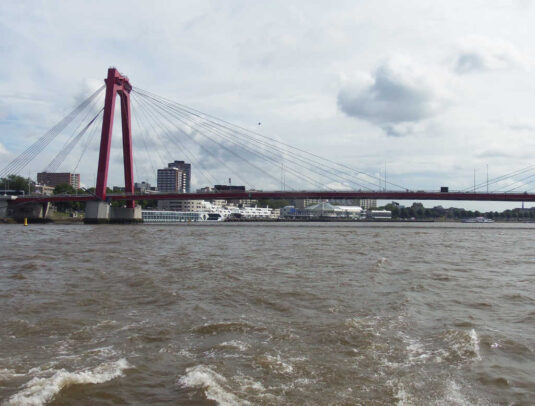
The waterbus from Dordrecht provides a convenient opportunity to take the same shot today. Dominating the foreground is the new Willemsbrug, opened in 1981. Just visible immediately to the right of the bridge tower and above the road deck is the top of the former Havenziekenhuis, now also awaiting redevelopment; the hospital closed in 2017 and was sold in 2019,and there are plans for two high-rise residential towers on the site. At the right-hand edge of the shot, just below the bridge deck, the tower of the St Lambertus church on Oostzeedijk Beneden, dating from 1809, is visible.
- Capture 111
- 'Now' required
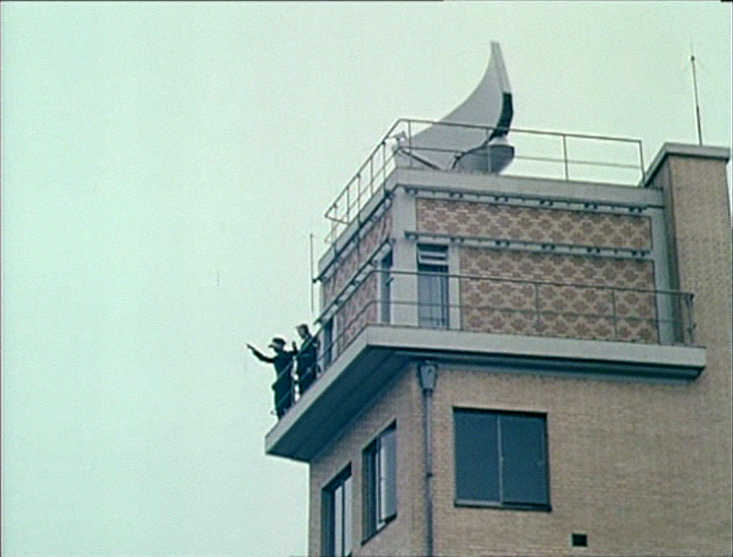
The boys have attracted the attention of the harbour police.
- Capture 112
- 'Now' required
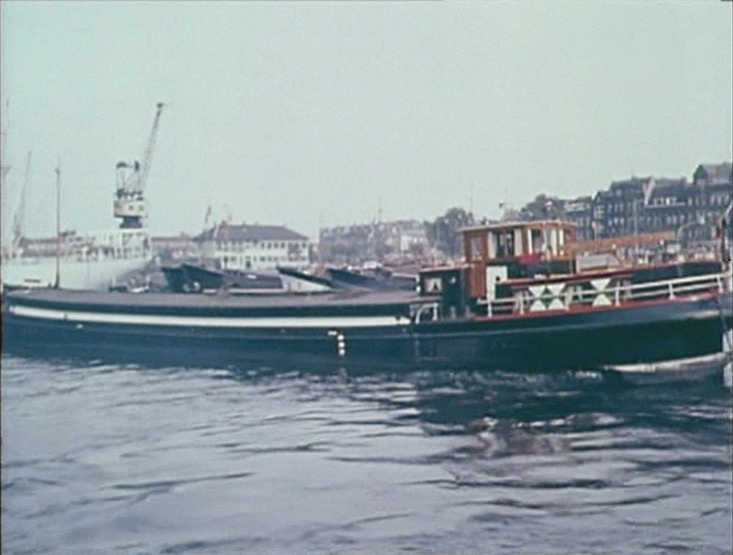
They reverse into a mooring. Maashaven, Rotterdam, looking toward Maashaven Noordzijde. Here too, no trace of the 1960s view remains today.
- Capture 113
- 'Now' required
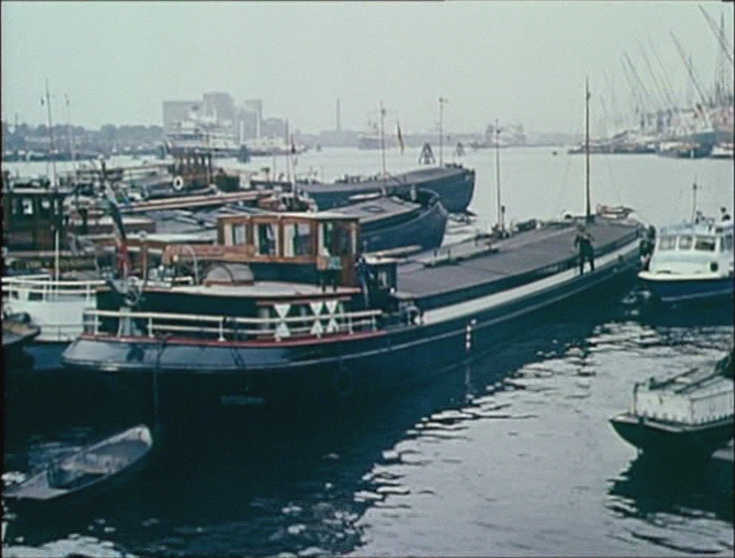
As they come to a stop, the harbour police arrive and board the boat. A view west on Maashaven. The large group of buildings just to the left of centre was then the Meneba company's steam flour mill 'De Maas', still present and now operated by Dossche Mills.
- Capture 114
- 'Now' required
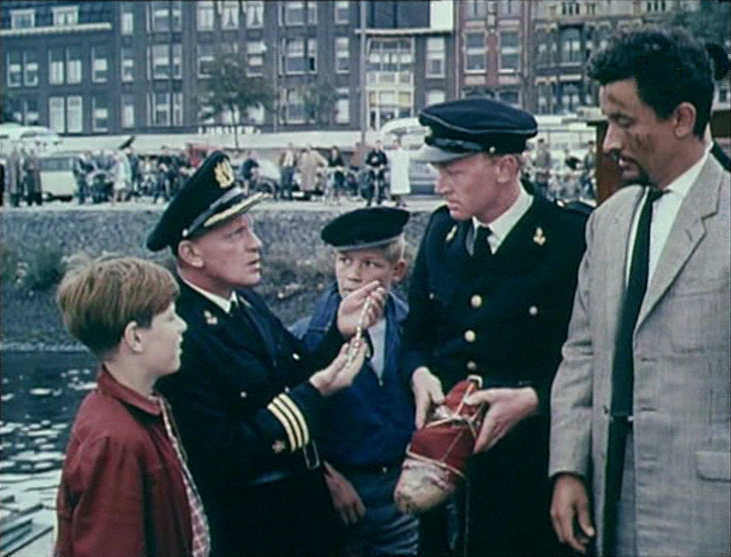
The boys hand over the diamonds and the villains to the police. Maashaven, now looking east to an area that has also been completely redeveloped in the intervening years. Today an elevated light rail line runs along the harbour side where all those people are standing.