
I Was A Fireman
Date: 1943
Director: Humphrey Jennings
Production Company: Crown Film Unit
Stars: See 'Additional Information' Section
Location(s): London
Region(s): London H-L
Storyline:
Filmed in documentary style and using actual firemen rather than professional actors the film shows the lives of firefighters through the Blitz during the Second World War.
Additional Information:
Our listing of this film consists only of external location screen captures that were omitted as a result of the Director’s first cut towards the subsequent release of Fires Were Started, together with some supplementary locations from that film for the purposes of historical record and enjoyment.
I Was a Fireman has a running time of 74 minutes. Humphrey Jennings’ first cut of this film reduced the running time to 65 minutes and released as Fires Were Started.
We are indebted to Dave W, for his close collaboration and involvement in the extraction of screen captures, provision of supporting text and uncredited location identifications as well as stimulating research sessions along the way. Uploaded by Richard Lovejoy.
No ‘stars’ appeared in this film, all parts were played by actual members of the fire fighting services. The cast and the parts they played can be viewed by clicking here.
I Was A Fireman is included as an Extra in the Fires Were Started DVD BFI Dual Format Edition.

As an Amazon Associate, we earn from qualifying purchases.
Can you help:
If you have any information regarding this production, the locations or, even better, some comparison shots please contact us. Images submitted must be in Landscape orientation, as would be seen on the cinema screen, not Portrait.
We are aware that there are films on the site that were added when the criteria for the inclusion of locations was very different from today and, as a result, there may be scenes missing from some productions. Please do not forward additional screen captures to us but bring the detail to our attention, for we do, and are, 're-addressing' these older entries as time allows.
- Capture 1
- 25 Apr 2021
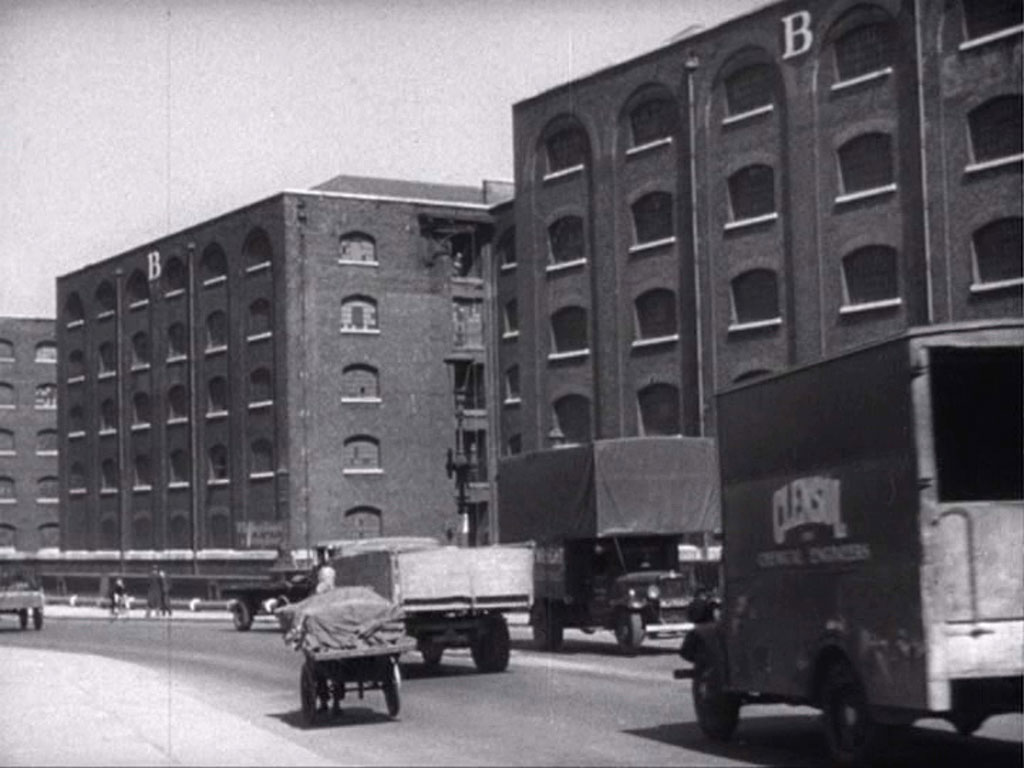
Tower Bridge Approach, London E1 looking north at ‘B’ warehouses of St Katharine Dock.
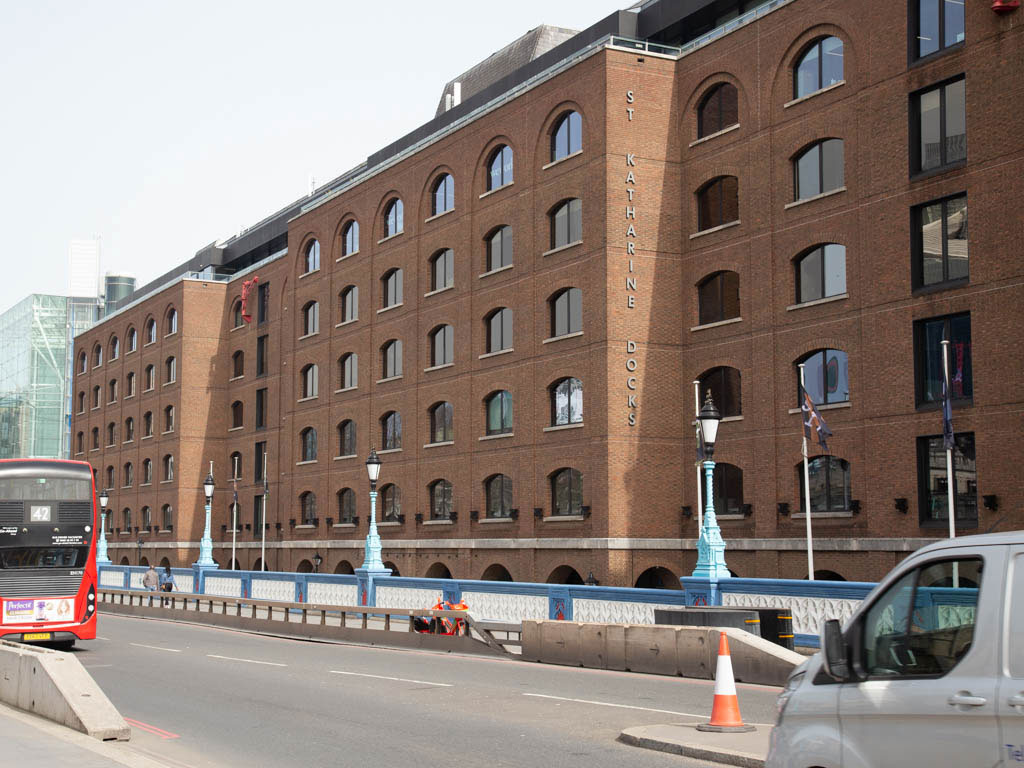
Despite the easing of lock-down a more comfortable scene can still be enjoyed.
- Capture 2
- 'Now' required

B.A. Brown (Fireman T.P. Smith) makes his way to work jesting with local ladies with regard to a fish. Unidentified location.
- Capture 3
- 'Now' required

Joe Vallance (Fireman John Barker) makes a purchase from an antiques salesman whose goods are displayed on the pavement in front of a shop. Unidentified location.
- Capture 4
- 25 Apr 2021
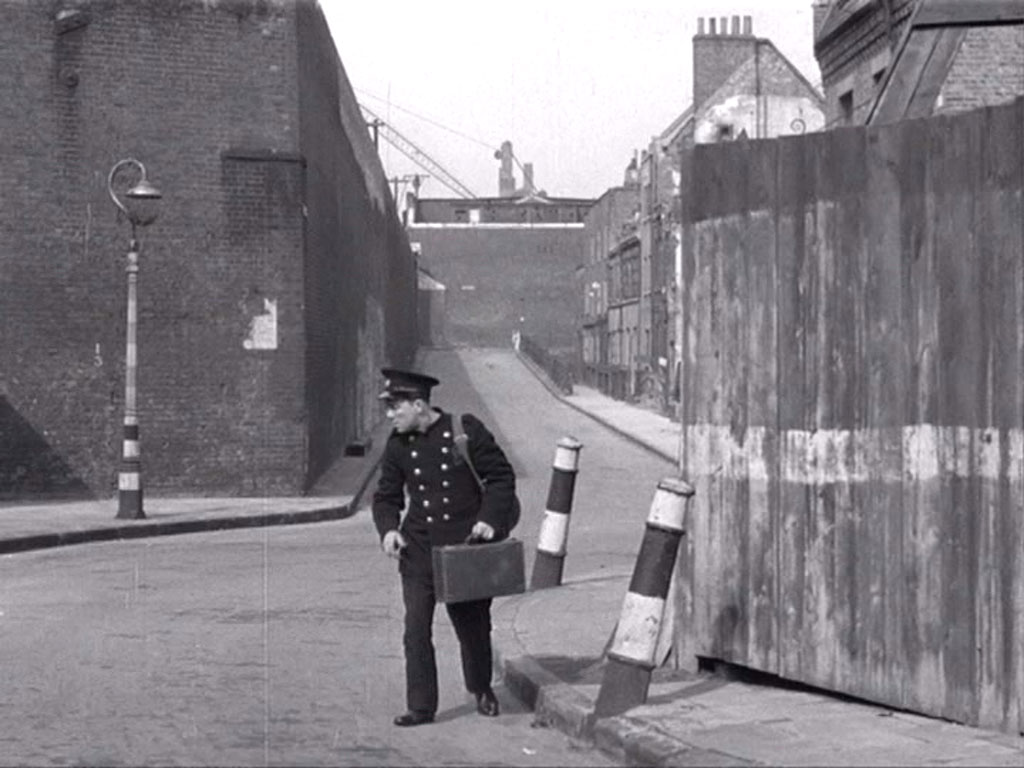
Johnny Daniels (Leading Fireman Fred Griffiths) makes his way to the station having survived the knockout blow from his young son. Tench Street, London E1 looking north from the corner of Green Bank/Scandrett Street. The boarding being that for the bombed St John of Wapping Church. The first building on the right to the rear of the boarding is the Turk's Head public house with the curly wrought iron sign hanger that remains to this day. A similar view can be seen in 'The Alf Garnett Saga' and the distant bend appears in 'To Sir with Love' whilst through the adjacent gate is a location from 'Murder in Reverse?'.
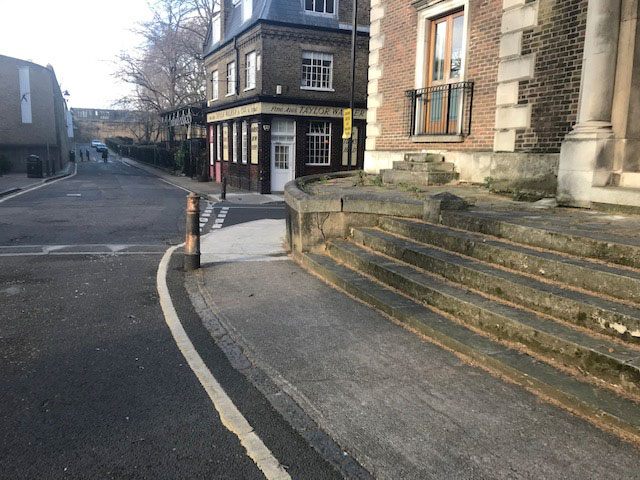
Ian Stewart provides this comparative shot of the same location now.
- Capture 5
- 25 Apr 2021
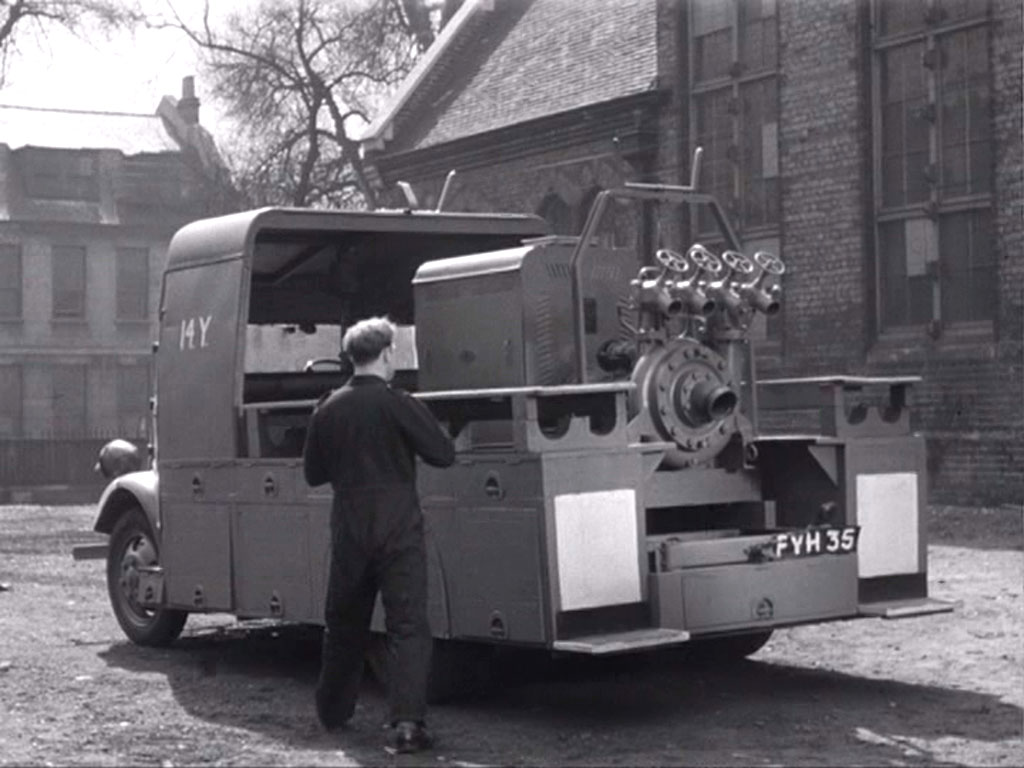
A more comprehensive view of St Paul’s school building being used as the base station. Looking across to No 33 Wellcross Square (The Old Courthouse)
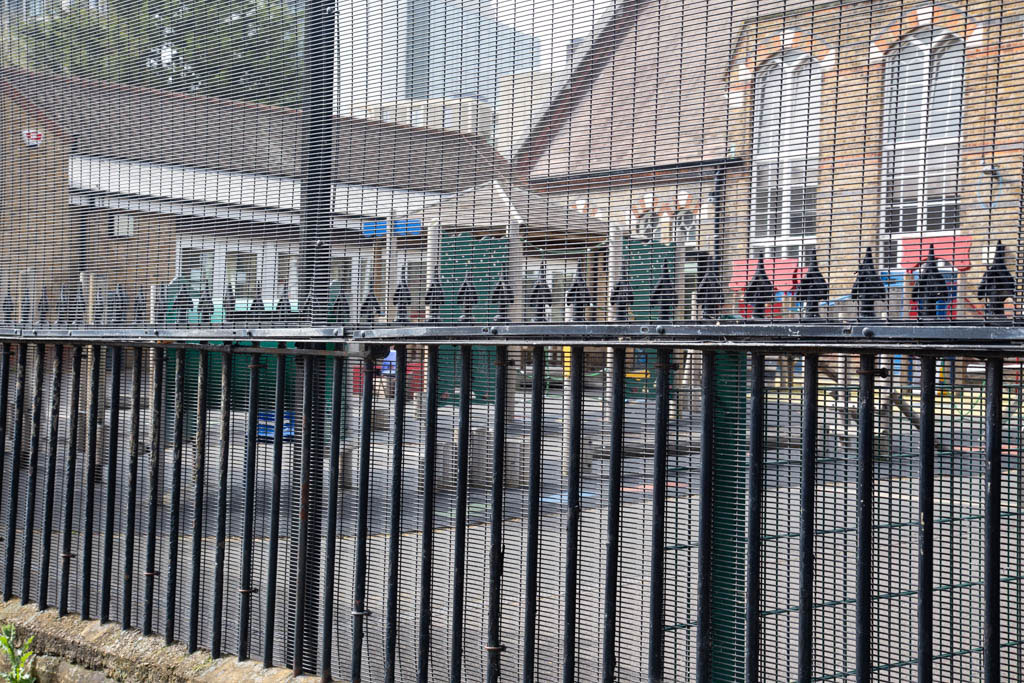
Whilst we cannot be the other side of the fence let's be grateful that the building and railings remain.
- Capture 6
- 26 Apr 2021
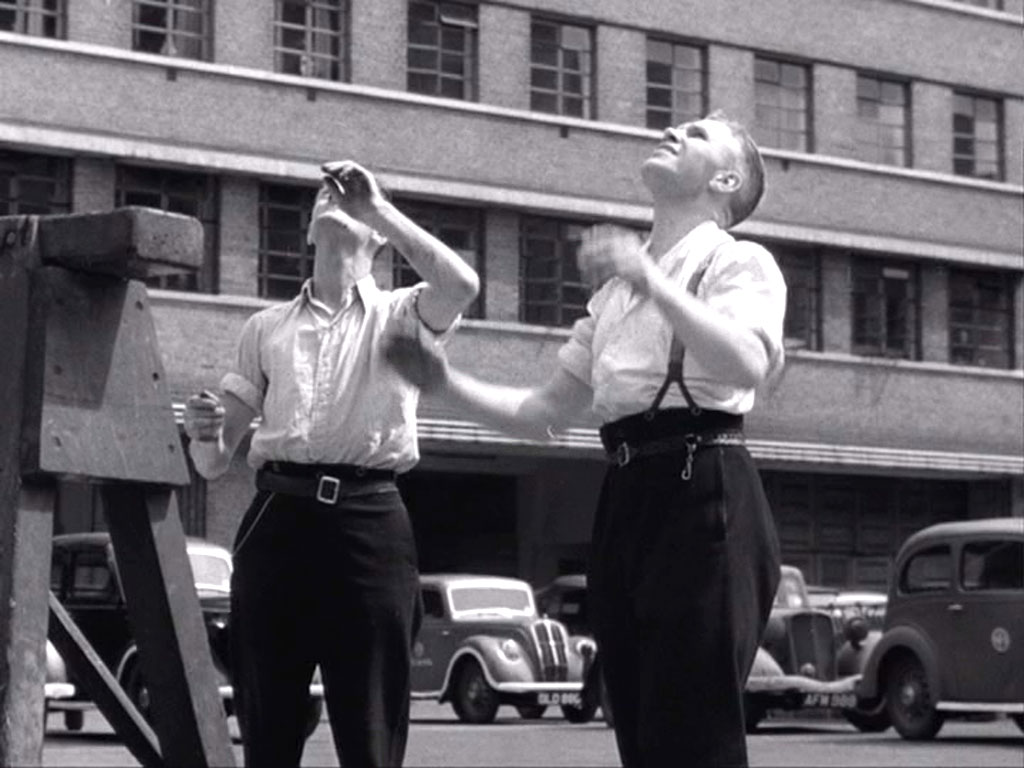
Lambeth Fire Station, Lambeth High Street, London SE1
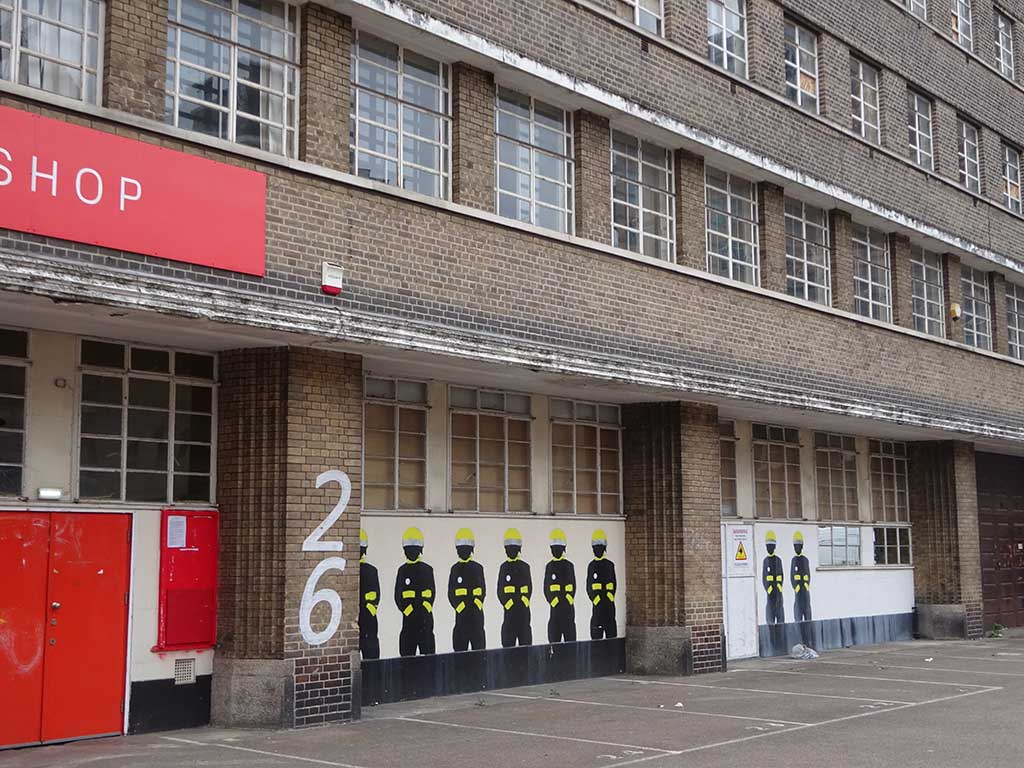
Looking east on Lambeth High Street. SJ
- Capture 7
- 'Now' required
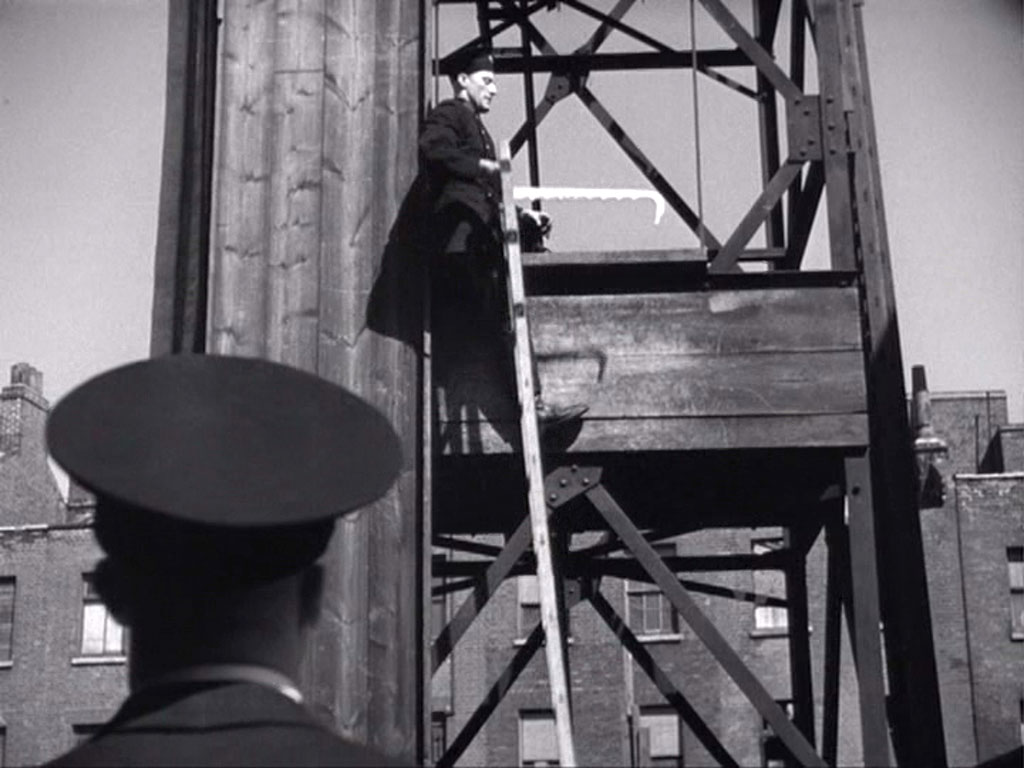
Hook Ladder training. A Lambeth Fire Station training tower.
- Capture 8
- 06 May 2021
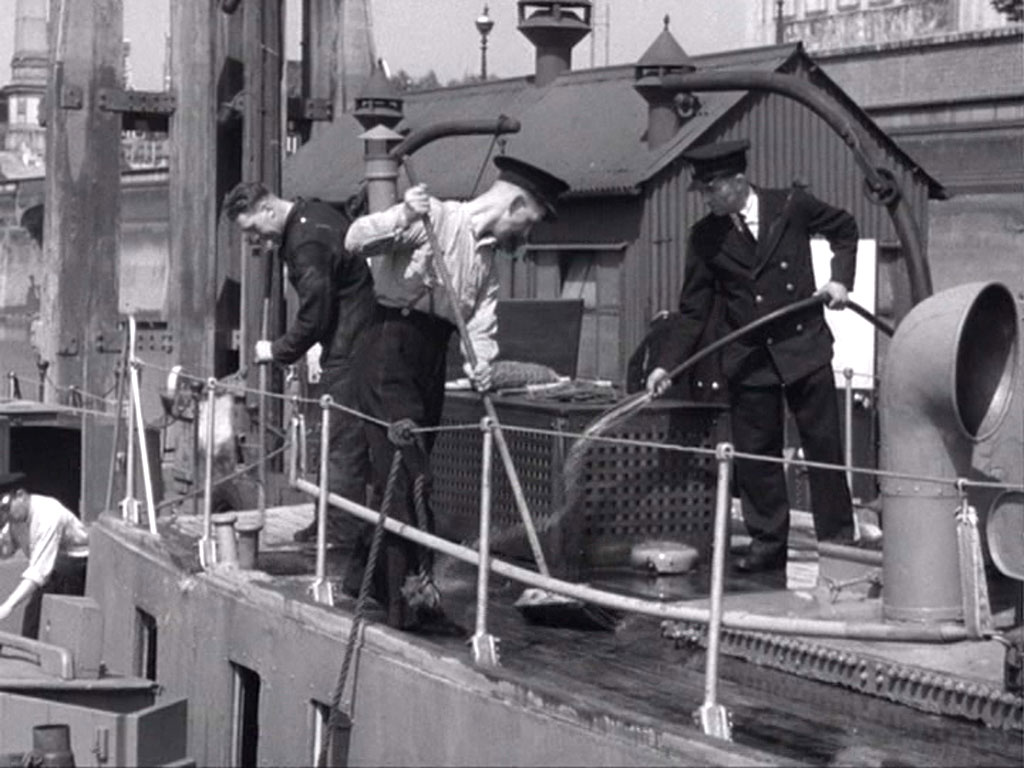
The cleaning of hoses. The pier opposite Fire Brigade HQ at Albert Embankment.
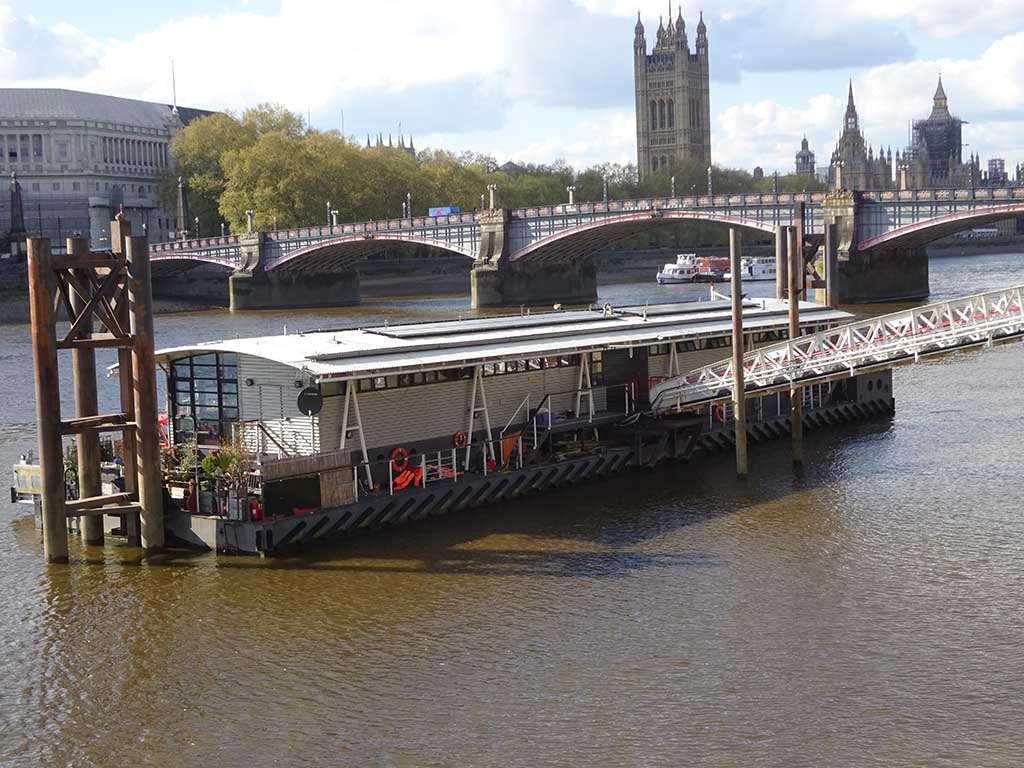
This is from the incorrect angle and will need replacement from the middle of the Thames at a future date and probably at low tide. SJ
- Capture 9
- 06 May 2021
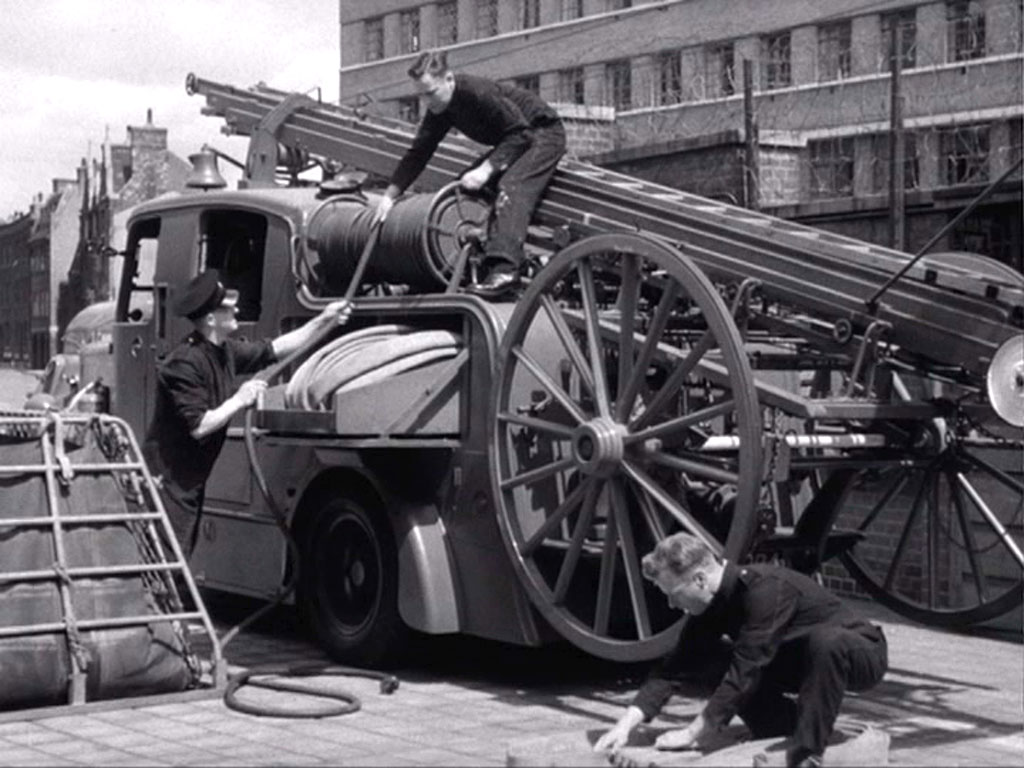
“Housework” in the Albert Embankment compound with the Lambeth High Street premises in the background.
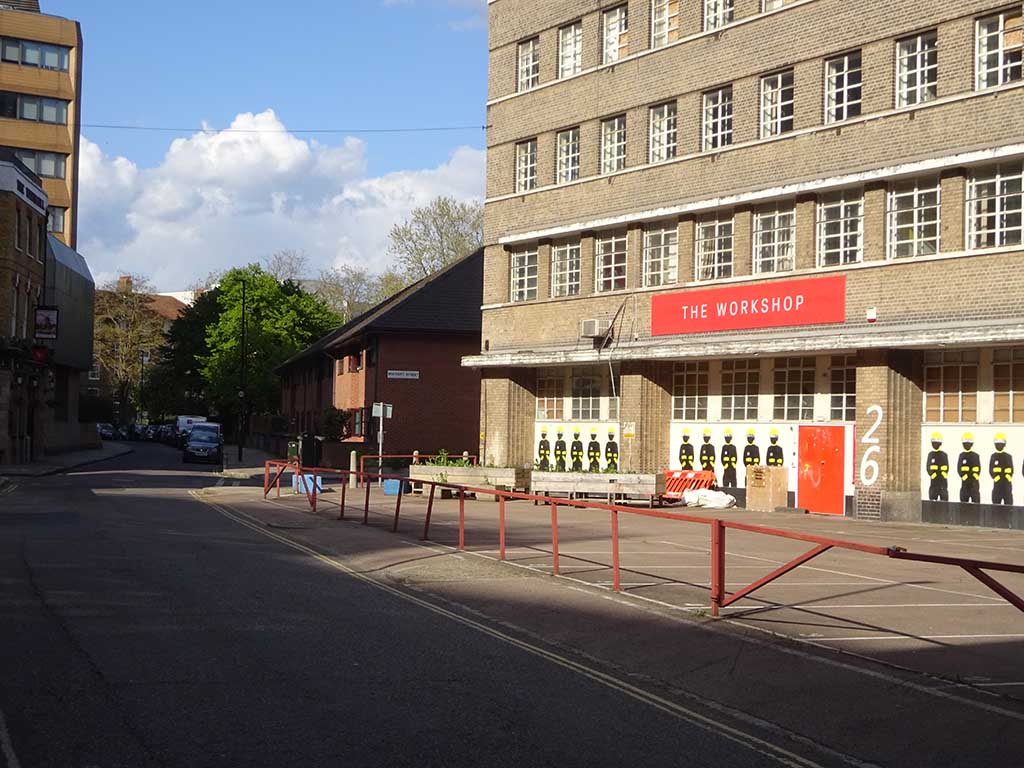
A slightly wider shot to capture on the extreme left the Windmill pub which is only other still standing original building on Lambeth High Street. SJ
- Capture 10
- 'Now' required
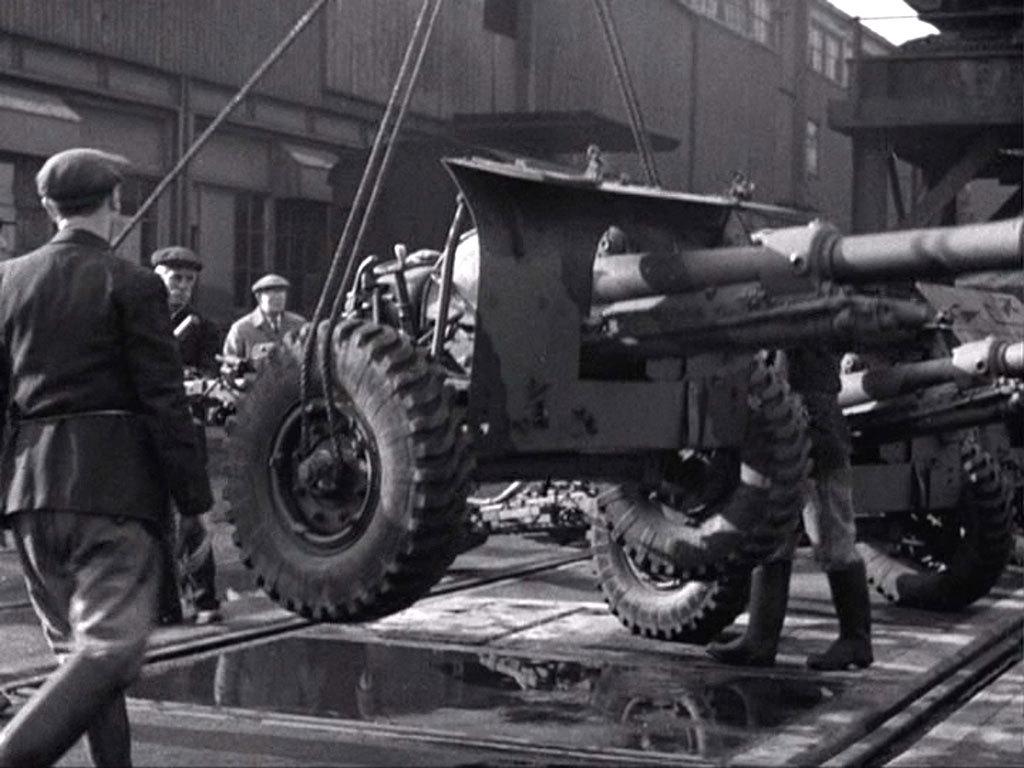
Woolwich Arsenal and we believe West Wharf (Ordnance). With sincere thanks to the Royal Arsenal History Forum and Steve Paterson (Admin) for referencing us to the rare video footage on YouTube showing a tour of the Arsenal in 1994 before demolition took place. This can be viewed at https://www.youtube.com/watch?v=qbJ7EMUFy9o&t=1062s and at circa 8':55" this very 'shipping shed' can be seen.
- Capture 11
- 25 Apr 2021
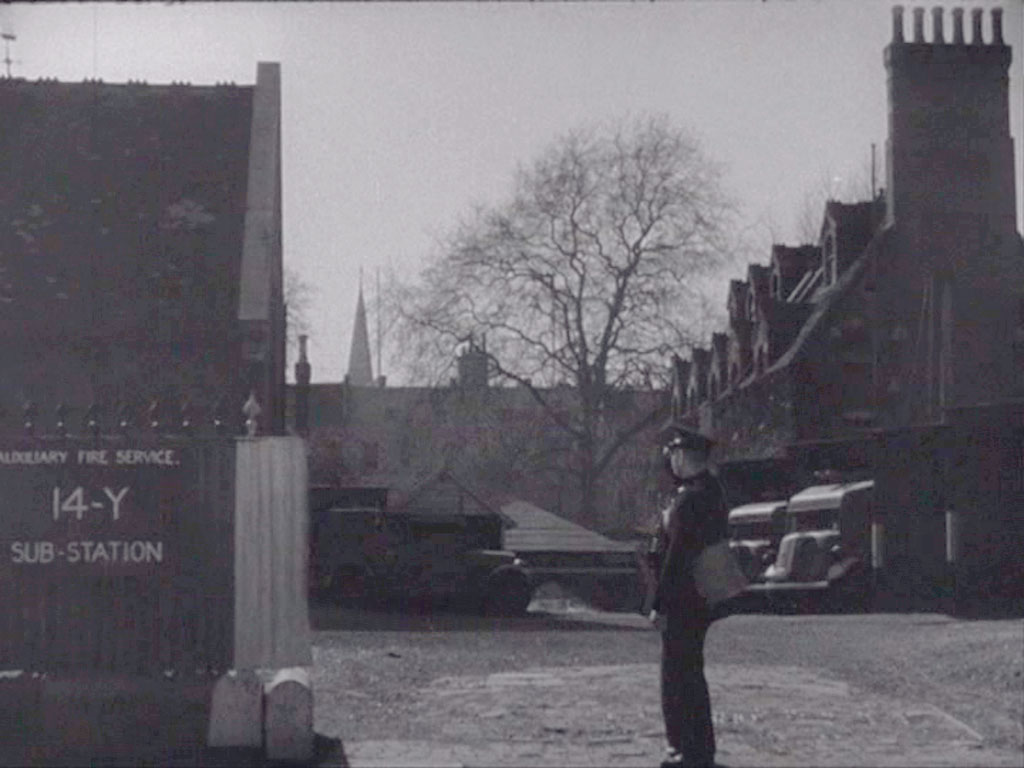
The school and grounds, and in the background the spire of St Paul’s Church, Dock Street, London E1
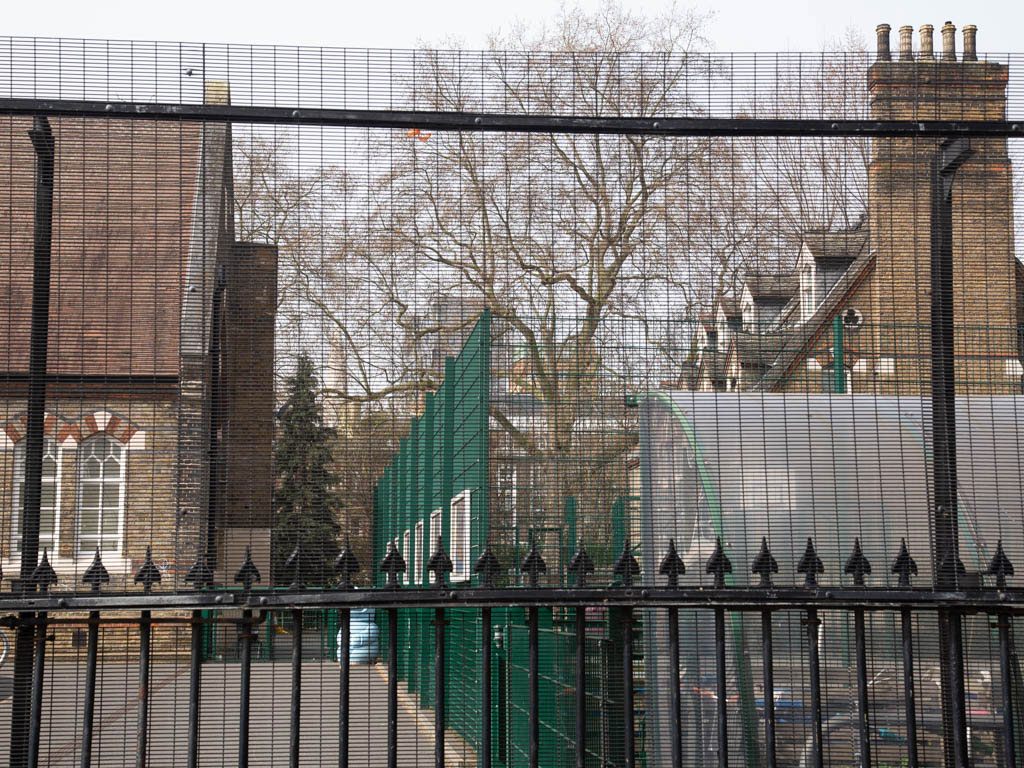
I was so pleased and grateful that the capture could be so faithfully replicated.
- Capture 12
- 25 Apr 2021
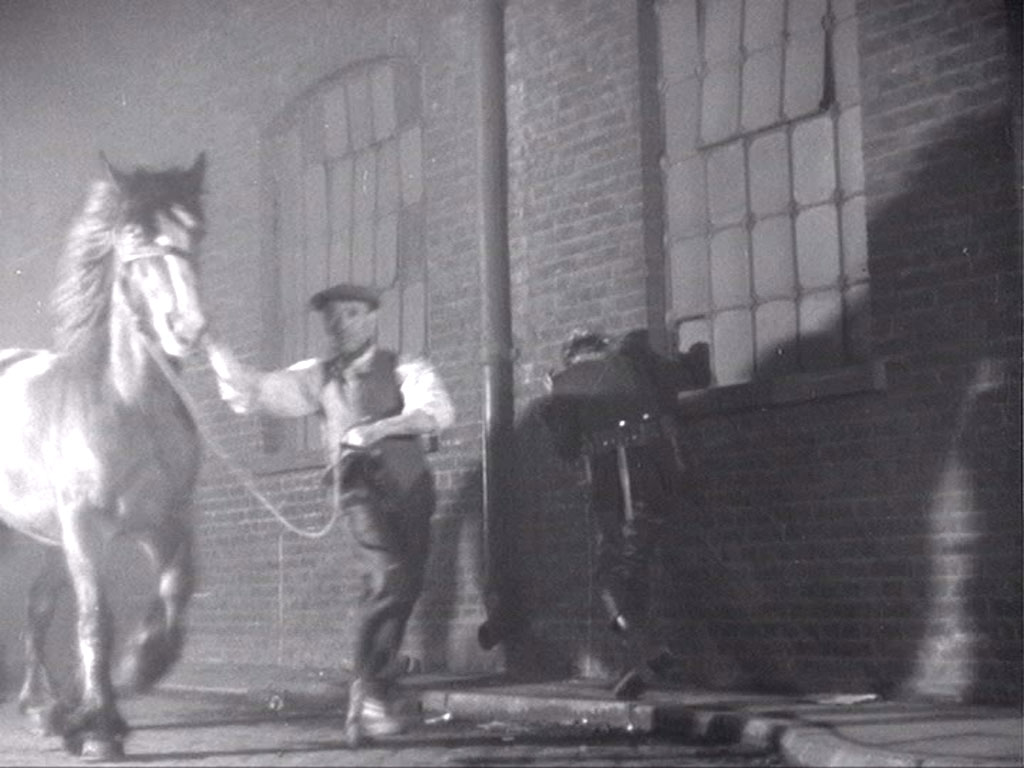
A frightened horse races down Pennington Street
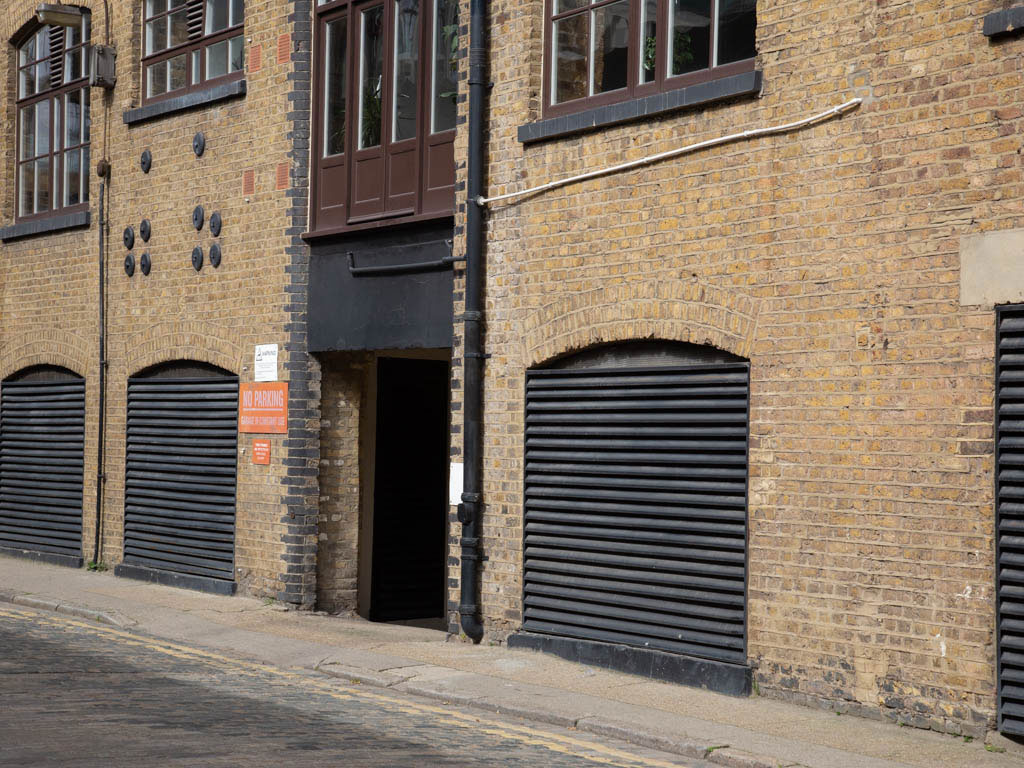
One now has to avoid speeding vehicles, despite the traffic calming measures.
- Capture 13
- 'Now' required
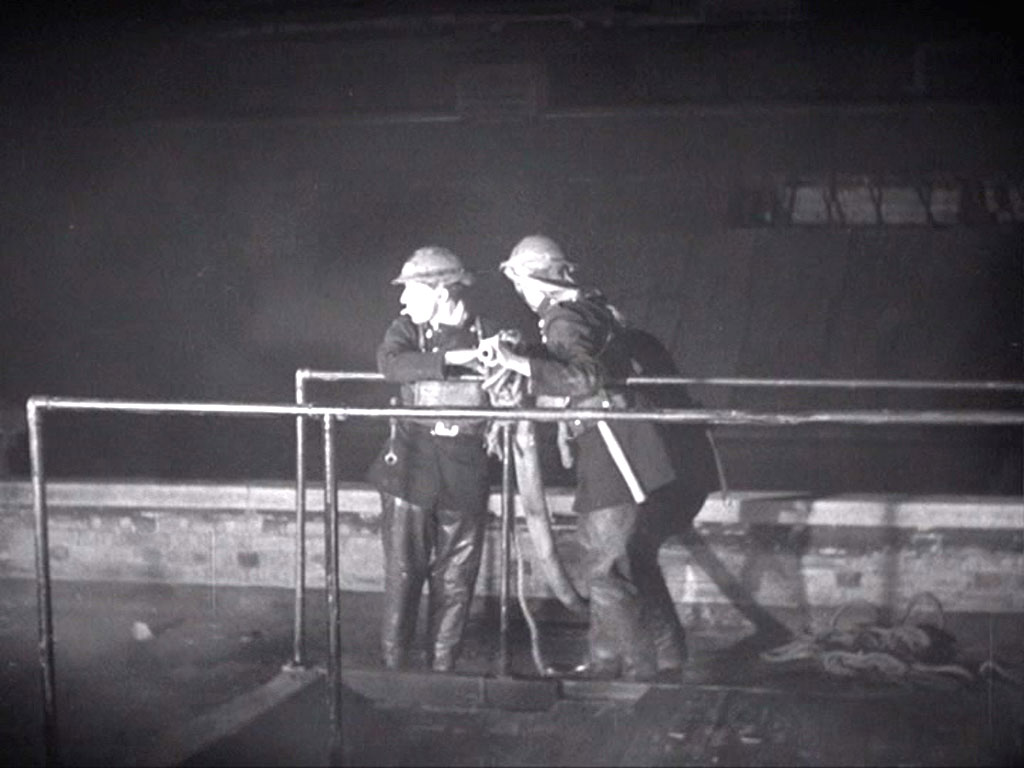
Fighting the fire from the roof but another air raid nearby has fractured the water main
- Capture 14
- 'Now' required
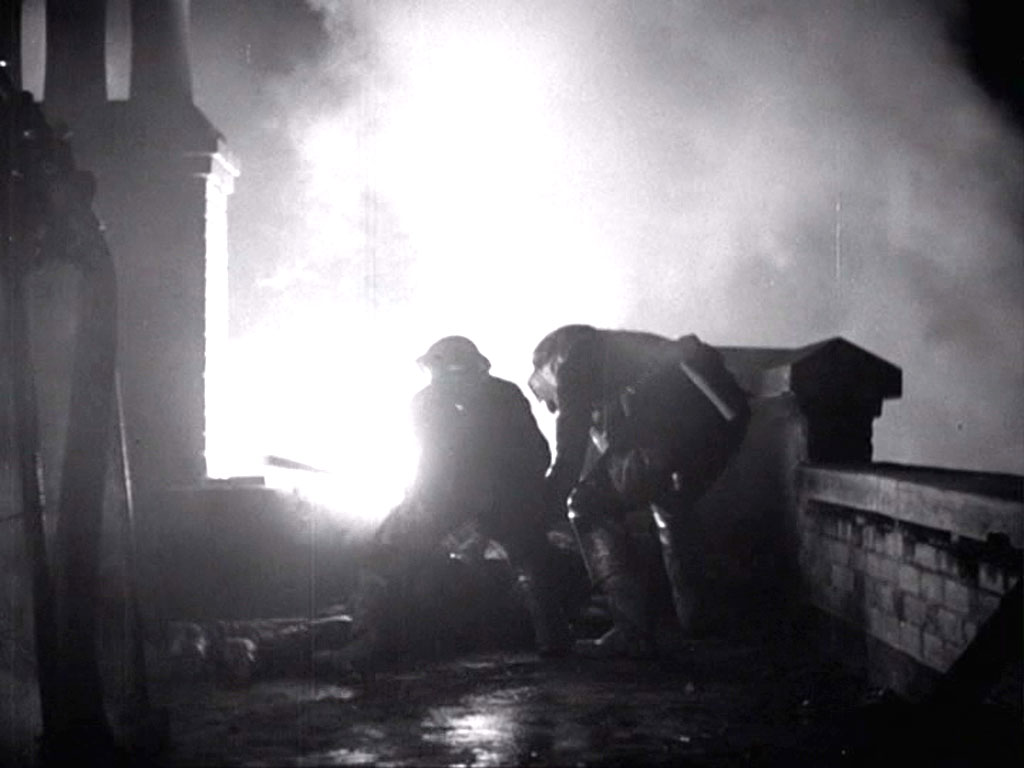
A sudden explosion and one man is knocked to the ground injured. It looks like the same wall as in the previous capture but that chimney stack doesn’t fit in with the surroundings.
- Capture 15
- 'Now' required
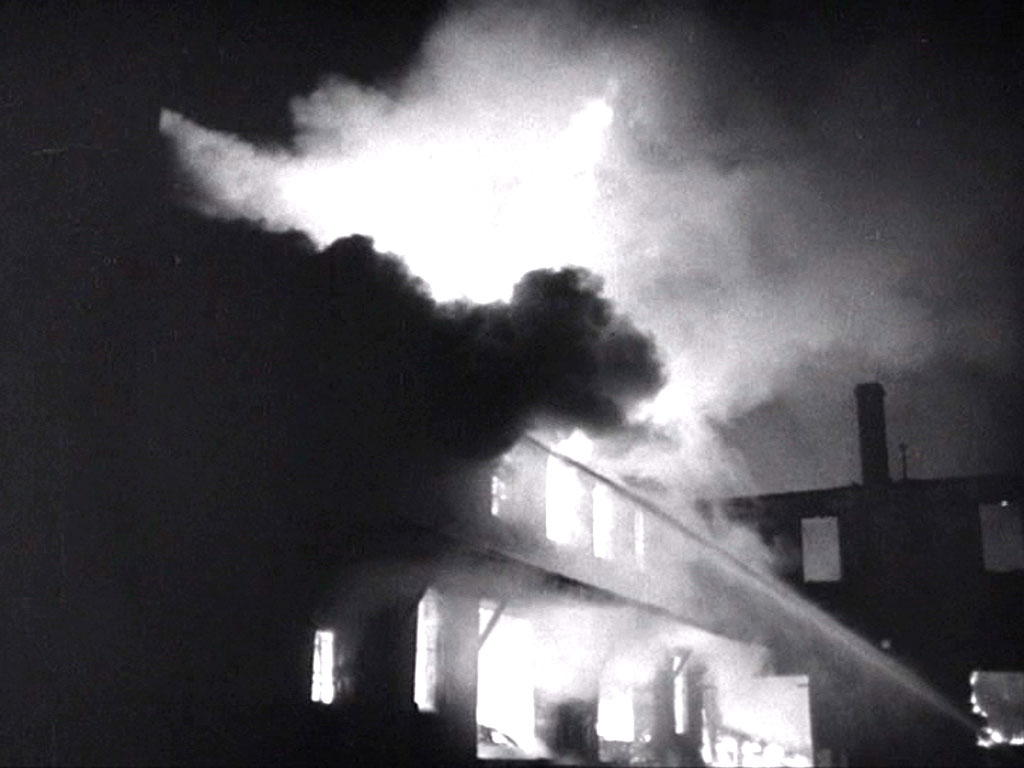
Could this be the two storey pickle factory mentioned in 'The Making of Fires Were Started', William Sansom, Film Quarterly (1961) 15 (2): 27-29? The documentation refers to the warehouse as “the pickle factory” but gives no precise location. It had been genuinely gutted during earlier wartime action and was made available for the film team to re-light for the fire scene.
- Capture 16
- 'Now' required
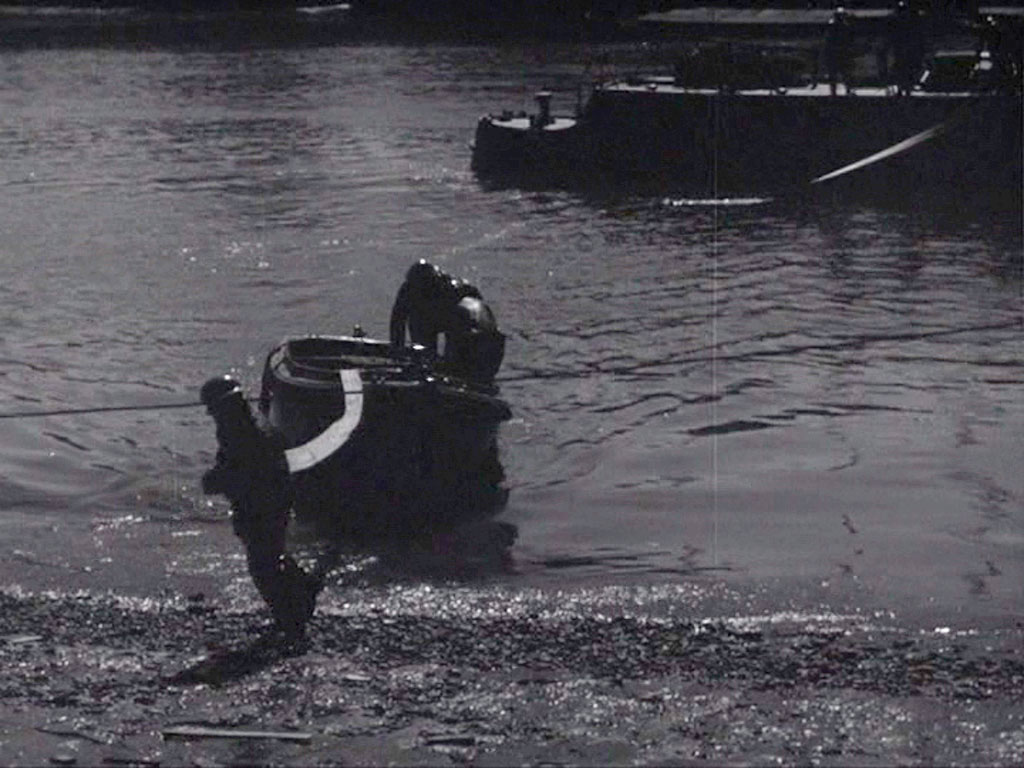
The fireboat crew bring their hoses ashore, supposedly the shoreline at St. Saviour's Dock.
- Capture 17
- 05 May 2021
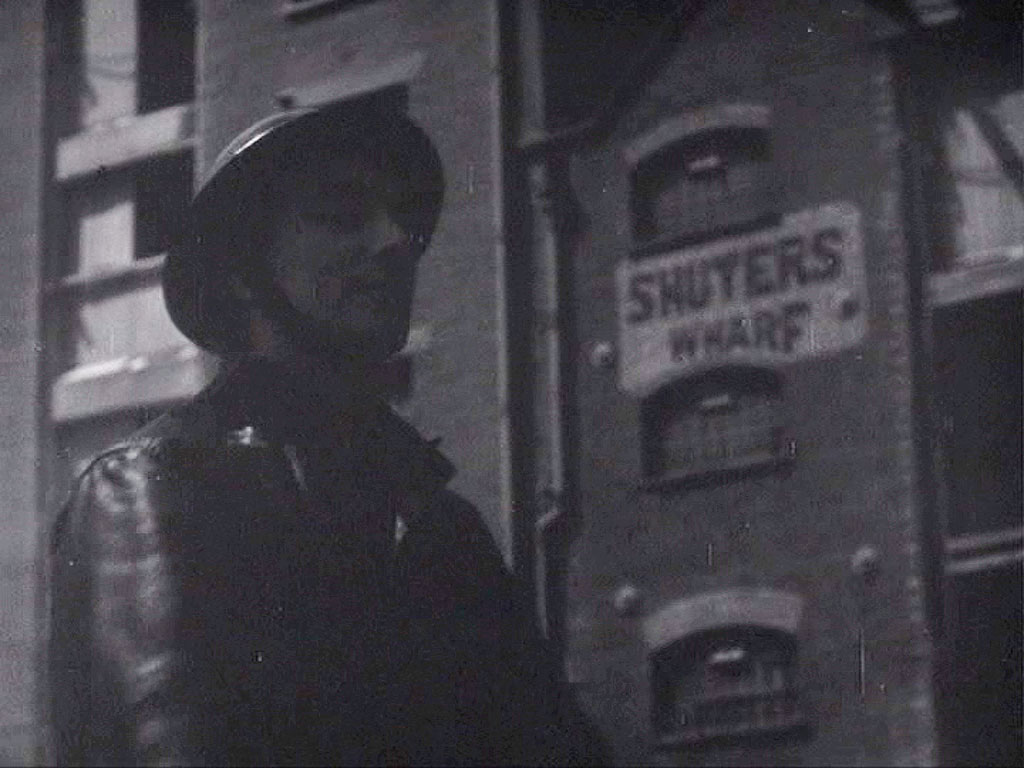
Guiding the men into St Saviour's Dock.
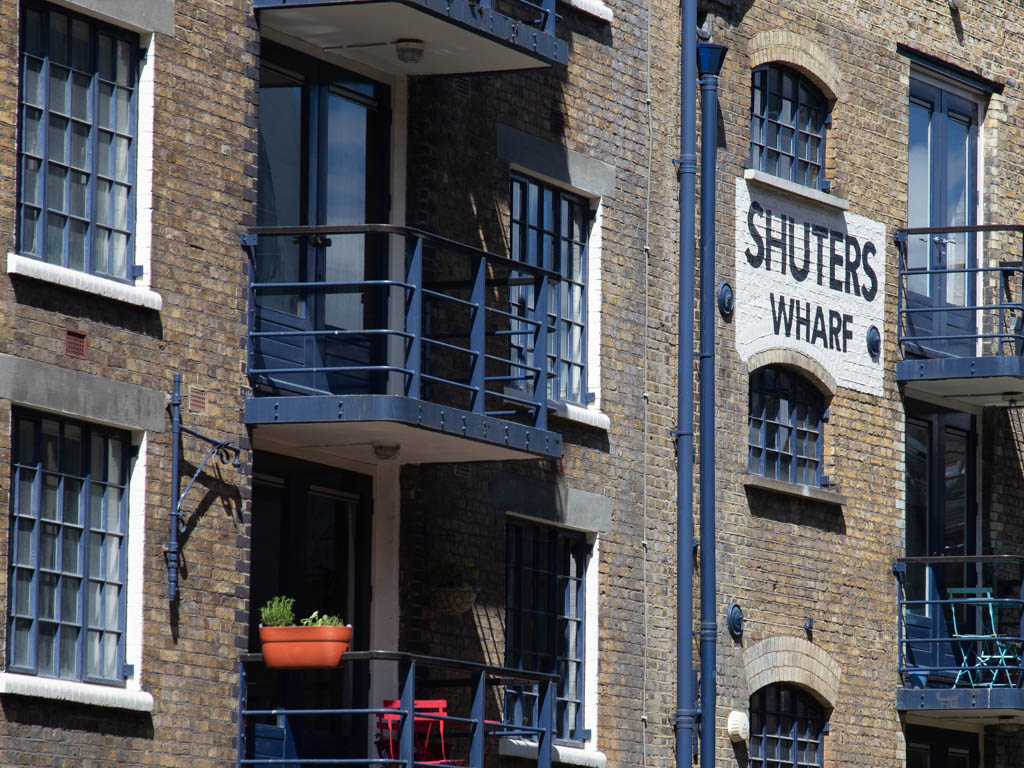
One needs to be the appropriate resident in the opposite block to achieve the correct angle these days.
- Capture 18
- 'Now' required
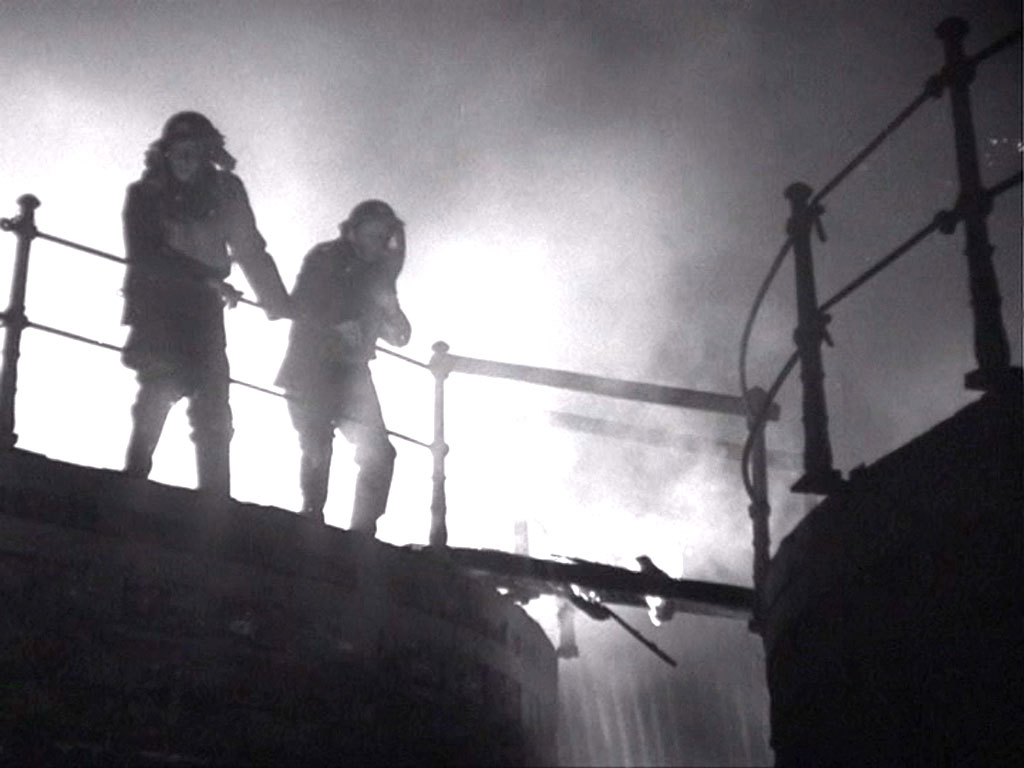
The fires continue to rage, two unidentified round towers.
- Capture 19
- 'Now' required
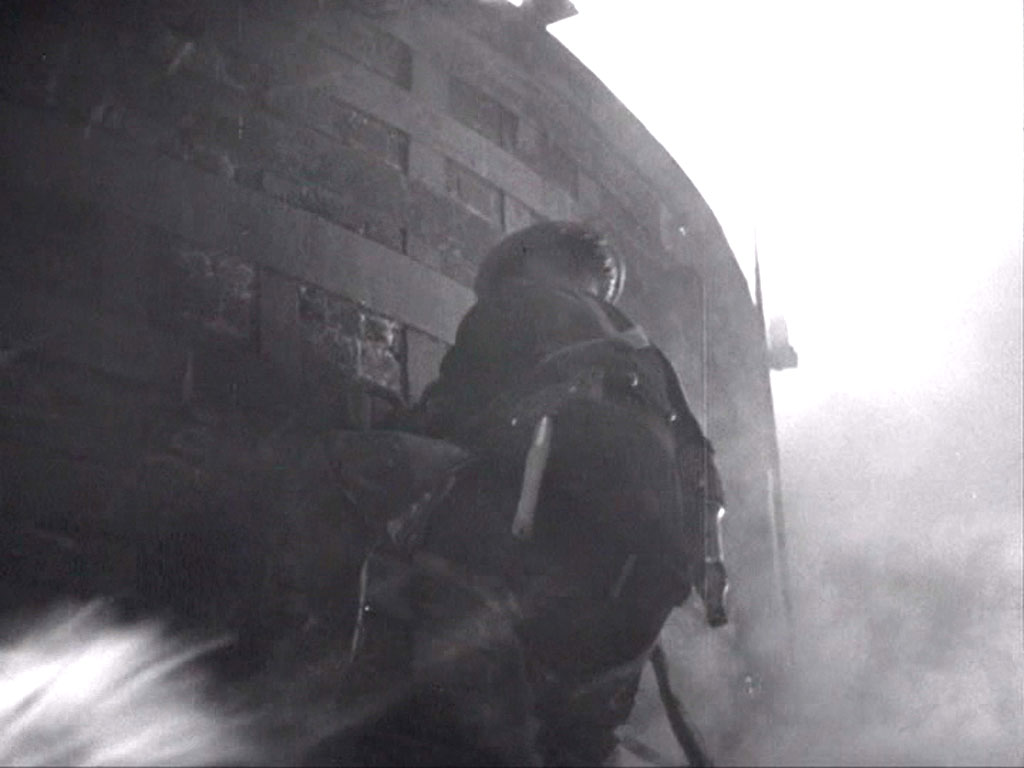
An officer climbs one of the towers.
- Capture 20
- 'Now' required
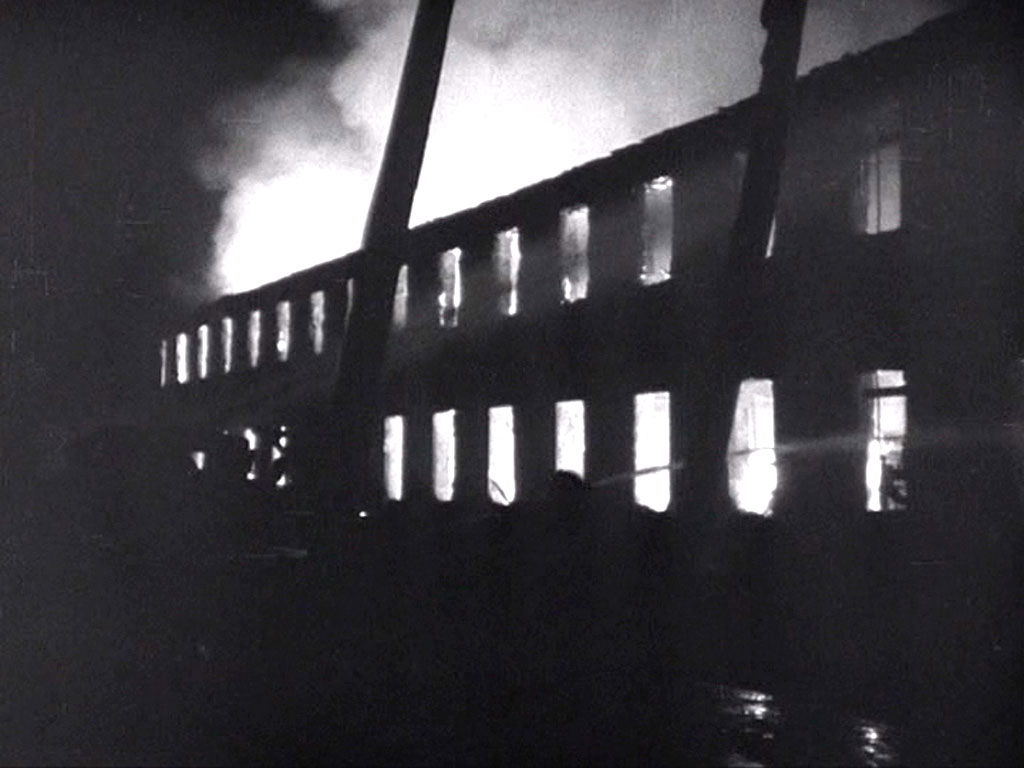
Another view of the pickle factory perhaps?
- Capture 21
- 12 Aug 2021
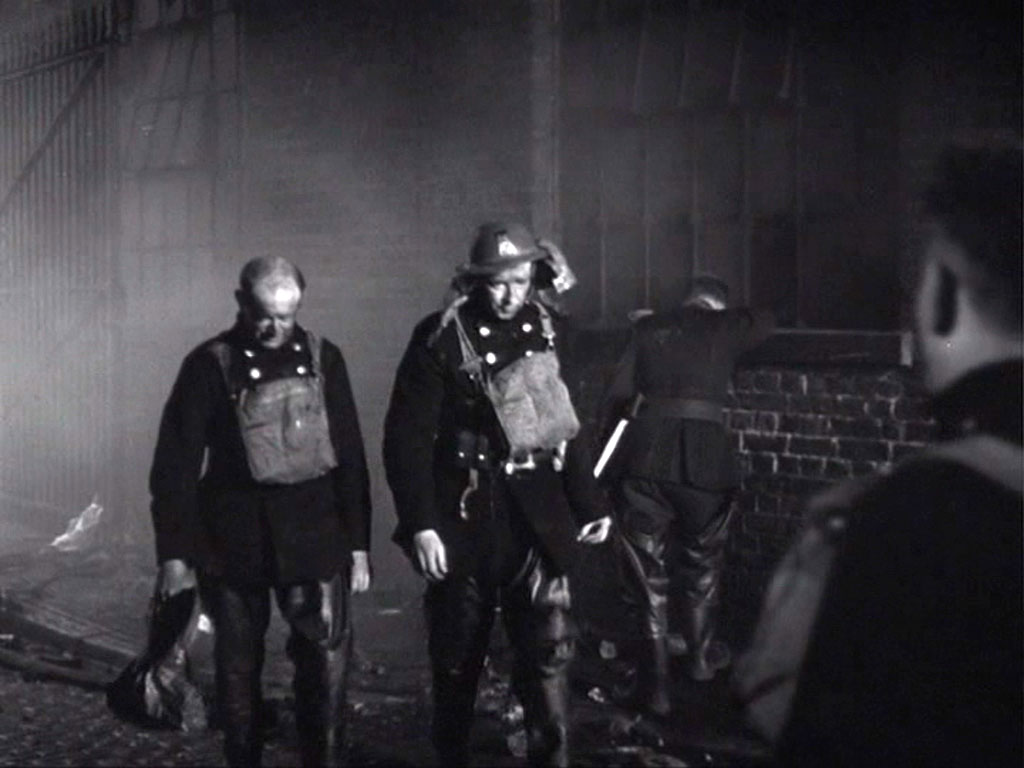
The fires are under control and the day ends, but Jacko (Fireman Johnny Houghton) has been killed. The wool warehouse now known as Telford’s Yard, looking out towards The Highway, London E1
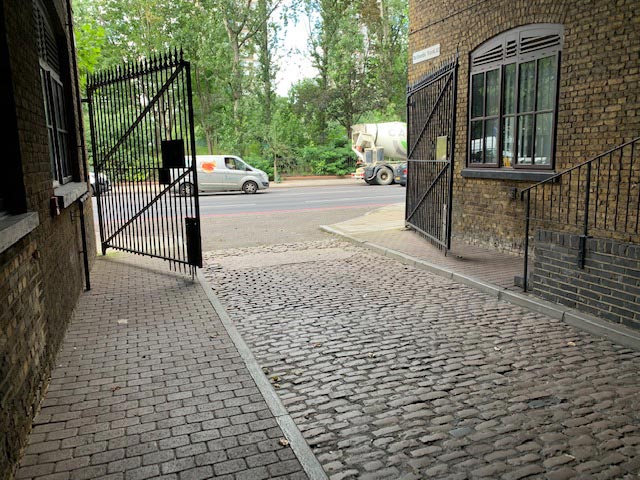
Ian managed to gain access to obtain this shot of a much less dressed scene.
- Capture 22
- 'Now' required
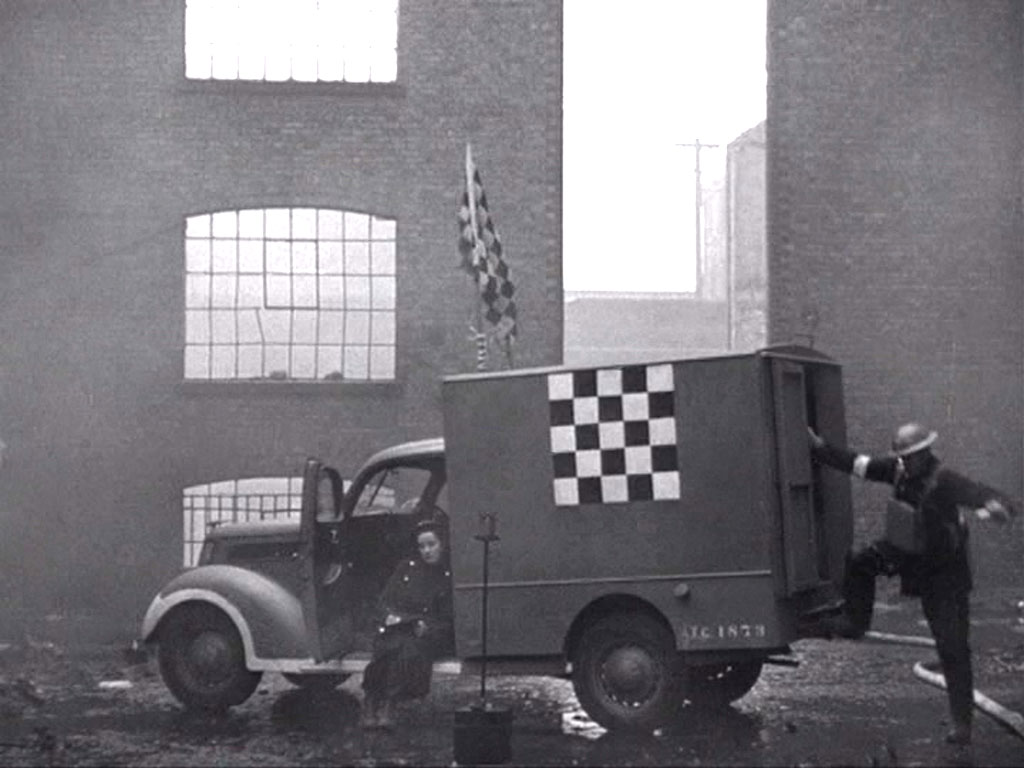
The controller is seen walking into the next capture so this suggests the foot of Virginia Street but it is difficult to find a match to the gap, associated buildings and the distant buildings. Perhaps an AFS descendant could explain the significance of the chequered flag and signage or indeed its true colour. Peter Brown found this comment in an ARP booklet, "The marking of Incident Posts during daylight was with a 3 foot square chequered flag of six inch squares of Cambridge blue and white." As Peter says, it looks more 'Oxford' blue rather than 'Cambridge' here. This would be where the Civil Defence officer in charge of coordinating the various services at an 'incident' would be located. This all seems highly likely given the circumstances in the film but the maths doesn't seem to work on either the flag or the side of the lorry. Ray Glenister has done research on this subject and, naturally, has sent supporting detail but in essence it appears that the chequered signage is not uniform and seems to amount to the same thing, chequered means Fire Control vehicle.
- Capture 23
- 04 Aug 2021
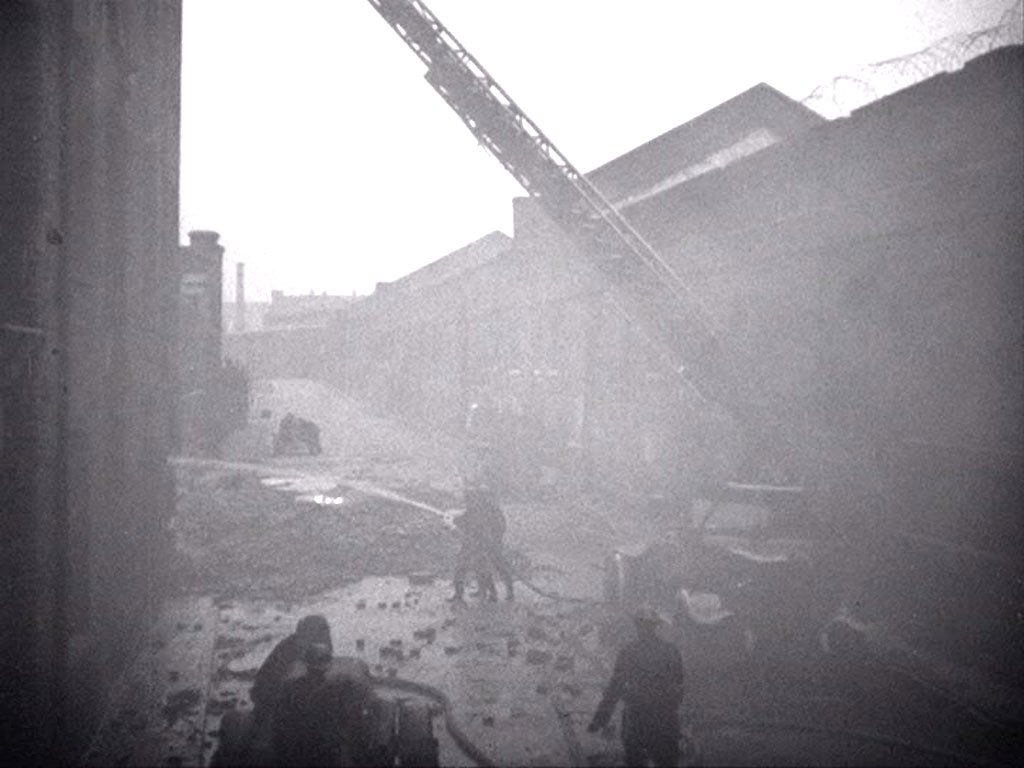
The controller walks towards the fire crews advising them to stand down. Looking east along Pennington Street.
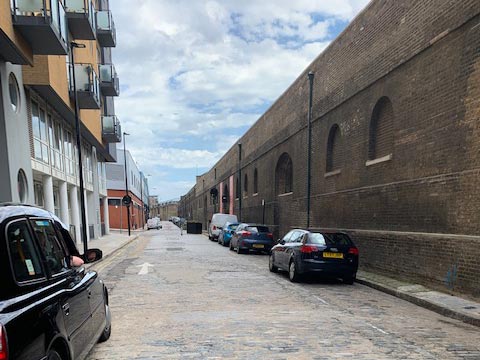
Ian Stewart found it to be a much quieter location some 78 years on.
- Capture 24
- 'Now' required
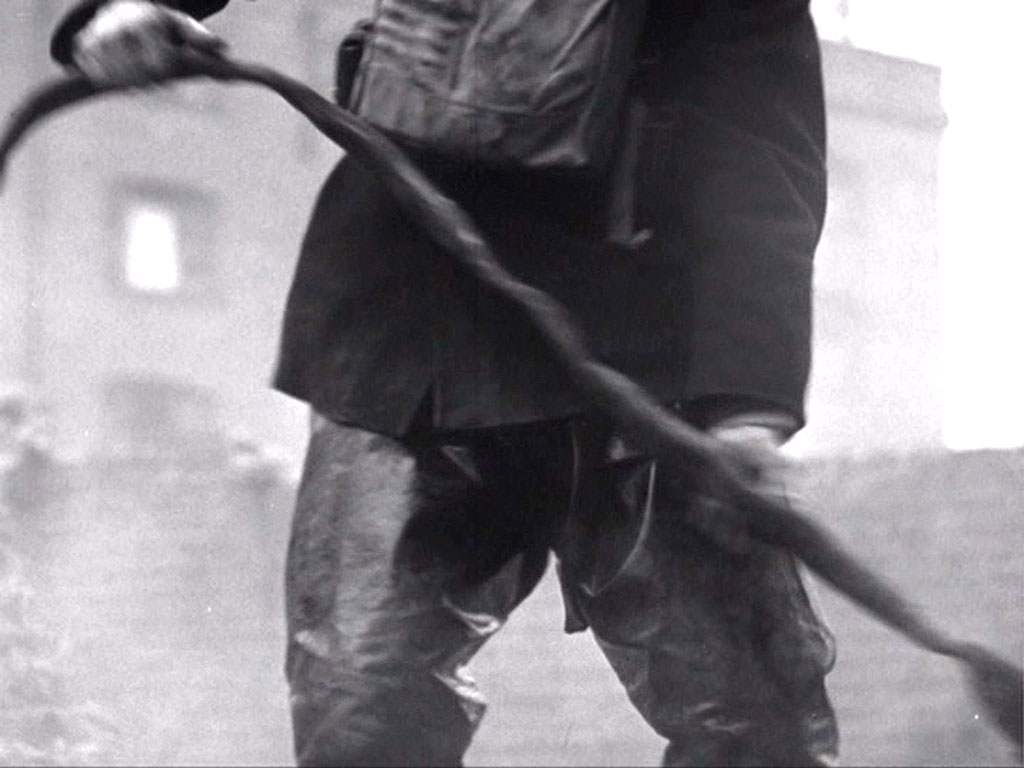
In the background, on the right, is that the corner of 26 The Highway's east Face? As perhaps seen from the ruins of Pennington Street north side? 26 is now renumbered to 20, Breezers Court.
- Capture 25
- 'Now' required
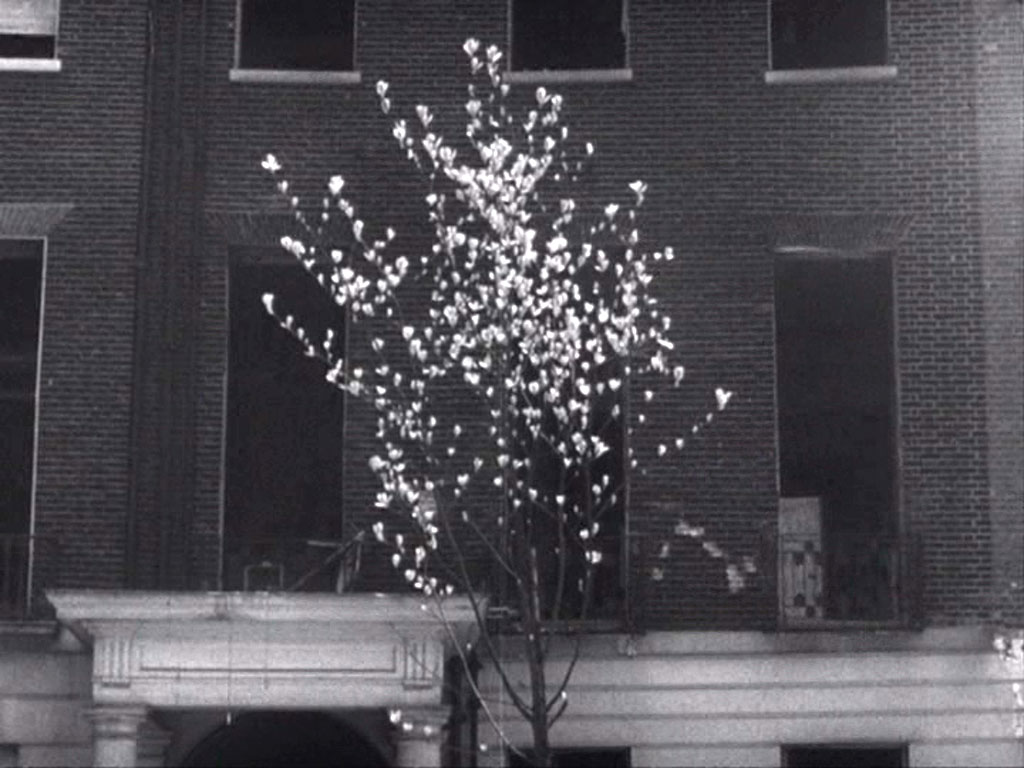
Blossom, maybe suggesting a brighter more cheerful tomorrow. This does not appear to be Wellclose Square nor the Georgian houses of Pier Head, Wapping. Unidentified location.