
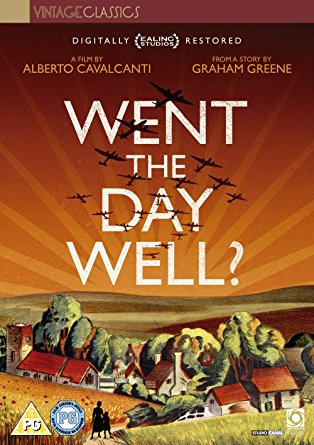
Went the Day Well?
Date: 1942
Director: Alberto Cavalcanti
Production Company: Ealing
Stars: Leslie Banks, Mervyn Johns, Thora Hird, Patricia Hayes, Harry Fowler
Location(s): Buckinghamshire
Region(s): South East R-Z
Storyline:
Nazi invasion of small Buckinghamshire village, and the villagers giving them the cold steel up ’em. Excellent wartime propaganda.
Additional Information:
Photo 021 of the church shows it now without the war memorial seen in the film. I am almost certain that this was a prop for the film and not a real one. In the film one can clearly see the names listed on it and it includes a Major G. Fraser. Mrs Fraser who lives in the manor house in Bramley End in the film is a sixty-something woman who is presumably a widow and it would tie in that her husband, never mentioned, would have probably held such a position in the army. The plaque commemorates ‘the men of this parish who fell’ rather than giving an actual location and that slight vagueness also suggests that it was no more real than the large cross for the German soldiers in the churchyard at the end of the film. Philip Anderton.

As an Amazon Associate, we earn from qualifying purchases.
Can you help:
If you have any information regarding this production, the locations or, even better, some comparison shots please contact us. Images submitted must be in Landscape orientation, as would be seen on the cinema screen, not Portrait.
We are aware that there are films on the site that were added when the criteria for the inclusion of locations was very different from today and, as a result, there may be scenes missing from some productions. Please do not forward additional screen captures to us but bring the detail to our attention, for we do, and are, 're-addressing' these older entries as time allows.
- Capture 1
- Pre 2008

All shot in Turville, Buckinghamshire, which John Larkin tells us was also used for scenes in 1945's 'Dead of Night'.

Now.
- Capture 2
- Pre 2008

One could almost stand in one place and photograph in a circle and capture everything.

Now.
- Capture 3
- 03 Dec 2015

A church, a pub, a village green and that's it.

The same shot 73 years on without the words. (RL)
- Capture 4
- Pre 2008

Perhaps at one time the manse.

Now.
- Capture 5
- 03 Dec 2015


To increase the number of "now" photos. (RL)
- Capture 6
- Pre 2008

Good, solid, English church.

Now.
- Capture 7
- Pre 2008
- 30 Aug 2023

The ex-school and library, Turville, Buckinghamshire.

Now.
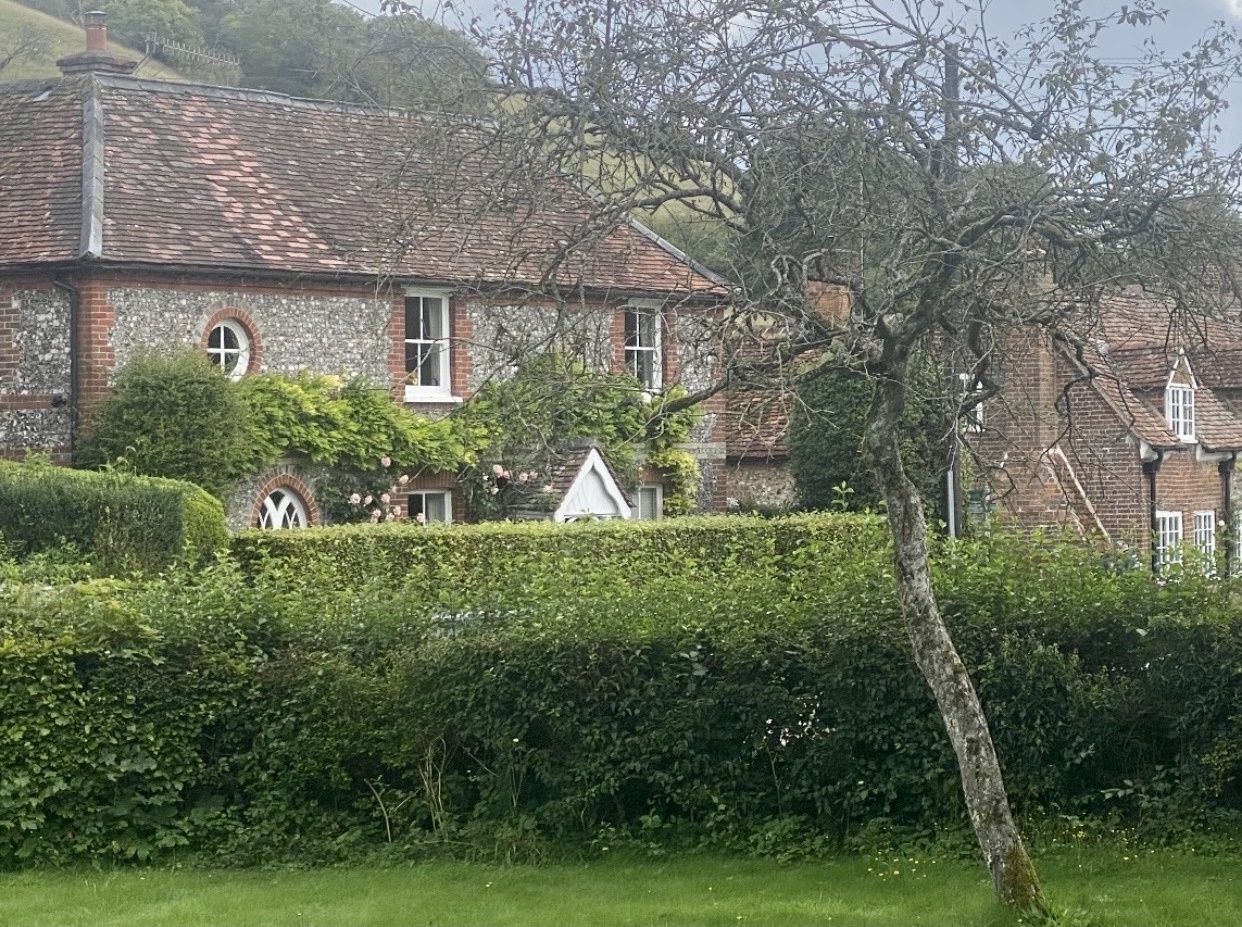
Antony Blair returned to the scene to find one of the trees still alive 81 years later.
- Capture 8
- Pre 2008


Now.
- Capture 9
- 03 Dec 2015

The pub, renamed for the film.

It remains as the "Bull & Butcher" today. (RL)
- Capture 10
- Pre 2008


Now.
- Capture 11
- Pre 2008


Now.
- Capture 12
- 12 Jun 2018


John Rhodes provides this shot of the location now. Slightly off angle because the Bull & Butcher has had an extension, they have either used the same door and over canopy or copied the old but the background building remain the same, OK so a chimney is missing! (RL)
- Capture 13
- Pre 2008
- 30 Aug 2023

The pub is on the right, the white building.

And, as you see, still is.

Antony Blair updated the record with this view.
- Capture 14
- Pre 2008
- 30 Aug 2023


Now.
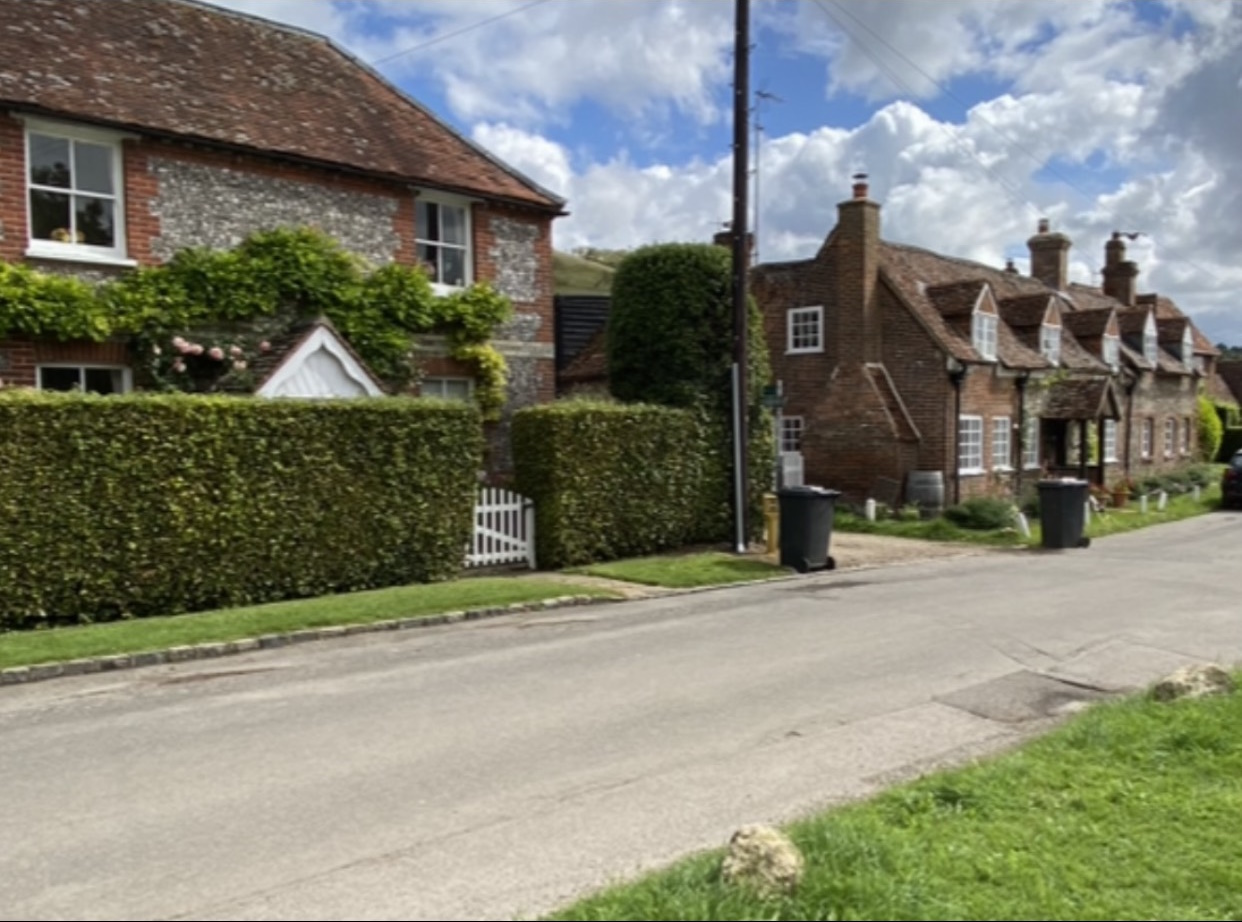
An almost unchanging scene captured by Antony Blair.
- Capture 15
- Pre 2008


Now.
- Capture 16
- Pre 2008
- 30 Aug 2023


Now.
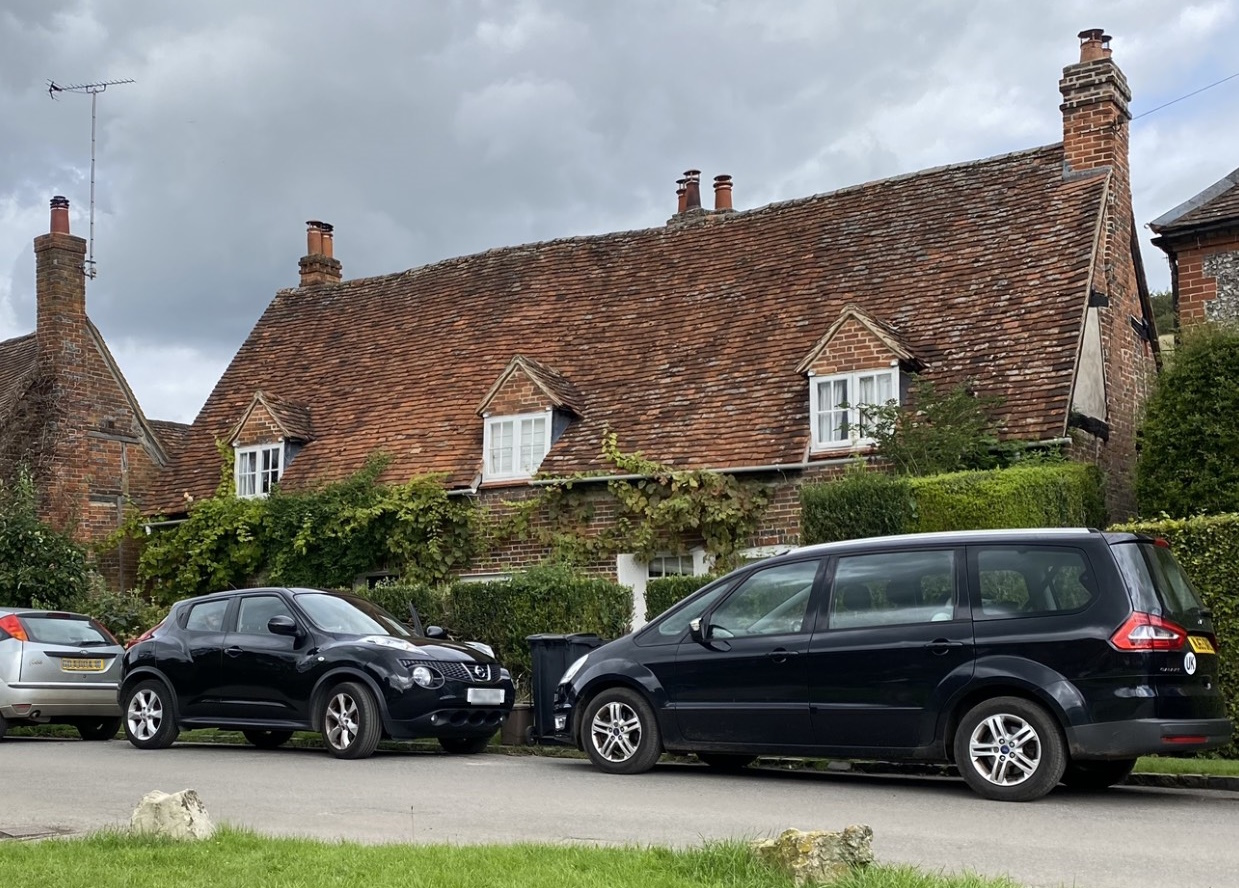
Antony found the roof fully restored and intact.
- Capture 17
- Pre 2008

The Old Vicarage, Turville Bucks.

Now.
- Capture 18
- Pre 2008

A barn, Turville, Bucks.

And today.
- Capture 19
- Pre 2008
A barn, Turville, Bucks.

Still with an ARP (Air Raid Precaution) WWII sign on the wall! Obviously taking no chances these villagers.
- Capture 20
- Pre 2008
- 30 Aug 2023

And this is where the mystery starts. The corner on the left is a set, it was never a building in reality.

And now.
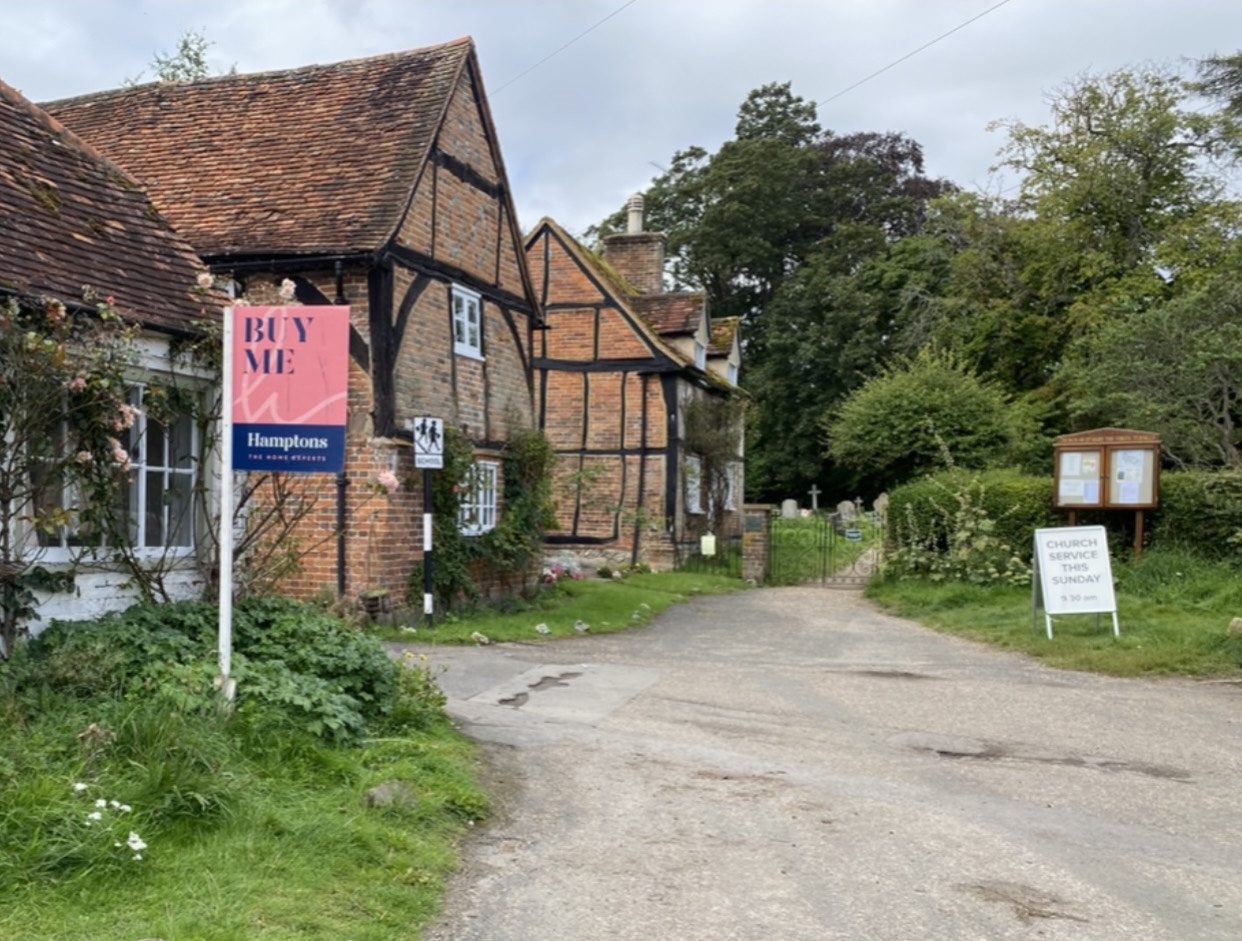
Antony Blair found a less cluttered view from the one 15 years ago.
- Capture 21
- Pre 2008
- 30 Aug 2023

View from Cobstone Hill, over Turville, Buckinghamshire.

Similar view now.
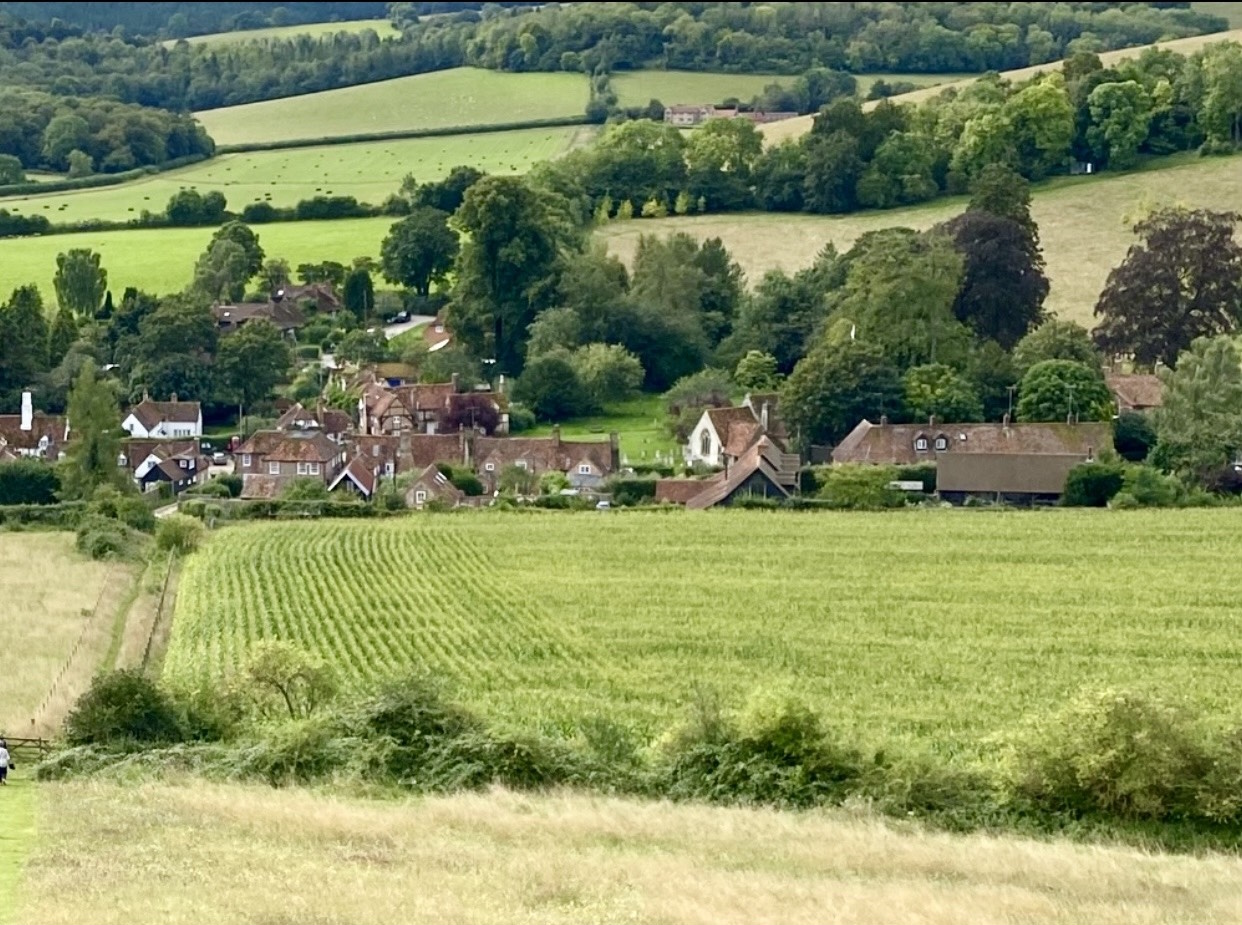
Antony Blair looked down onto the village across a field of sweetcorn.
- Capture 22
- Pre 2008

View from Cobstone Hill, over Turville, Buckinghamshire.

Similar view now.
- Capture 23
- Pre 2008

Cobstone Hill Mill. This windmill also appeared in Chitty Chitty Bang Bang and Dead of Night made in 1945 also made in Turville. John Larkin sent this information in. Thanks John.

Now.
- Capture 24
- Pre 2008

A view of the village, which doesn't actually show the fake post office, unless it's hidden by the trees on the left.

Now, trees gone, cars parked where the phantom Post Office was built. Pub on the left.
- Capture 25
- 21 Nov 2018

Photo kindly supplied by Eric Thurman, who confirmed that the Post Office never was! I really must try and get a life! The picture shows the pub, the white building and a timber store office on the right, now demolished.
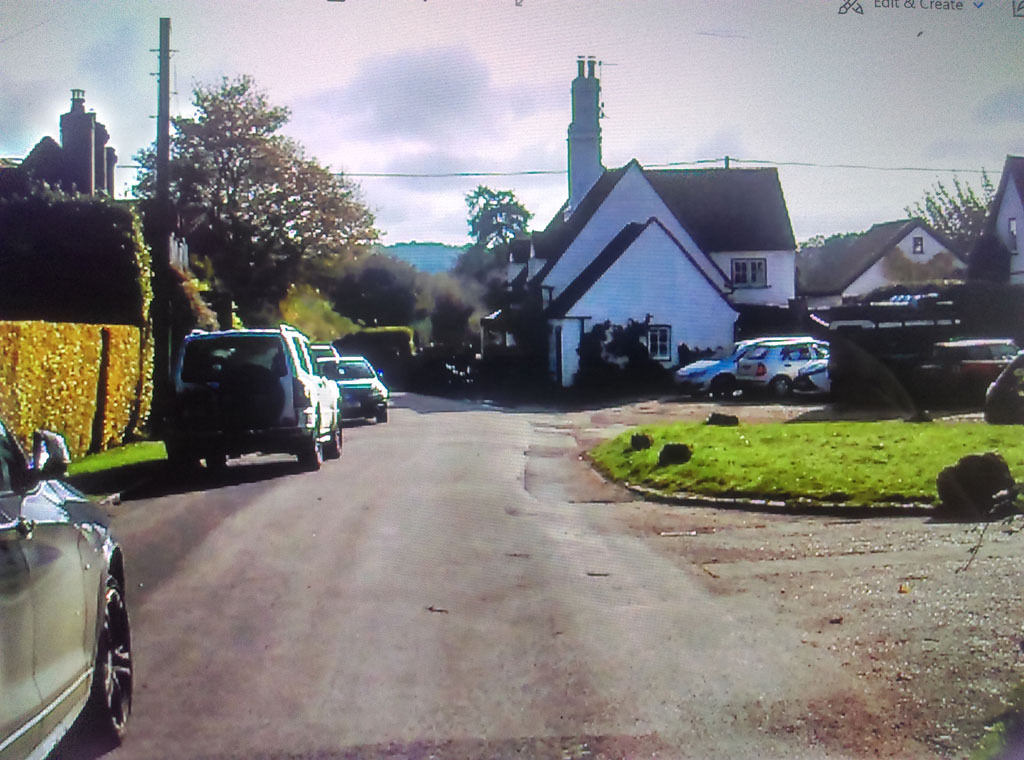
Michael Miller sends us this comparative shot that he took last month whilst touring the area for "now's". (RL)
- Capture 26
- Pre 2008

Corner of Chiltern Way, Turville, Buckinghamshire.

Now.
- Capture 27
- Pre 2008

The pub, now called the Bull and Butcher.

Now.
- Capture 28
- Pre 2008
- 30 Aug 2023

Peter Woodman updates us that a plaque has been fixed to the pub's wall commemorating the 80th anniversary of filming.

Now.
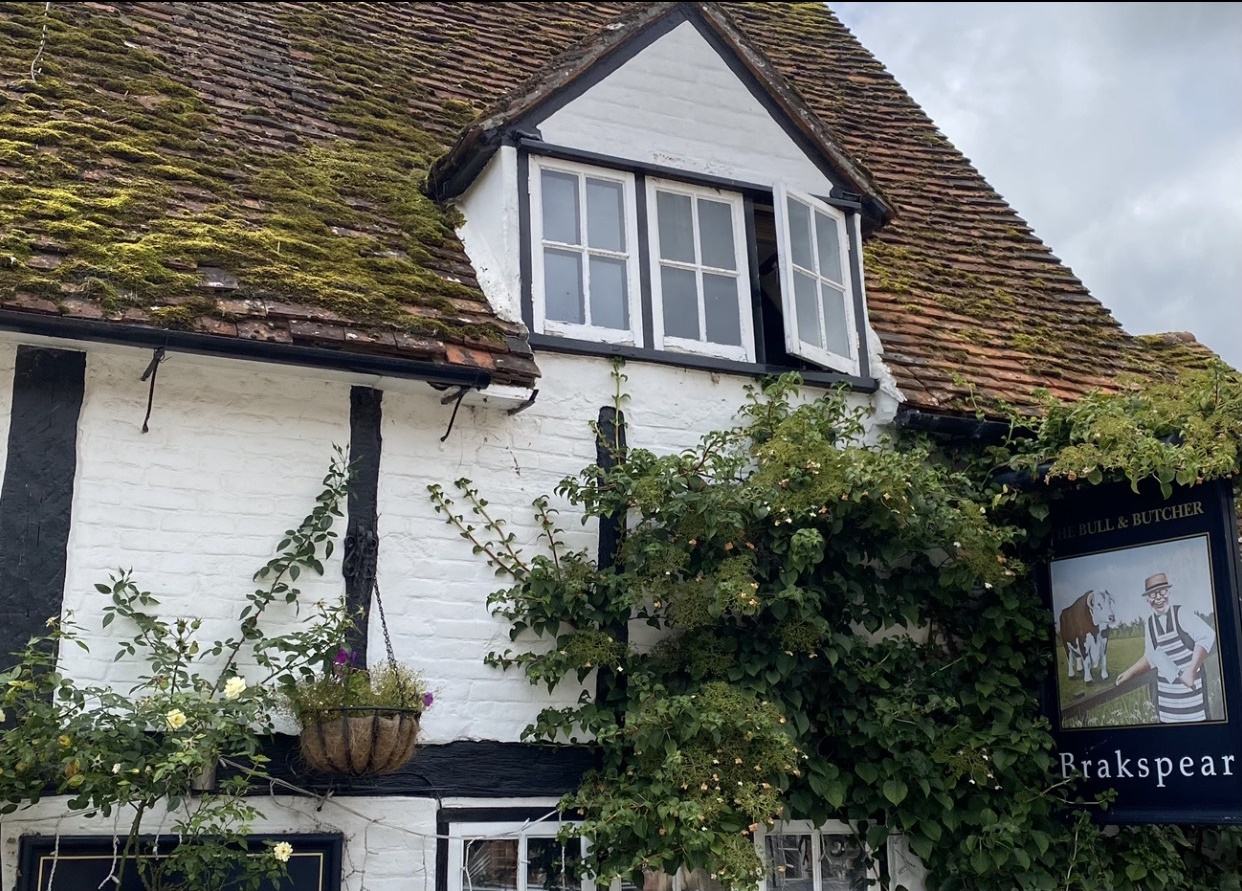
Antony Blair returned to the pub.
- Capture 29
- Pre 2008

The memorial was a prop, but two old wooden benches remain.

Now.
- Capture 30
- 18 Jun 2018

The set. The Post Office.

Accepting that the Post Office was a prop John Rhodes took this shot of the view without the obstruction. (RL)
- Capture 31
- Pre 2008
- 30 Aug 2023

The set, built in front of the pub, taken from the churchyard gates.

Now, from the churchyard gates towards the pub.
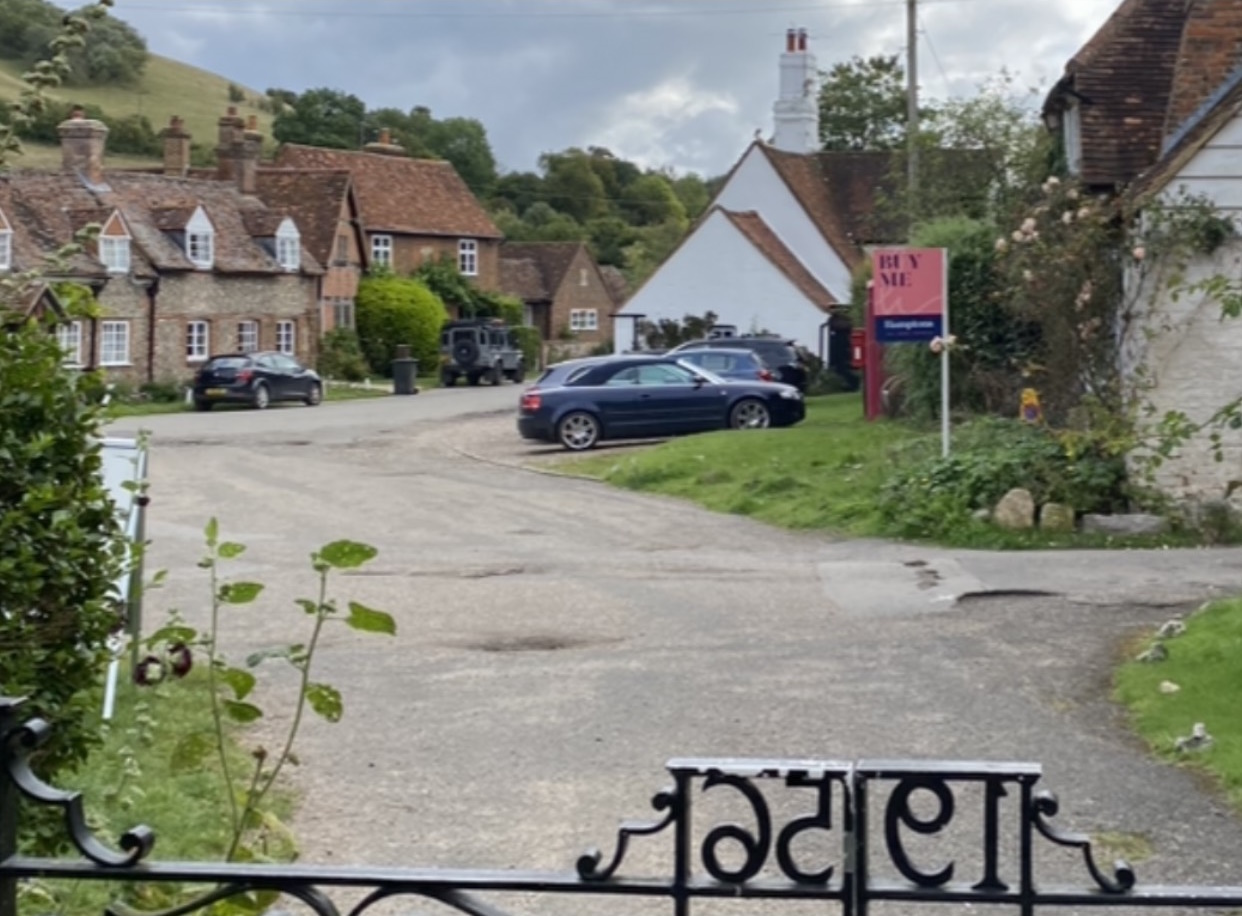
The gates from 1956 are still in place as Antony Blair discovered.
- Capture 32
- Pre 2008

Churchyard of St Mary's, Turville.

Now.
- Capture 33
- Pre 2008

All much the same angle, but with the Post Office set on left side of wdw025b.

Now.
- Capture 34
- Pre 2008

All much the same angle, but with the Post Office set on left side of wdw025b.

Now.
- Capture 35
- 03 Dec 2015

All much the same angle, but with the Post Office set on left side of wdw025b.

At "much the same angle". (RL)
- Capture 36
- Pre 2008
- 30 Aug 2023

All much the same angle.

Now.
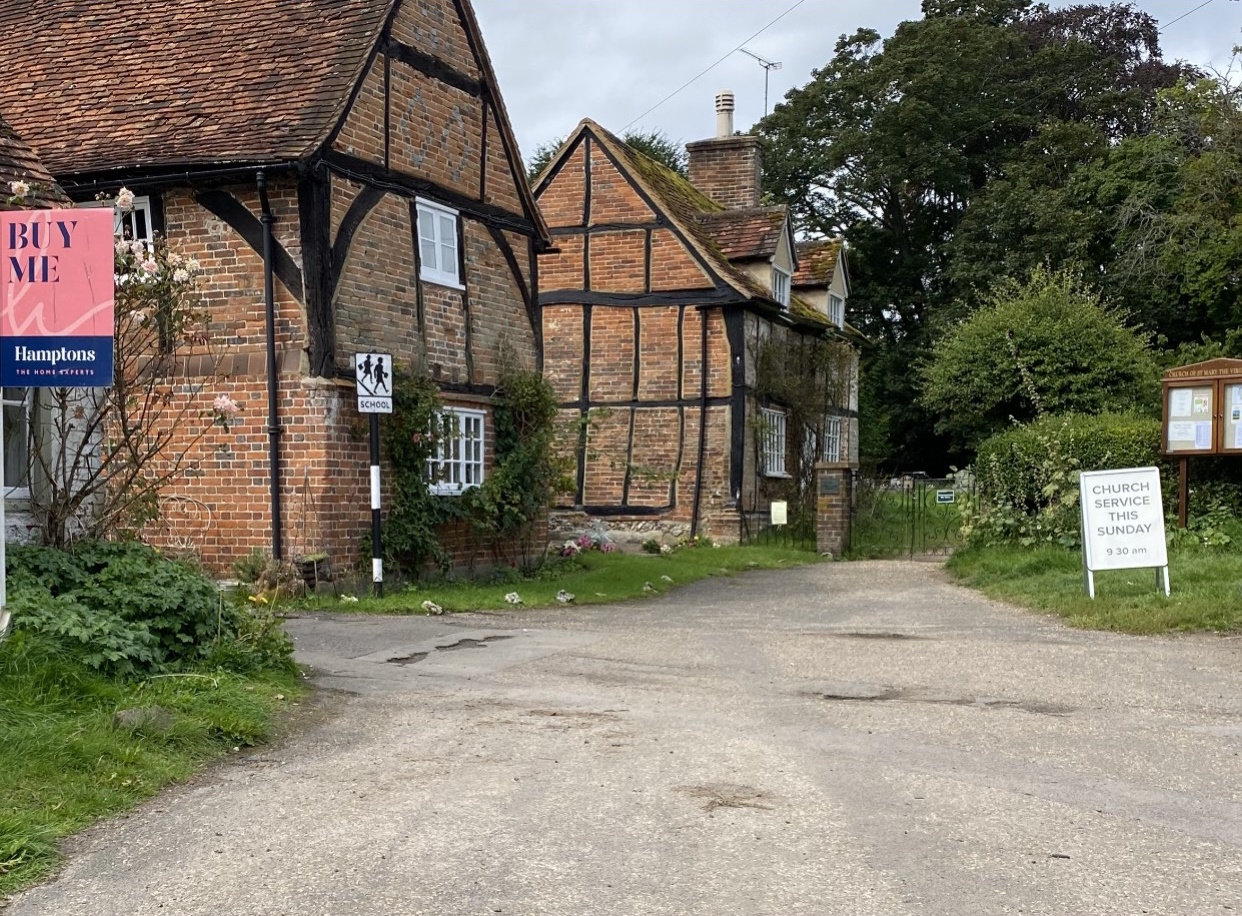
Much the same in Antony Blair's comparison.
- Capture 37
- 18 Jun 2018

More evidence, kindly supplied by another villager, whose family have lived in the village since 1927. Showing the timber works office on the left, but with no Post Office!

John Rhodes provides an up to date shot of the same spot now still evidencing no Post Office but it would have been where the Range Rover is parked. (RL)
- Capture 38
- 09 Apr 2015

Stanwell Place, Stanwell, Middlesex, identified by Chris Makin. Now demolished. The driveway gatepost can be seen in 'Genevieve' Capture 42. (RL)

Chris Makin identifies this as Stanwell Place and sends this 1953 photo stating that the front of the house is to the left in the screen grab. He adds that the troops are approaching the area that later became tennis courts and the apple tree on the left is clearly larger in 1953. As a child, Chris knew the gardens well and found a box of blank ammunition that would have been used in the film. The house, which was a magnet for British film studios throughout the 1950's and 60's was sadly demolished around 1965, the area, now unrecognisable, is now a hideous gravel pit. (RL)
- Capture 39
- Pre 2008

The pub. But the heavy shadow on the bottom right suggests a building??.the Post Office again.

Now. Well, what an adventure, and what a wonderful set of pics. Heartiest congratulations and hugest thanks to Geff Barrett for his sleuthing. And, obviously the Day Went Very Well Indeed.