
Where Strangers Meet
Date: 1951
Director: Paul Barralet
Production Company: Paul Barralet Productions Ltd.
Stars: E. V. H. Emmett (Commentary)
Location(s): London
Region(s): London T-Z
Storyline:
A short travelogue from the 1950s featuring the streets, businesses and people of London’s Soho district.
Additional Information:
Page compiled and uncredited comparisons by Phil Wilkinson
Can you help:
If you have any information regarding this production, the locations or, even better, some comparison shots please contact us. Images submitted must be in Landscape orientation, as would be seen on the cinema screen, not Portrait.
We are aware that there are films on the site that were added when the criteria for the inclusion of locations was very different from today and, as a result, there may be scenes missing from some productions. Please do not forward additional screen captures to us but bring the detail to our attention, for we do, and are, 're-addressing' these older entries as time allows.
- Capture 1
- 21 Nov 2025
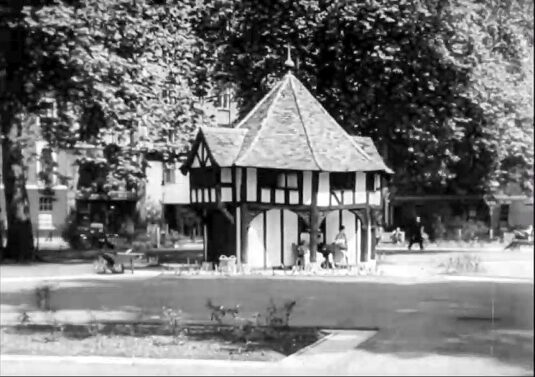
E. V. H. Emmett narrates "We all know that a square peg won't fit in a round hole. But here's a square that's in a circle. If that sounds a bit too complicated, lets explain that its Soho Square." The gardens in the centre of Soho Square W1 facing the, now Grade II listed, half-timbered access point to the electricity substation which was built in 1925.
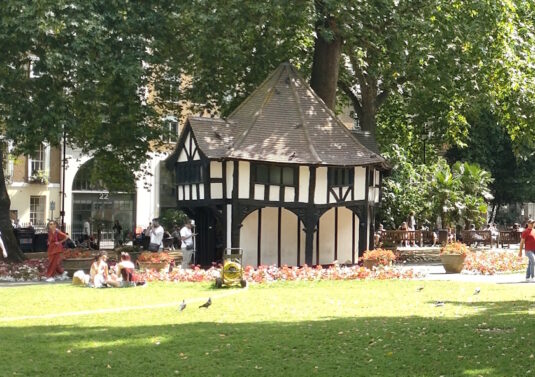
The sun was out for my visit too.
- Capture 2
- 21 Nov 2025
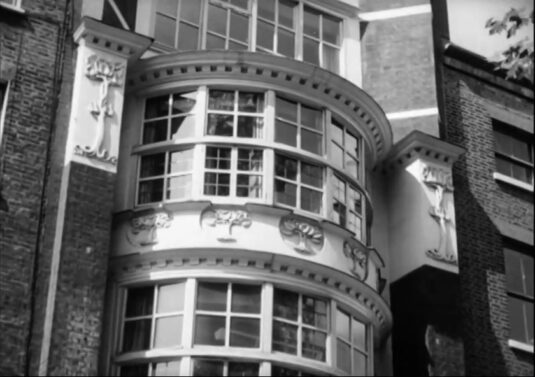
"And it's a part of what you might call the European Continental circle, bang in the middle of London, England." Number 3 Soho Square W1.
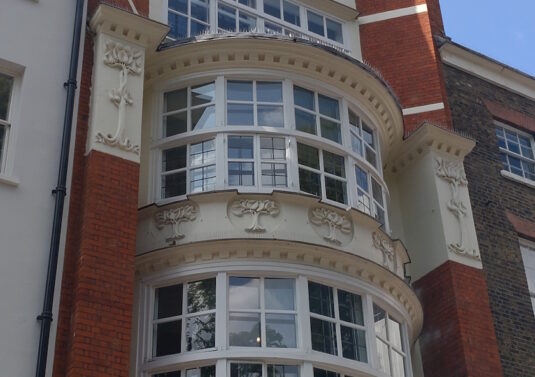
Hardly a change here.
- Capture 3
- 21 Nov 2025
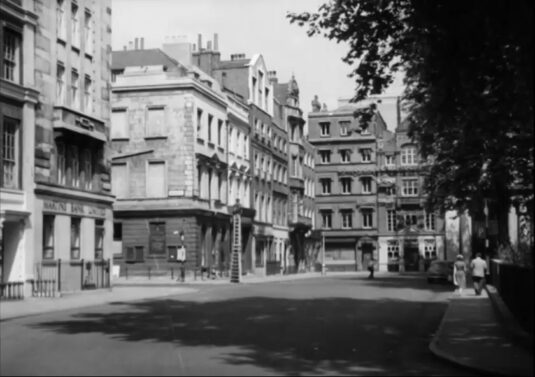
"The square was laid out in 1681. Fifteen years after the Fire of London. Though why it is called Soho is a bit of a mystery." Soho Square with Soho Street to the left.
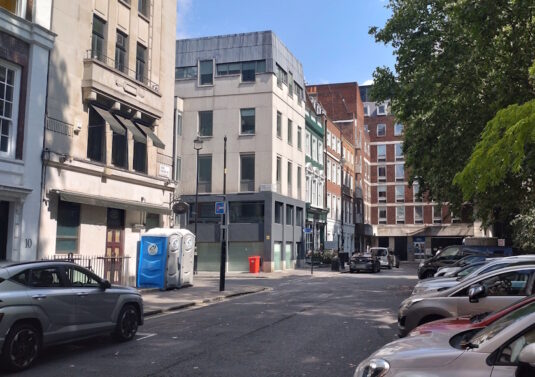
Parked cars now clutter the square.
- Capture 4
- 21 Nov 2025
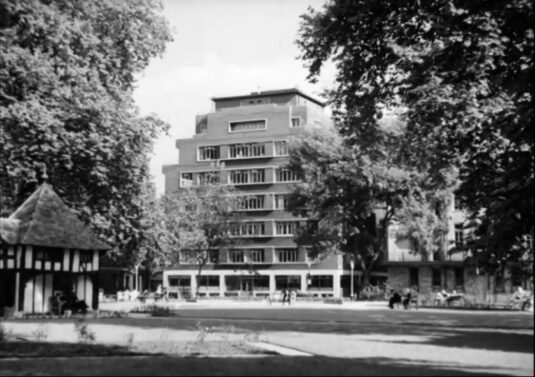
"Soho is said to have been a password in the Monmouth rebellion and also an old hunting call." Looking across the gardens towards the southern side of Soho Square.
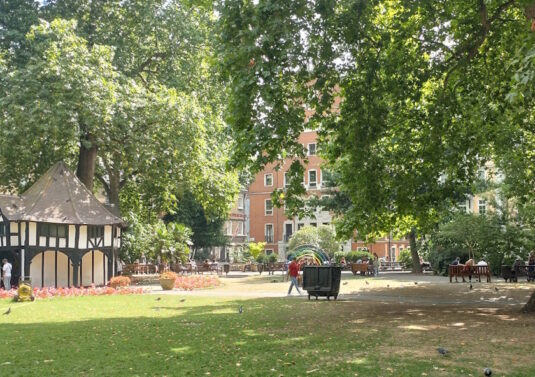
The background building has been replaced.
- Capture 5
- 21 Nov 2025
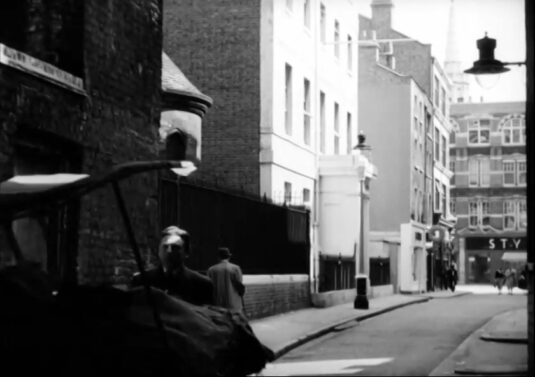
"But they haven't had any rebellions here for some time, and not much hunting either except when the police give a barrow boy the move on signal." Manette Street W1 with Charing Cross Road in the right background.
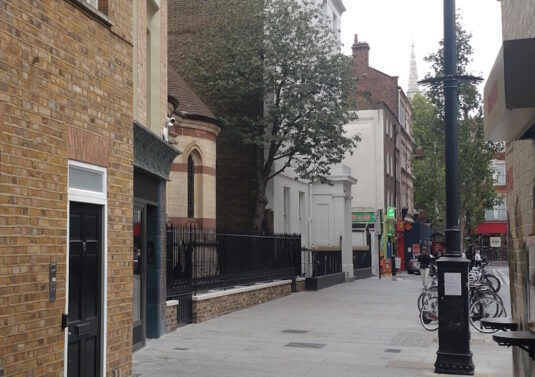
Still recognisable.
- Capture 6
- 21 Nov 2025
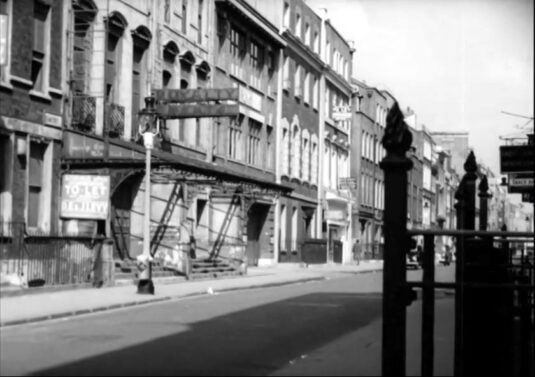
"Dean Street is one of the oldest streets in Soho. Edmund Kean the famous actor lived here at one time. And in Dean Street is the old Royalty Theatre where great artists of the calibre of Sarah Bernhardt frequently appeared. But, unfortunately, it wasn't the acting that brought the house down." The theatre stood opposite Bateman Street.
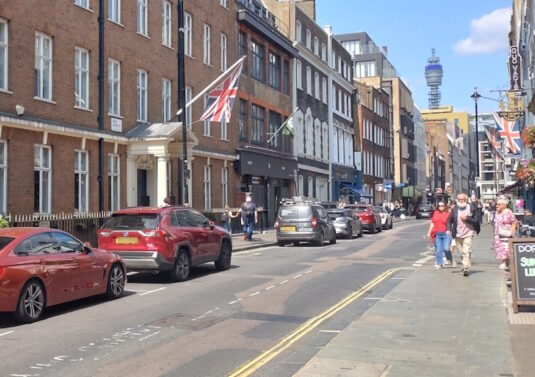
Dean Street 74 years later.
- Capture 7
- 21 Nov 2025
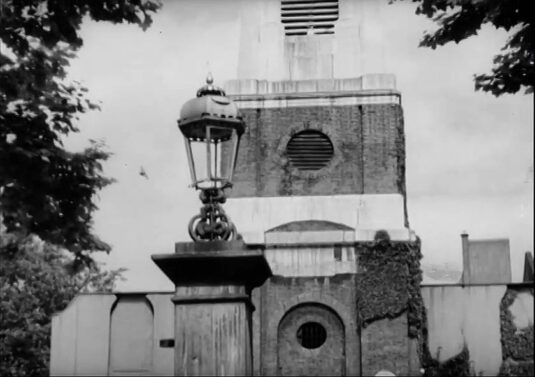
"And bombs, of course, were responsible for the destruction of the Church of St. Annes at the Shaftesbury Avenue end of Wardour Street."
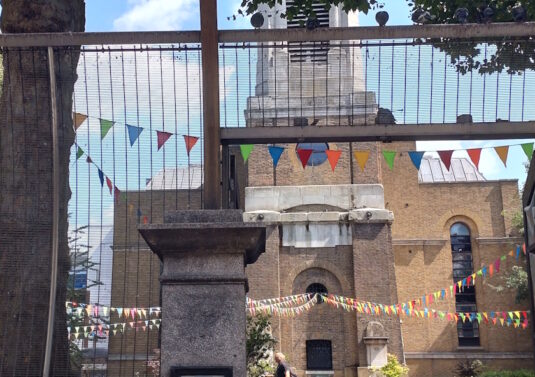
Security around the church gardens.
- Capture 8
- 21 Nov 2025
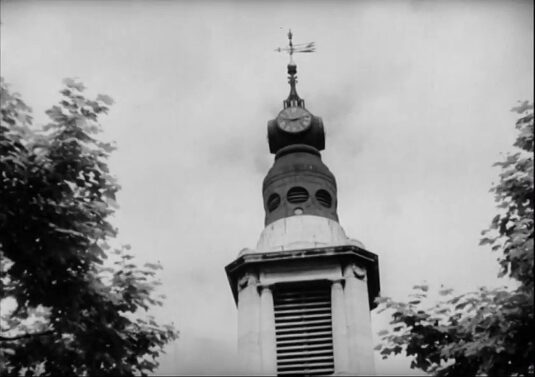
The camera tilts up the tower of St. Anne's church, now with an address on Dean Street.
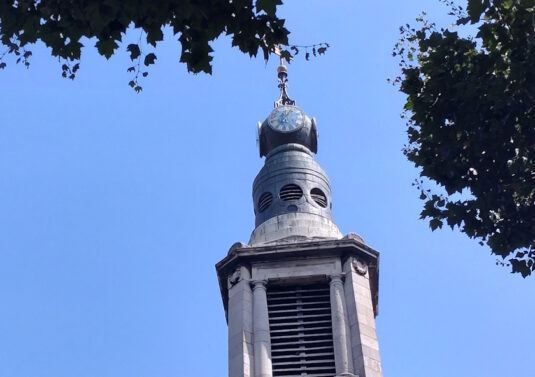
Spot the difference.
- Capture 9
- 21 Nov 2025
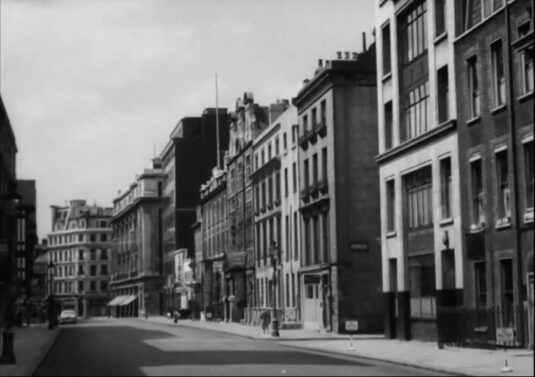
"This is Marlborough Street, where more people are brought up than at Eton." Great Marlborough Street, looking westward towards the junction of Regent Street and Maddox Street.
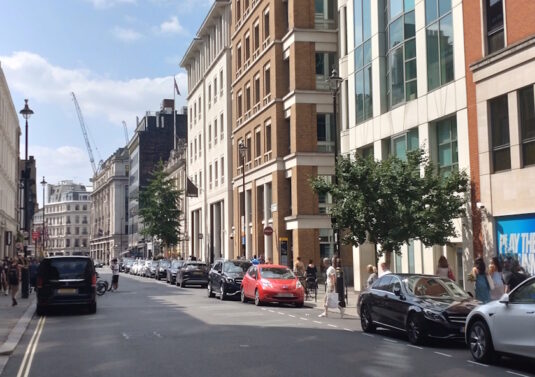
Different buildings line this end of the street.
- Capture 10
- 21 Nov 2025
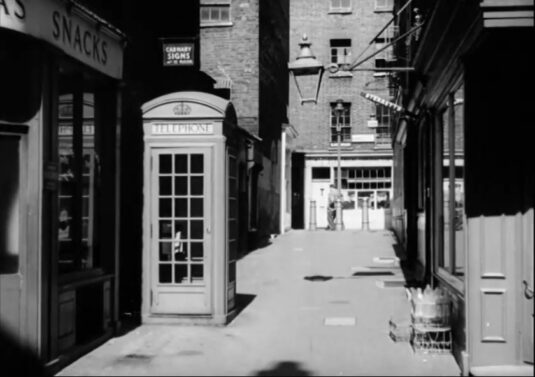
"Soho is a district that doesn't really get going until later in the day." St. Anne's Court W1 with Dean Street crossing the background. The passage can be seen in 'Cover Girl Killer', 'Son of a Stranger', 'Secrets of a Door-to-Door Salesman', 'The Small World of Sammy Lee’ and ‘Inadmissible Evidence’.
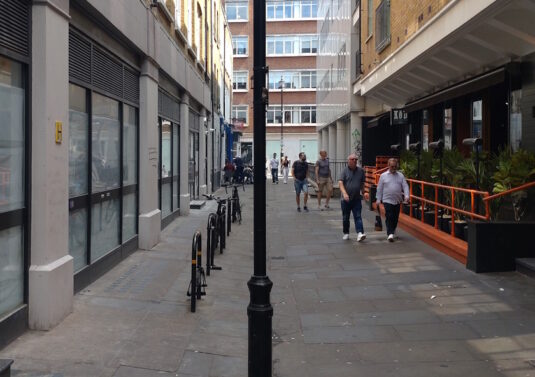
Wider and without the telephone box.
- Capture 11
- 21 Nov 2025
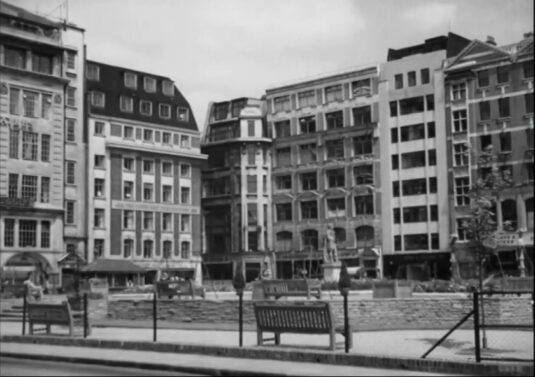
"In the early morning, there's an air of cloistered calm. But it'll begin to seethe long before lunch time." Golden Square with Upper James Street to the left of centre.
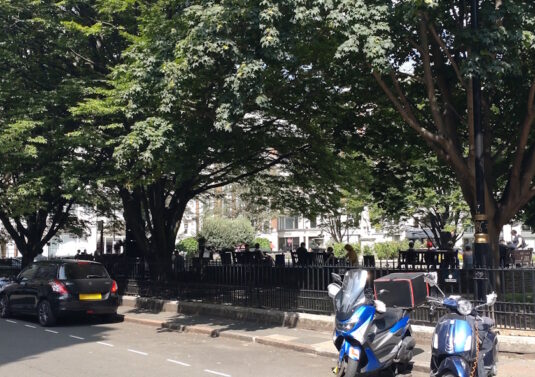
I assure you that the background buildings still stand beyond the trees.
- Capture 12
- 21 Nov 2025
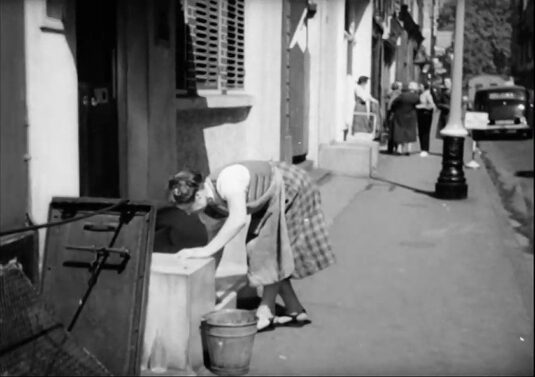
"This is the traditional way in which many women greet a new day." Outside 46 Frith Street with the trees of Soho Square in the right distance.
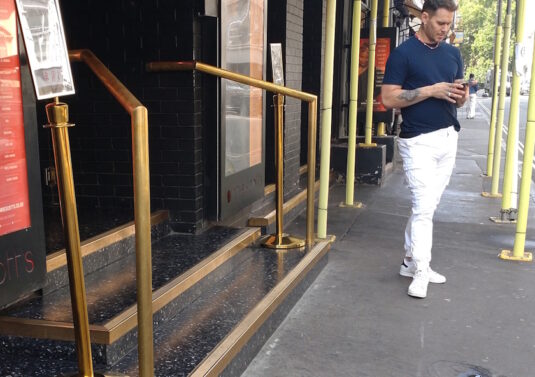
Outside a scaffolded Ronnie Scotts where the Sunday lunchtime queue has all but disappeared.
- Capture 13
- 21 Nov 2025
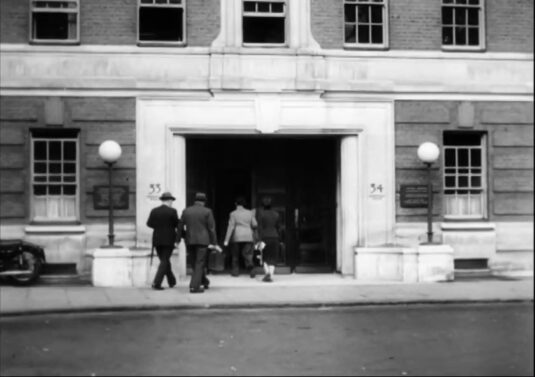
"And in many other ways, Soho has hardly altered at all with the passing years." Facing numbers 33 and 34 Soho Square.
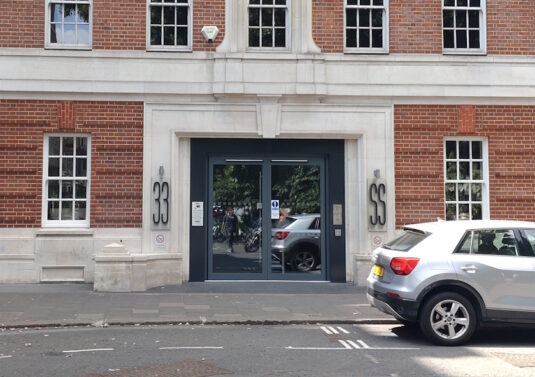
It appears to be just 33 now.
- Capture 14
- 'Now' required
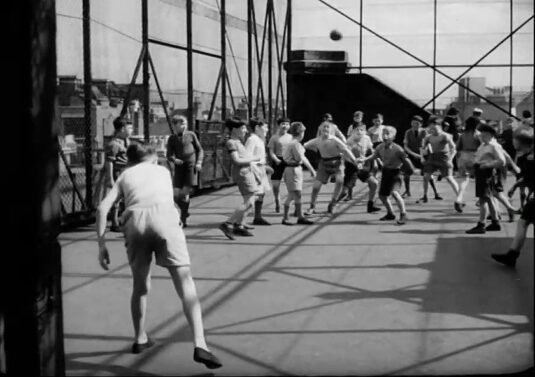
The film visits the village smithy before Children come out to play of the roof of the International School. Richard Lovejoy found the rooftop playground of St. Patrick's School, high above on the corner of Great Chapel Street and Hollen Street W1.
- Capture 15
- 'Now' required
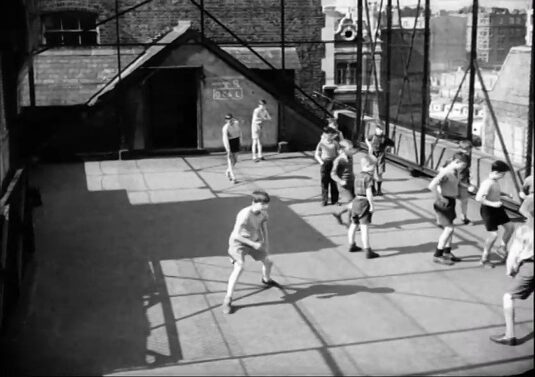
"When it's a case of children's games, it doesn't really matter what language they talk because everyone seems to understand what everyone else is doing. Which is more that you can say about international politics." St. Patrick's School at the corner of Great Chapel Street and Hollen Street located by Richard Lovejoy.
- Capture 16
- 21 Nov 2025
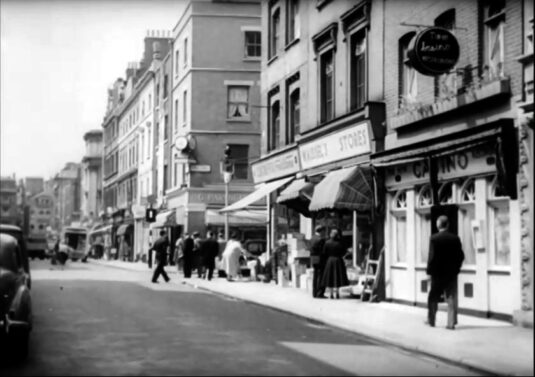
After watching a milliner and a maker of handbags at work . . . "When you're in Old Compton Street you're really in High Street, Europe. This is the main shopping centre." Facing the junction with Frith Street.
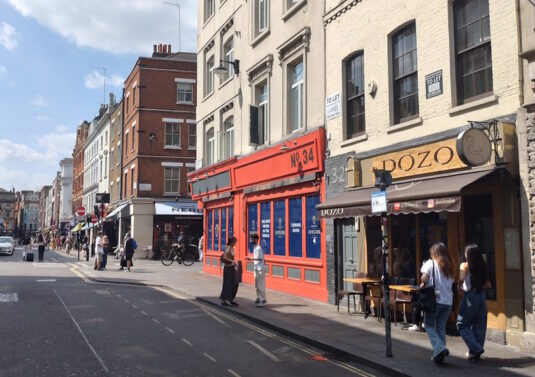
Looking towards the junction now.
- Capture 17
- 21 Nov 2025
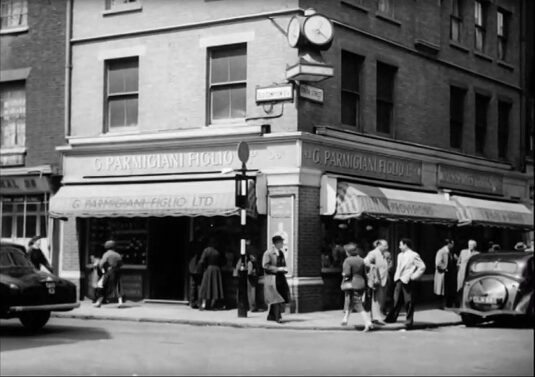
"And you could just as easily fancy yourself in France or Italy . . ." The corner of Old Compton Street and Frith Street.
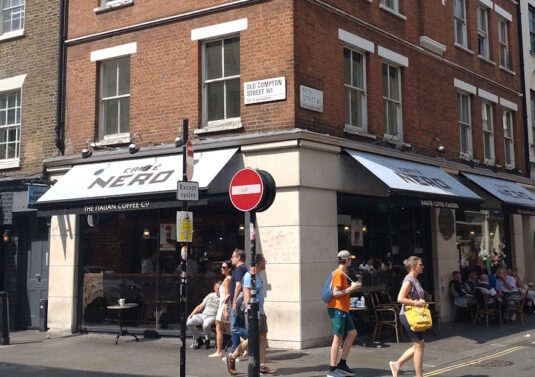
Does "Nero" counts as Italian.
- Capture 18
- 21 Nov 2025
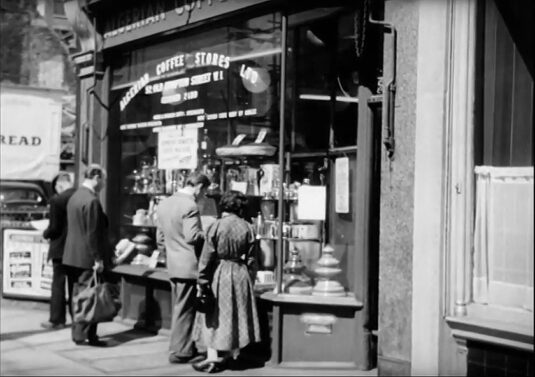
". . . or even Africa at a pinch. It's hard to believe that you're still in the heart of London." The Algerian Coffee Stores at 52 Old Compton Street W1.
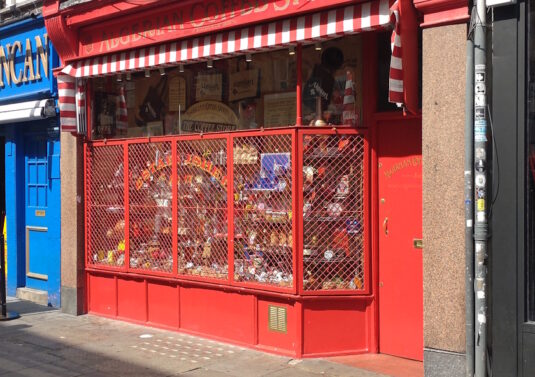
Surviving, but closed on Sundays.
- Capture 19
- 21 Nov 2025
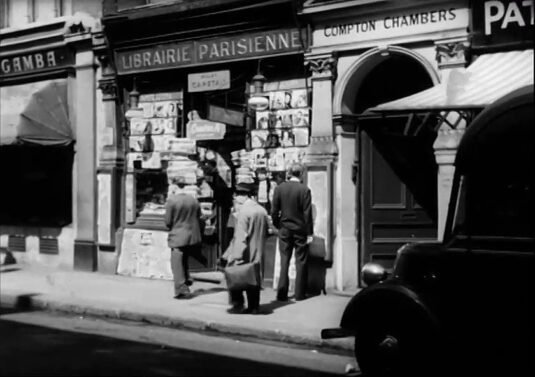
"You'd never imagine that a double decker London bus would come rolling along at any minute. Of course not. And oddly enough, it never would, because strange to relate, buses never do go down any street in Soho." On the left stands Gamba at the corner of Old Compton Street and Dean Street with the entrance to Compton Chambers to the right.
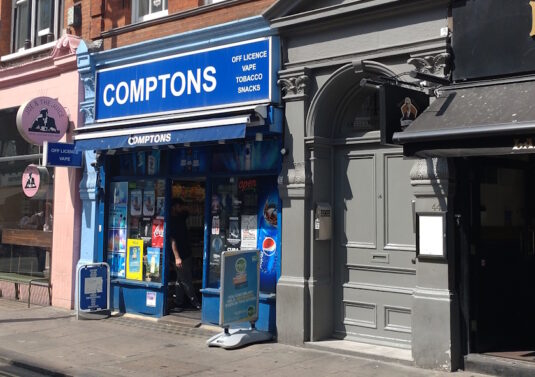
A modern take on the scene.
- Capture 20
- 21 Nov 2025
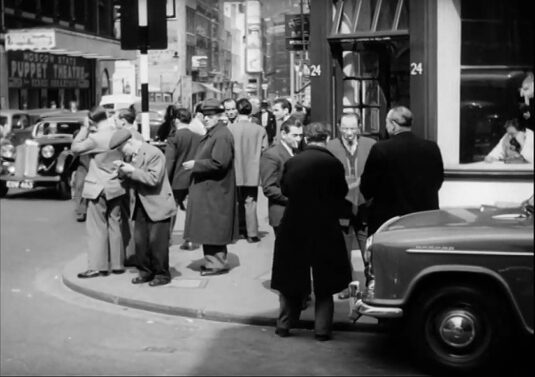
"But if there's one thing the streets of Soho are really rich in, it's gossip." Outside number 24 Frith Street on the corner of Old Compton Street with the London Casino top left.
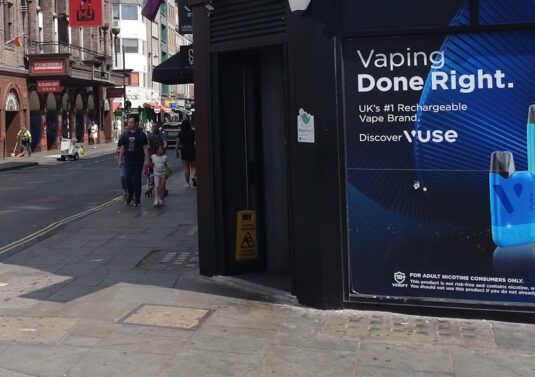
Not as interesting today.
- Capture 21
- 21 Nov 2025
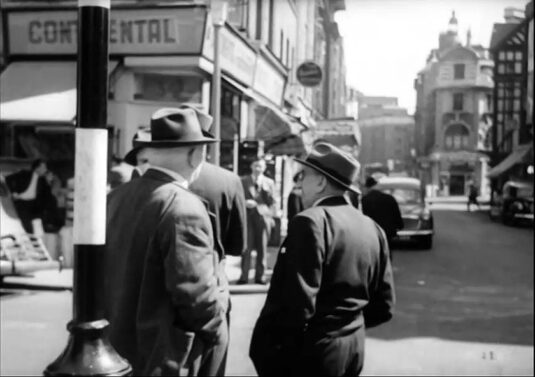
"'Where Strangers Meet', people always find it easy to engage in Continental style conversation. Any time you like." Facing north-east on Old Compton Street at the corner of Frith Street with Moor Street in the right distance.
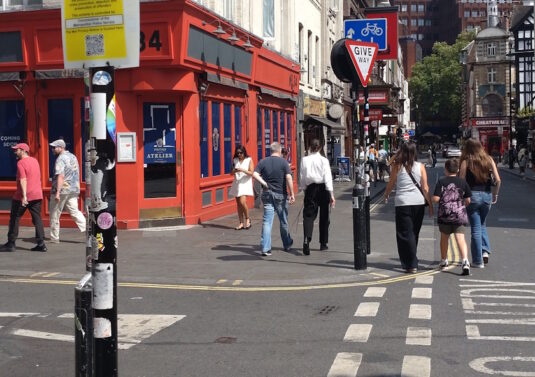
Strangers still meet in Soho.
- Capture 22
- 21 Nov 2025
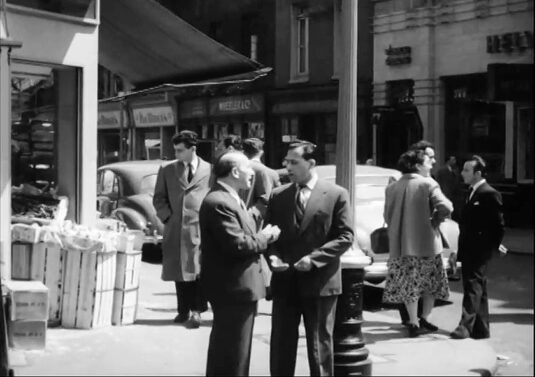
"Of course, it's no so easy if you've got your hands full of parcels." The junction of Old Compton Street and Frith Street with the Helvetia public house to the right.
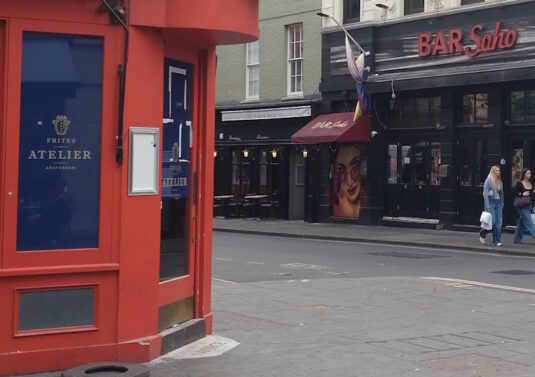
Bar Soho occupies the Helvetia.
- Capture 23
- 21 Nov 2025
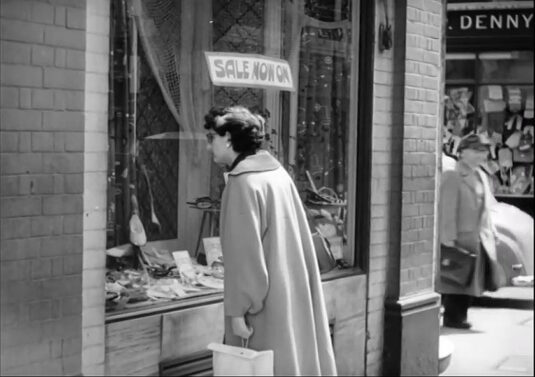
"One or two of the shops are the kind of shops that you'd find elsewhere in London. But the inhabitants of Soho don't have to pine in exile on a diet of roast beef and beer. They can get all the highly spiced delicacies they want." The window of Gamba at the corner of Dean Street and Old Compton Street with P. Denny & Co. visible to the extreme right.
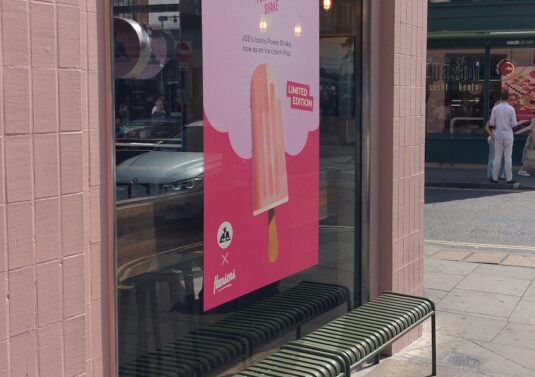
No shoes of any type on sale here now.
- Capture 24
- 21 Nov 2025
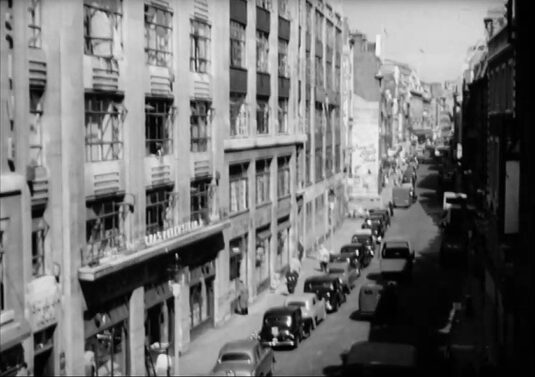
The street views continue following a visit to Gamba, the famous ballet shoe manufacturer, and a theatrical rehearsal . . . "Another famous quarter for reaching to the stars is Wardour Street, the home of film." Facing northward on Wardour Street with Screen House at numbers 119 to 123 and the offices of the Rank Organisation on the left.
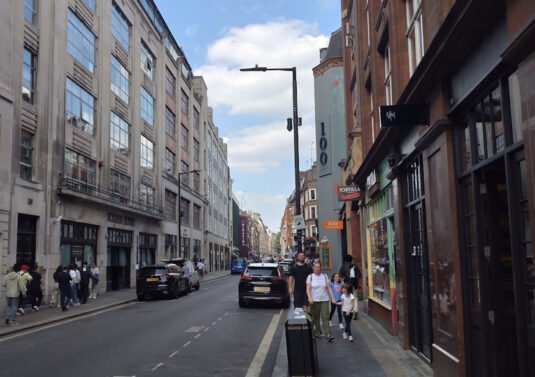
From street level.
- Capture 25
- 21 Nov 2025
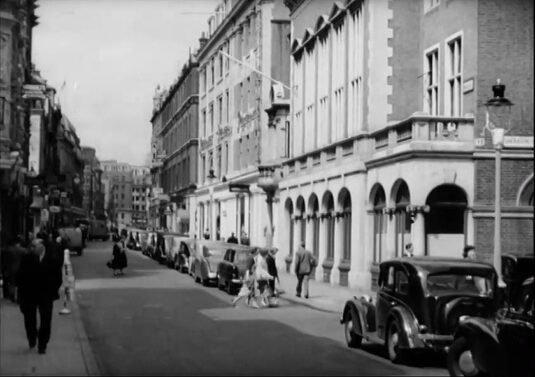
"But here the stars are always, so to speak, in cans. You seldom see them here in person. It's in Wardour Street, where the famous furniture designer Sheraton lived 200 years ago, that the films are bought and sold or rented." Wardour Street with the Novello Printing Works at the corner of Sheraton Street to the right.
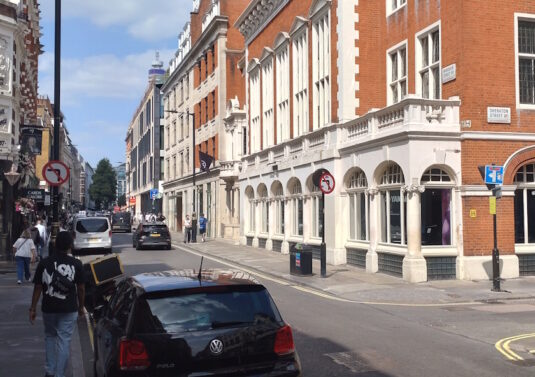
The same building.
- Capture 26
- 21 Nov 2025
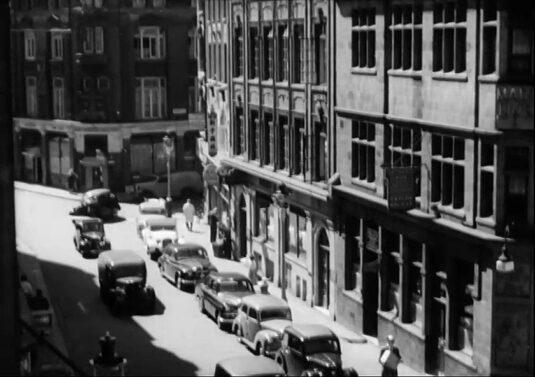
"But although this is mainly the business end of the cinema world, there are also lots of little side turnings where technicians are at work." Wardour Street with The Round House public house at the corner of Brewer Street in the left distance and The Intrepid Fox public house to the right.
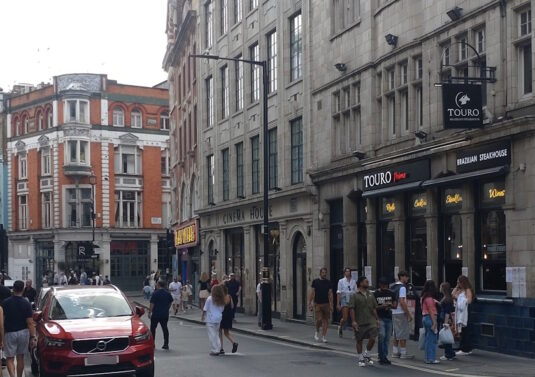
Without the elevation. and, surprisingly, with less traffic.
- Capture 27
- 21 Nov 2025
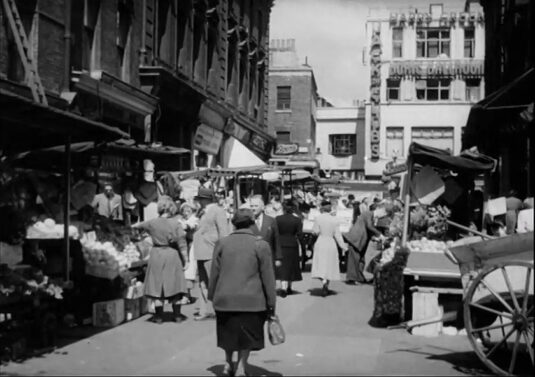
"Next street to Wardour Street is Berwick Street, and that's the well known street market, mostly in the fruit and vegetable line. And they seem to do a pretty brisk trade too, although they'd never admit it." Facing northward on Rupert Street with buildings on Brewer Street at the corner of Walker's Court in the background.
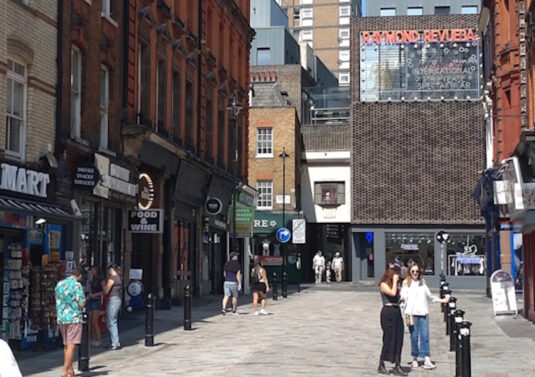
Confirming Rupert Street.
- Capture 28
- 21 Nov 2025
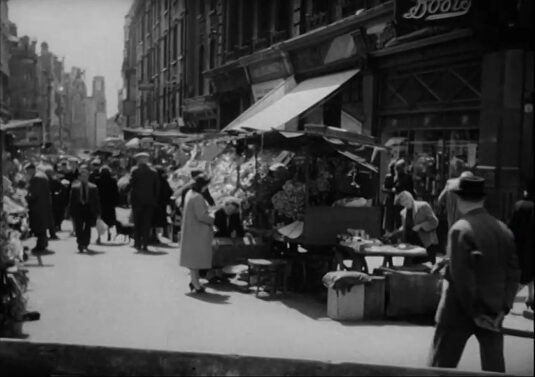
"Nobody seems to know how long ago Berwick Street became Berwick Market, but at one time it was famous for its cheep dress shops, with gentlemen who stood in the doorways and tried to persuade customers to come in." Facing southward on Rupert Street W1 with the tower of the Prince of Wales' Theatre in the left distance.
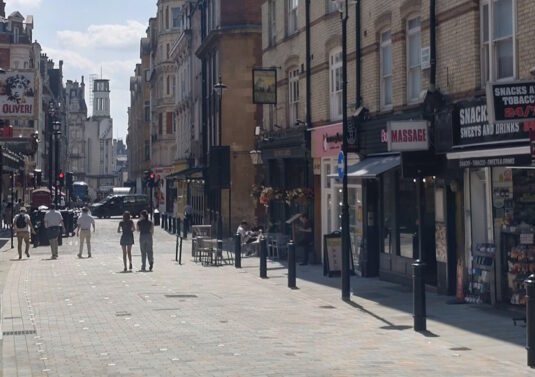
No market of any sort since the old cobbles were replaced.
- Capture 29
- 'Now' required
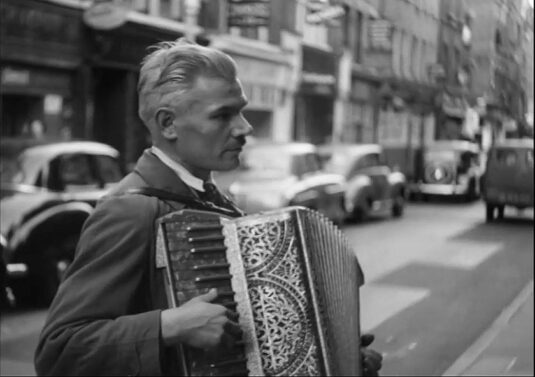
"At the far end of the market is Shaftesbury Avenue, synonymous with Theatreland. And good business in the theatre spells good business and lots of money for a lot of people outside."
- Capture 30
- 'Now' required
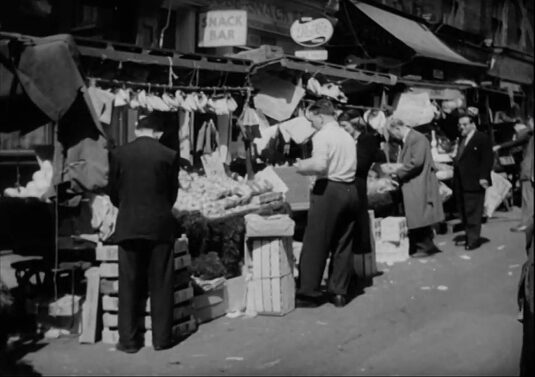
"Not only does it bring customers this way with money in their pocket for the fruit stalls, it also means that trade is good for the street musicians. The buskers who earn their living entertaining the queues while they wait for the doors to open."
- Capture 31
- 21 Nov 2025
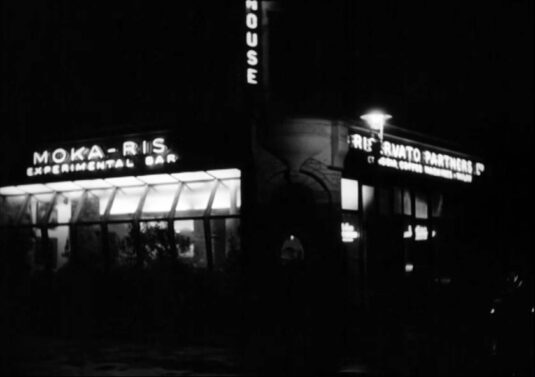
A rendition of 'Santa Lucia' by a Street Accordionist and the Proprietor of a café takes us through the afternoon, to when the offices are closing, and into evening. "But before you go to the theatre or cinema you'll be wanting something to eat." Moka-Ris was at number 10 Dean Street, on the corner of Carlisle Street.
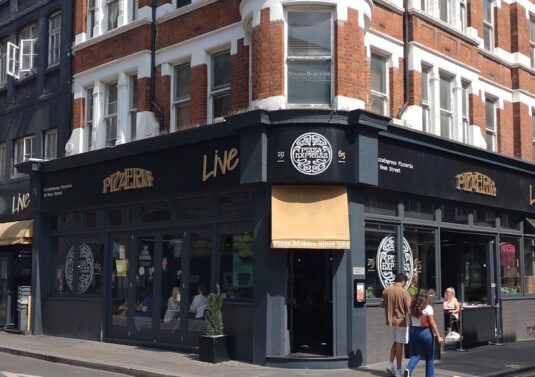
Now serving pizza.
- Capture 32
- 21 Nov 2025
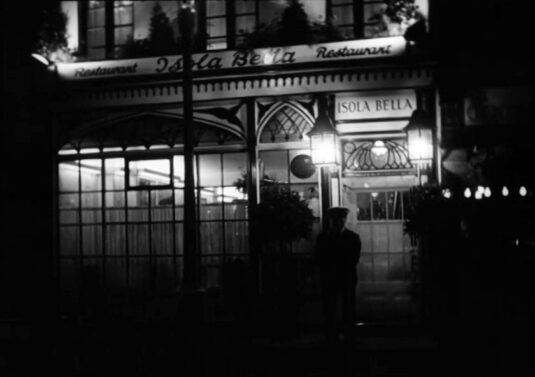
"And it's here that Soho really comes into its own. Within that magic square 'Where Strangers Meet' you can eat your way round Europe and parts of China too." Facing Isola Bella at number 15 Frith Street.
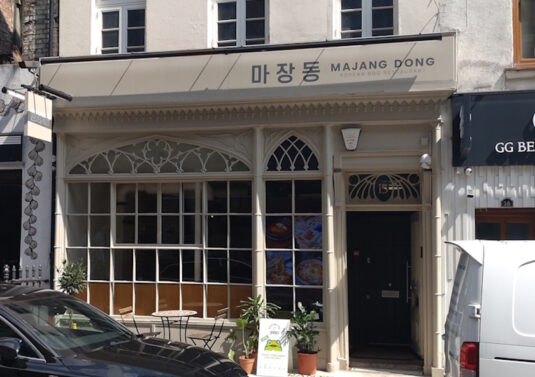
The decorative window survives.
- Capture 33
- 21 Nov 2025
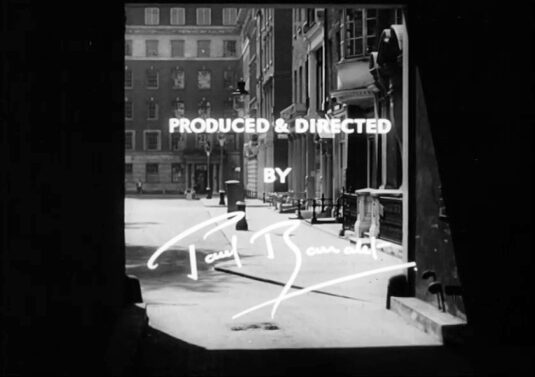
A look inside a fish bar that you'd never expect to find anywhere else but in the United Kingdom, where the oyster is king, followed by a Chinese restaurant and an Italian restaurant brings the short to an end. Seen from the entryway of number 7, next to the French Protestant Church, this is Soho Square W1 with Carlisle Street to the centre and number 31 in the left distance.
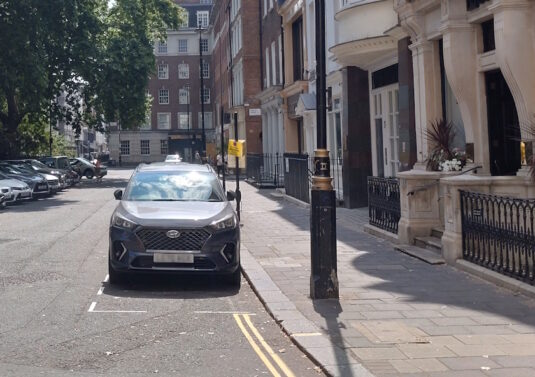
Back where we started, a last comparison of Soho Square.