The Silver Fleet – Location Detail
As a result of the dogged determination of Philip Anderton we are indebted to Martin Cleaver, Archive and Records Officer at Wirral Borough Council who has provided and given us permission to reproduce photographs and support detail concerning the locations used in the film.
Screen captures provided by Phil to Martin help to support the use of Cammell Laird’s shipyard for the filming as well as the Eastern Wharf at Dundee. We are very grateful to Martin for his location identification and also for the added information making the shots all the more interesting.
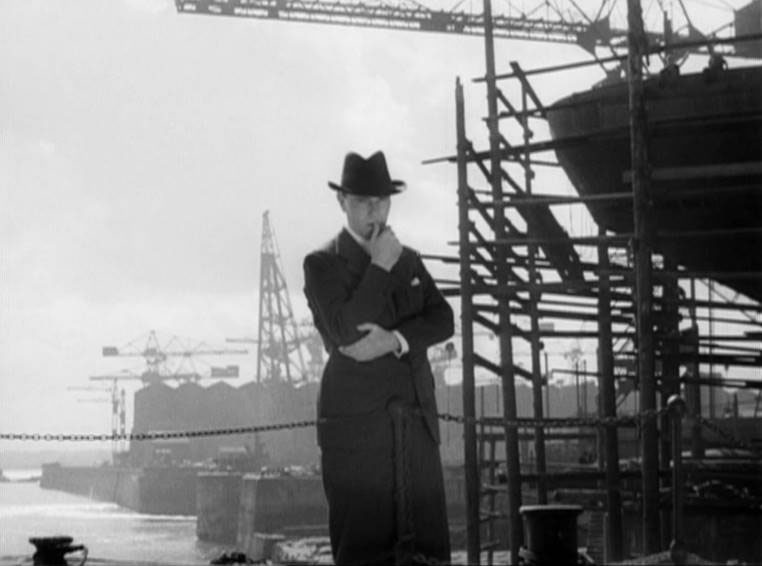
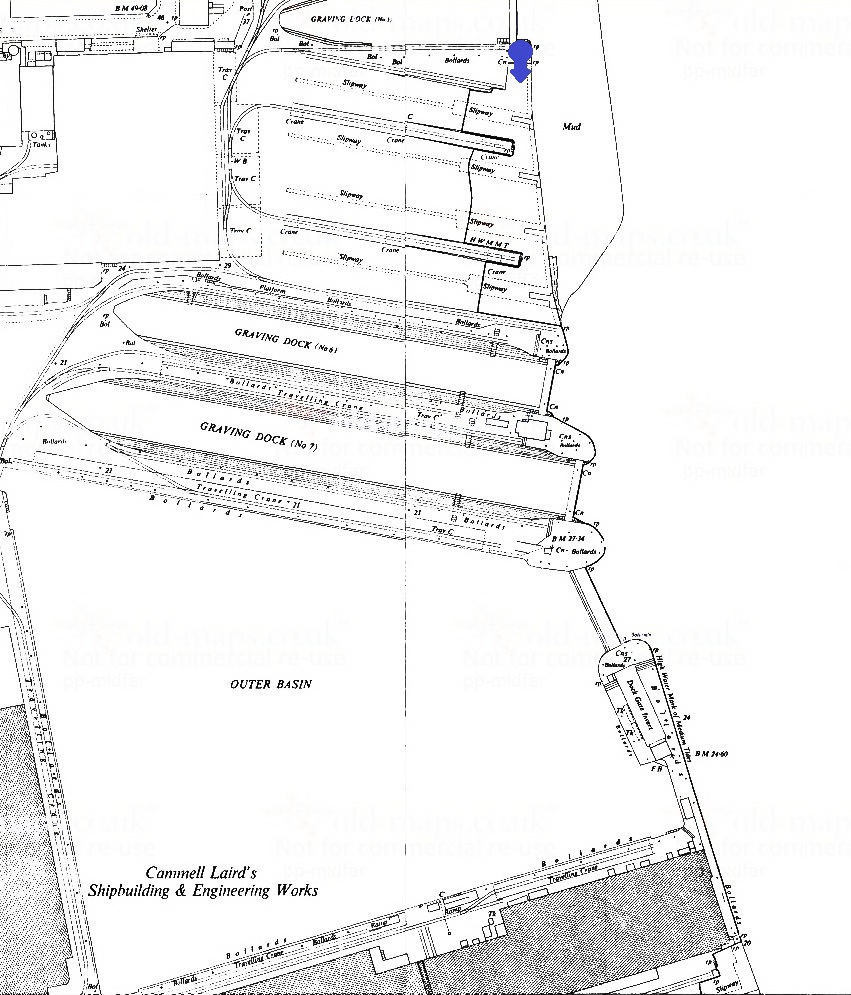
Martin explains that the capture above shows Ralph Richardson standing at the riverward end of Laird’s No.5 Graving Dock, looking north. The background is looking south towards the main entrance to the yard’s wet basin, with the main fitting shop on the far side (see Yard Plan 1 below for location). If the dates of filming that you have given are correct, the ship under construction in the background at right would be the SS John Holt, a war-loss replacement being built for John Holt & Co (Liverpool) Ltd; the vessel was laid down on Slip No.1 in Laird’s North Yard on 29/01/1942 and launched just under 12 months later on 09/12/1942.
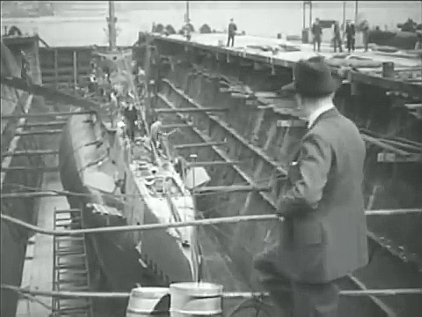
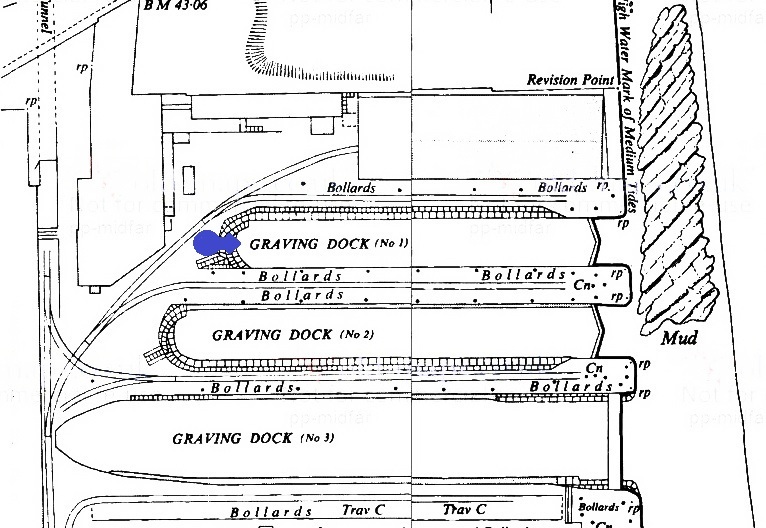
This shot of Jaap looking down onto a submarine in drydock and the subsequent sequence in the bottom of the dock, were filmed at Laird’s No.1 Graving Dock (see Yard Plan 2 below). The submarine is another of the S-class vessels that were then under construction at the yard, either HMS/m Sibyl or HMS/m Seadog. Laird’s records show that Sibyl was docked for completion in No.1 Dock from 01/07 to 16/07/1942, and again from 30/07 to 02/08/1942, before being handed over to the Navy on 16/08/1942, whilst Seadog followed her into the same dock from 11/08/1942 to 29/08/1942. Martin says that he wasn’t able to find a photo of No.1 Dock for comparison, but the attached shot shows the interior of the adjacent No.2 Dock in 1958, which was essentially of the same construction, though slightly larger. These were the only two docks at Laird’s at that time that still had the traditional pair of wooden lock-gates at their entrances, all of the others being closed by caissons.
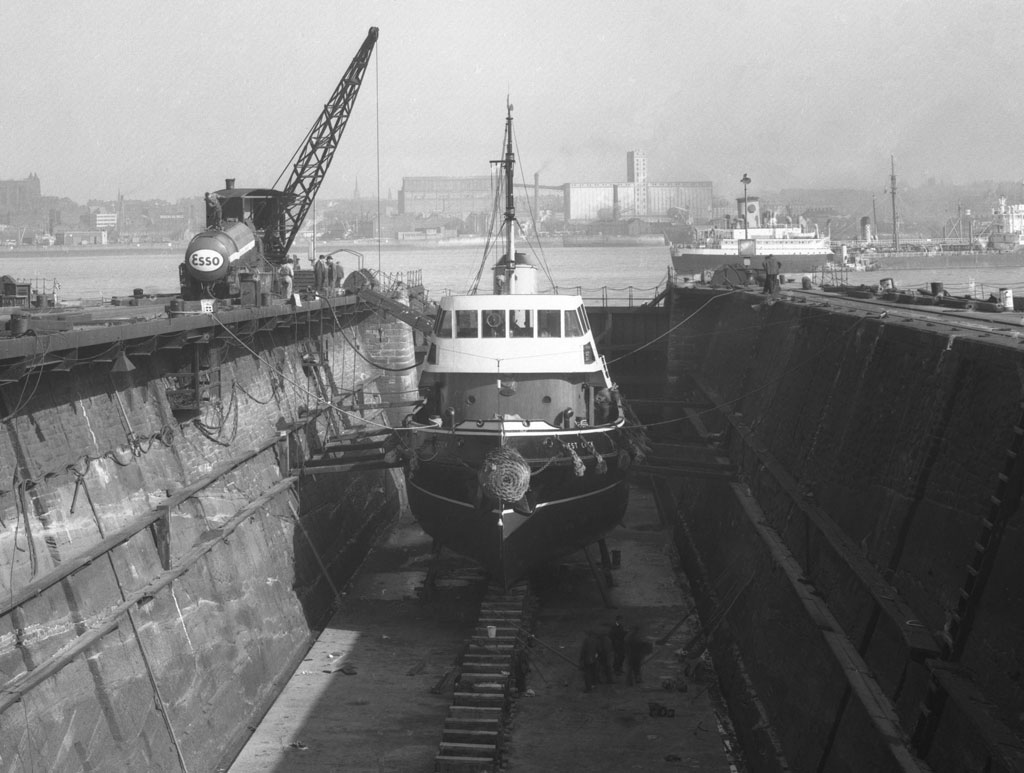
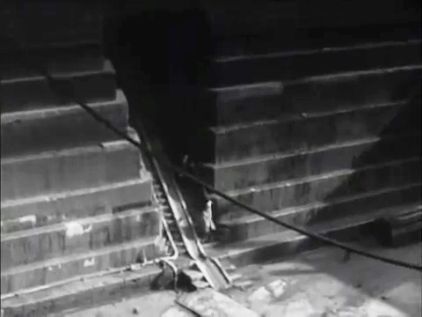
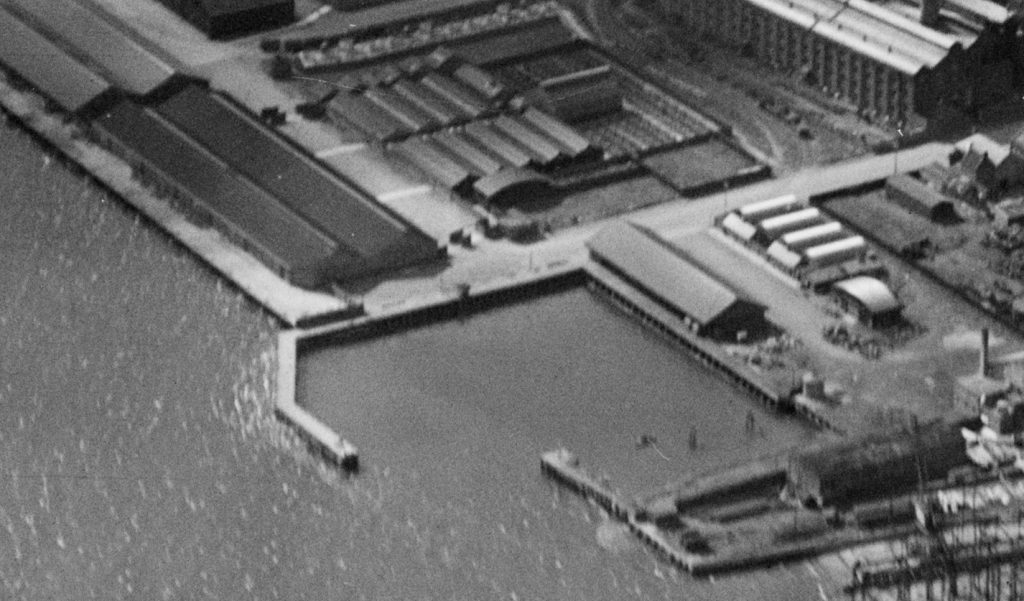
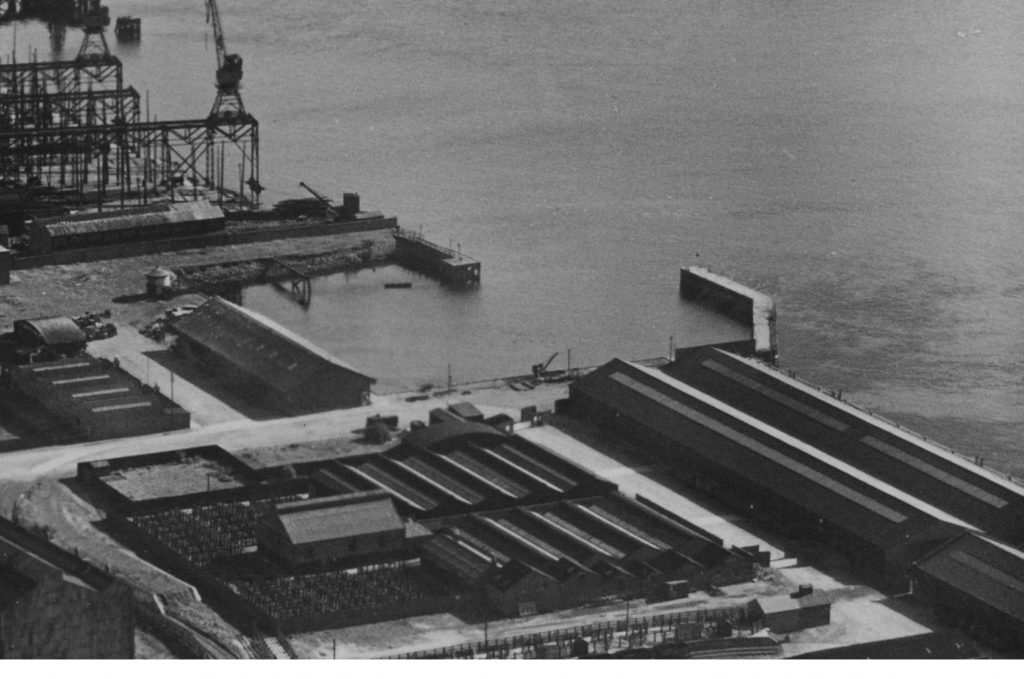
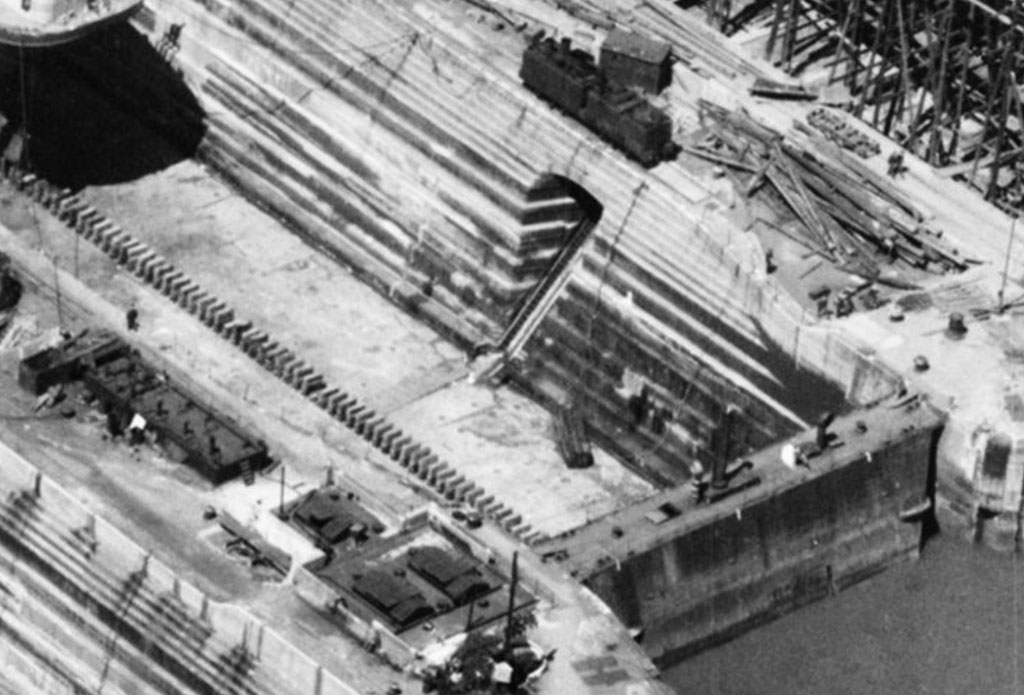
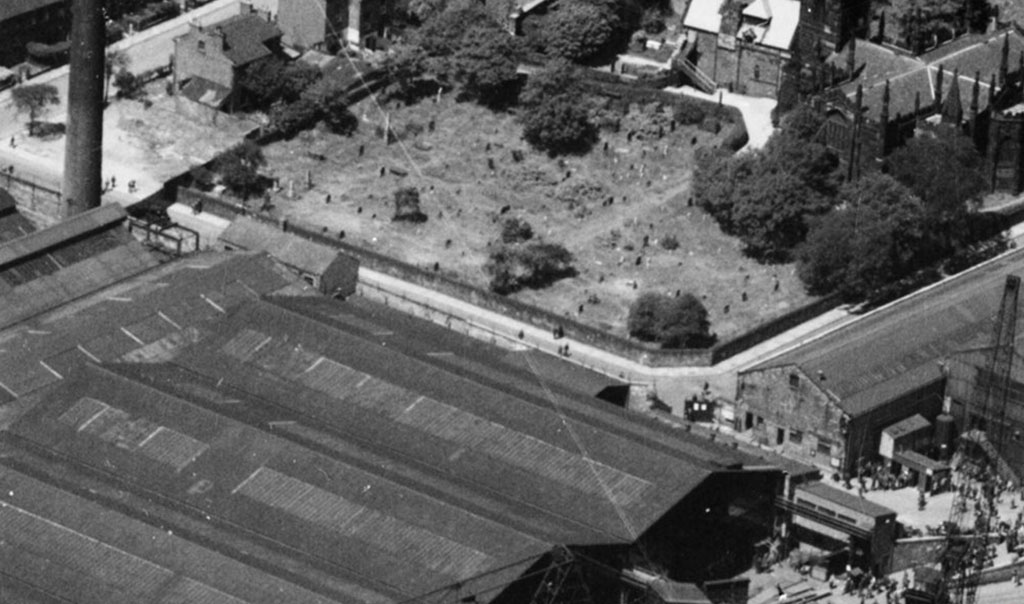
This sequence where van Leyden goes to the yard at night and discovers the explosive device was filmed at the river end of No.6 Dock, one of the two largest at Laird’s yard (see the following aerial photo and Yard Plan 1 below). At one point the silhouette of Liverpool’s Anglican Cathedral is briefly visible in the background.
With regard to the sequences earlier in the film of the yard gates and the various interior shots of workers entering the yard, such as these two captures:
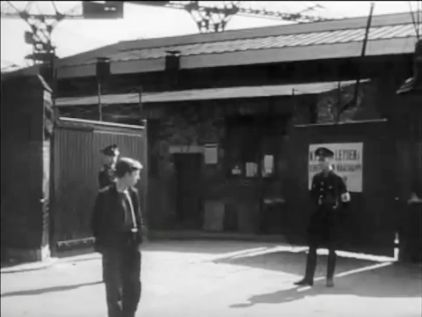
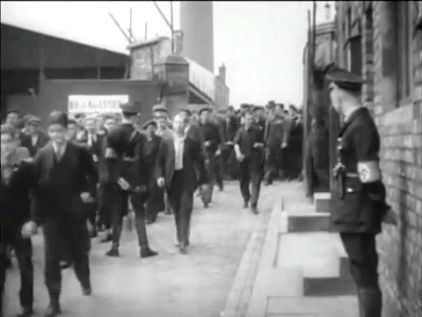
Martin says these were filmed at the old yard entrance at the bottom of Abbey Street. The section of an aerial photo from 1946 below, shows the buildings around the area of the gateway, with the boiler house chimney visible at left. The short montage of yard views after the first shot of the gates includes a brief clip of what appears to be Slip No.4/5 in the South Yard with the S-Class submarine HMS/m Simoom under construction; the large piece of metal in the foreground has ‘HB4 Side Plate 1116’ chalked on it, indicating that it was intended for the new caisson for the wet dock that according to the records was assembled between June 1942 and May 1943 in the area between Slip 4/5 and Slip 6. The same submarine features in the sequence at 11m 54s with the shipyard workers working on top of the boat.
We now move to Dundee
Philip provided this screen capture to Martin:
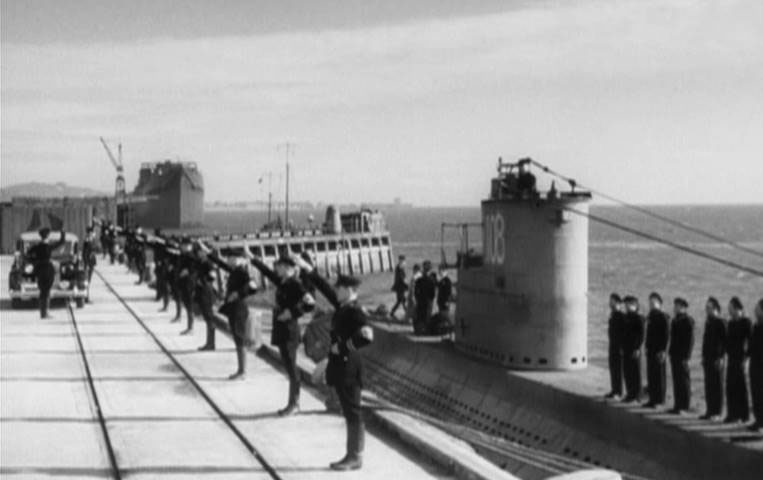
And we have this screen capture on Site:
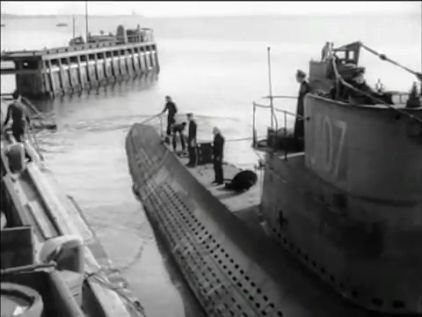
Martin advises that these captures clearly show the submarines alongside Eastern Wharf at Dundee, adjacent to the entrance to the old Fish Dock (see aerial views below). The headland visible in the background of the first shot is at Broughty Ferry, with Broughty Castle standing at the right hand end. The ship in the background is moored alongside Caledon Wharf, just beyond the shipyard. Possibly the filming for these sequences was done on the Tay because there was too much ‘sensitive’ shipping on the Mersey during the war, and it would have been impossible to film the scenes there without getting some of it in shot. Or perhaps they were worried that filming shots of a U-boat sailing down the Mersey in 1942 might cause some sort of mass panic!